
Exploring Identity and Resilience in Anuradha Marwah's Latest Novel
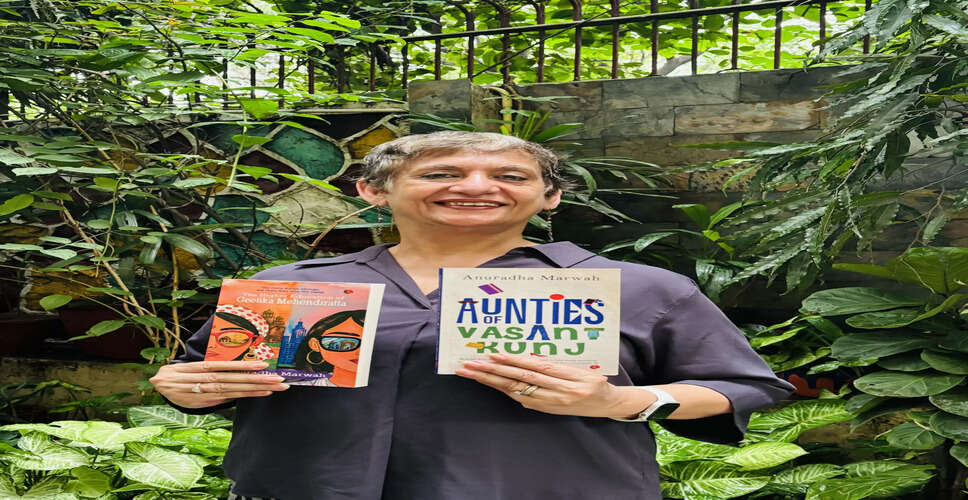
Anuradha Marwah: A Voice Beyond Labels
Anuradha Marwah, a distinguished author known for her four published works, rejects the notion of being confined by labels. She is celebrated for pioneering the 'campus genre' of English novels in India, consistently delivering narratives that are realistic, relatable, and infused with wit, all while addressing societal norms. Marwah emphasizes that themes such as humor, empathy, and the complexities of love and career are not bound by gender.
Her recent release, Aunties of Vasant Kunj, resonates with a diverse audience, appealing to both men and women alike. "I frequently receive feedback from male readers who find themselves connecting with the situations and characters in my stories. The themes I delve into are fundamentally human," shared Marwah, who is currently engaged in academic pursuits in the United States.
Launched in August, Aunties of Vasant Kunj follows the lives of three middle-aged women from a prestigious neighborhood in South Delhi, each on a quest to establish their own identities. Marwah skillfully portrays their lives with both humor and depth, encapsulating the tumult of their experiences.
Through her characters, Marwah reflects her own life experiences and insights. "We have much in common with these women, often labeled as homemakers or socialites, and judged for their views. My experiences reveal how women can transcend these limitations — they are resilient and powerful," she remarked.
With over thirty years of writing as a playwright, poet, and educator, Marwah's debut novel, The Higher Education of Geetika Mehendiratta, has been re-released by Rupa Publications. This coming-of-age tale, which follows a young woman's journey to higher education as a path to freedom and self-discovery, has been lauded for its progressive themes and its portrayal of contemporary India through a female perspective.
"The narrative remains pertinent — the story, the characters, their situations. Like the protagonist, many women today view education in urban settings as a means to escape patriarchal constraints and familial expectations. The current generation continues to navigate issues of autonomy, empowerment, and carving out their own identities," she added.