
Exploring 19th Century India Through Emily Eden's Portraits

A Unique Exhibition at DAG, New Delhi
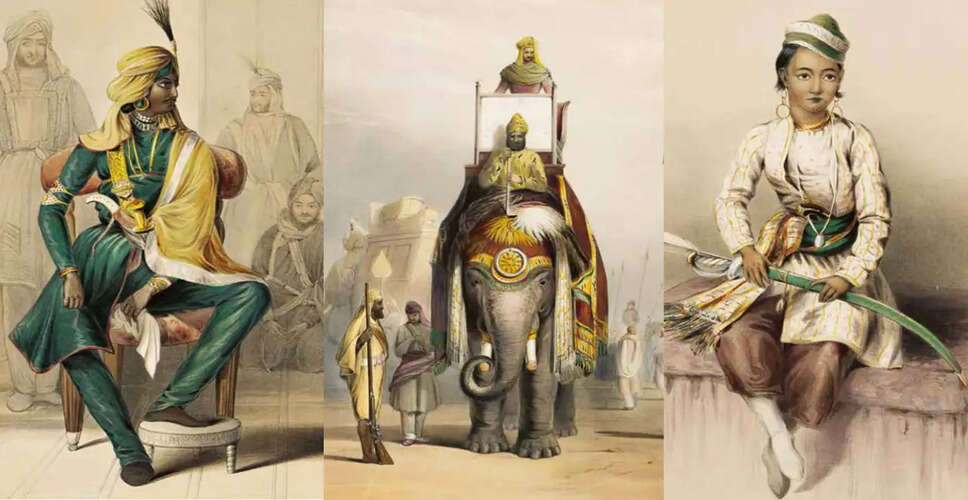
The exhibition Princes & People of India: Portraits by Emily Eden opened on July 10 at DAG in New Delhi, marking a significant event as the first major showcase in India dedicated to the works of the British artist, writer, and traveler. Curated by art historian Mary Ann Prior, this exhibition invites visitors to retrace Eden's journey through 19th Century India, all within a contemporary and vibrant setting. The walls of the gallery, painted in burnt orange and soft green, are adorned with earthy portraits that provide a fresh perspective on the complete series of Eden's Portraits of the Princes and People of India published in 1844. This display is complemented by the recently acquired Eden Family Archives and a rare collection of Lahore Company School paintings, creating a comprehensive experience that merges Eden's artistic vision with an authentic Indian viewpoint.
Emily Eden arrived in India in 1836, accompanying her brother George Eden, who was the Governor-General until 1842. During her travels across North India with her sister Fanny, she meticulously documented her experiences through sketches of various subjects, including rulers, soldiers, and everyday people. This resulted in a remarkable portfolio of 24 hand-colored lithographs published in London in 1844.
What distinguishes DAG's presentation of Eden's work is the portrayal of these lithographs as more than mere historical artifacts. Eden's diverse representation of society transforms these pieces into visual records of a dynamic culture, showcasing both stability and change. For instance, portraits from Maharaja Ranjit Singh's court are displayed alongside images of servants and religious devotees, creating a comprehensive narrative without gaps. The Eden Family Archives, which include sketchbooks, letters, and personal documents, further enrich the context of these portraits, tracing their journey from the estate of Anthony Eden, a former British Prime Minister and Eden's descendant, to DAG's collection.
Similarly, the Lahore Company School paintings from the mid-19th century provide an artistic contrast, depicting many of the same subjects through the lens of Indian artists. When viewed thoughtfully, the dialogue between these two cultural perspectives is profoundly engaging. This approach aligns with DAG's commitment to fostering scholarly discourse rather than merely reviving colonial-era art.
The careful curation of the exhibition, including the placement of artworks and their descriptions, reflects a deep admiration for Eden's contributions. Mary Ann Prior, who has appreciated Eden's work for over a decade, finds it particularly meaningful to bring these pieces back to their place of origin. Accompanying the exhibition is a well-researched publication edited by Prior, featuring essays from scholars that delve into the intersections of art, politics, empire, and gender, all illustrated with Eden's works, positioning her as a key visual chronicler of the era.
Ultimately, while the historical context may be familiar, the perspective offered through this exhibition is both unique and captivating. The exhibition Princes & People of India: Portraits by Emily Eden will be on display at DAG, New Delhi, until August 1.