
Essential Tips for Caring for Your Expensive Sarees at Home
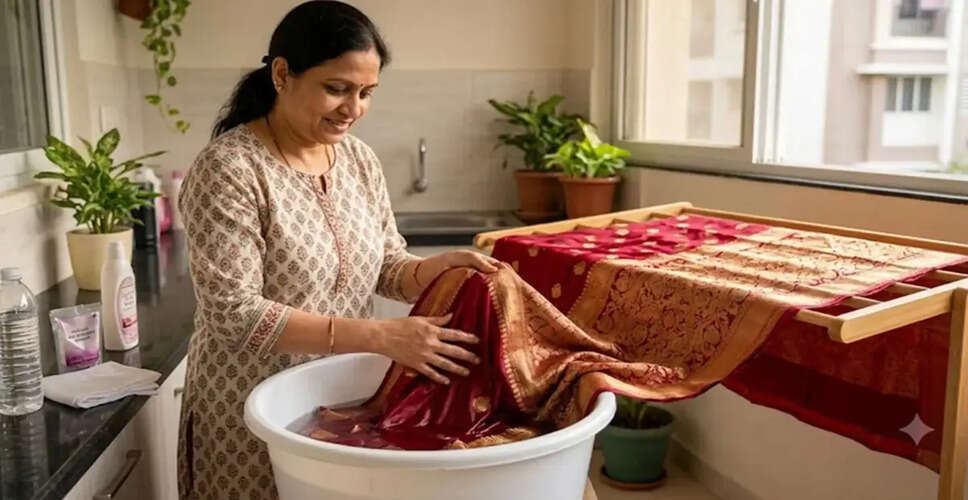

Caring for Your Sarees: A Guide
If sarees are a staple in your wardrobe, then Kanjeevaram, Banarasi, silk, and intricately embroidered varieties are likely essential pieces. However, these luxurious sarees demand careful handling, particularly when it comes to cleaning and maintenance.
While dry cleaning is often the go-to method for these sarees, there are effective ways to clean them at home without resorting to professional services.
**Opt for a Gentle Detergent**
Standard laundry detergents can be too abrasive for delicate silk or Banarasi sarees. Instead, consider using a gentle detergent. Baby shampoo or a fabric cleaner specifically made for delicate materials works well. Mix it with water, soak the saree for about five minutes, and rinse thoroughly with plain water.
**Using Lemon for Stain Removal**
Stains on your sarees can be treated with simple home remedies. A few drops of lemon juice can be effective. After letting it sit for 2–3 minutes, rinse the area with cold water. Always conduct a patch test on a hidden part of the saree first to ensure there’s no color bleeding or adverse reaction.
**Gentle Handling is Key**
When washing Kanjeevaram, Banarasi, silk, or heavily embroidered sarees, avoid scrubbing or using brushes. If you encounter a stain, gently rub it without compromising the fabric's integrity. Also, refrain from wringing out the saree to remove excess water.
**Proper Drying Techniques**
To prolong the life of your fabrics, it’s crucial to wash and dry them correctly. Heavy silk or Banarasi sarees should never be exposed to direct sunlight, as this can lead to color fading. When hanging them to dry, turn them inside out and ensure the drying area is flat and open to prevent stretching of the threads.
By following these tips, you can maintain the beauty and quality of your sarees for years to come.
PC Social Media