
Essential Guidelines for a Sacred Kanwar Yatra

Introduction to Kanwar Yatra
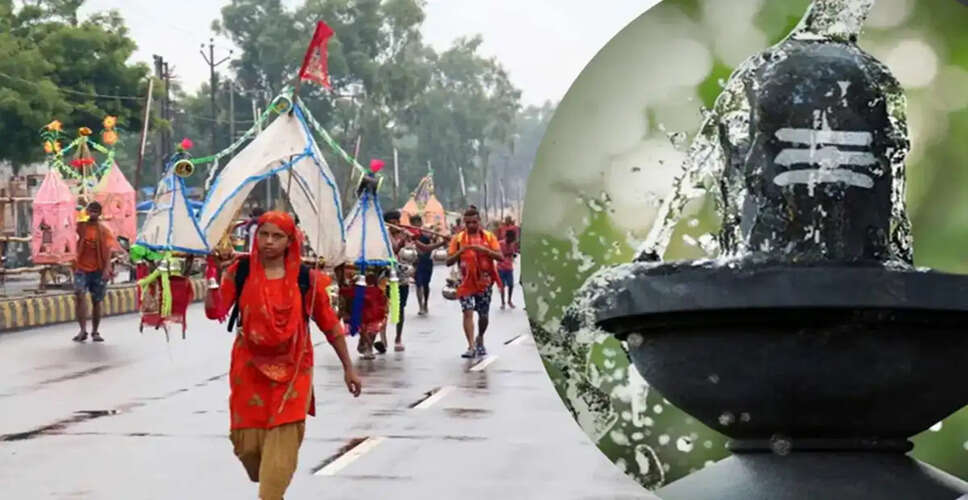
The Kanwar Yatra has officially begun. During this pilgrimage, Kanwariyas (devotees) must be cautious, as any negligence can lead to the *Kanwar* becoming ritually impure (*khandit*), hindering the successful completion of their spiritual journey. To maintain ritual purity throughout the Kanwar Yatra, this report provides essential guidelines that devotees should follow before and after lifting the *Kanwar*.
Rules for Collecting and Offering Holy Water
**Guidelines for a Pure Journey**
The Kanwar Yatra is primarily a pilgrimage that emphasizes purity in actions. Each year, millions of Shiva devotees travel to Haridwar to collect *Gangajal* (sacred water from the Ganges). Upon arrival, they bathe in the river, gather the holy water, and embark on their respective journeys. However, there are crucial rules to adhere to while collecting the *Gangajal*.
Moreover, pilgrims must remain vigilant throughout their journey to keep the *Kanwar* ritually intact. Attention to dietary choices is also vital during this pilgrimage. Pandit Somprakash Shastri elaborates on the specific dietary items and considerations that should be taken into account.
Significance of Departing at an Auspicious Time
**Choosing the Right Moment**
According to Acharya Somprakash Shastri, it is essential to commence the journey during an auspicious time (*muhurat*) and maintain purity of conduct at the beginning of the month of Shravan. Pilgrims should aim to travel light and leave during a favorable astrological alignment (*lagna*). There are variations in this practice: some devotees collect holy water from Haridwar, while others may choose Gomukh, Gangotri, or even Badrinath. They plan their journey based on the distance and time needed to transport the water from their selected source. For those starting from Haridwar, the *Kanwariyas* begin their journey after a morning bath and performing their daily prayers and rituals (*Sandhya-Vandan*). They fill their *Kanwar* (carrying pole) with water, offer prayers, and focus their minds on Lord Shiva as they set off.
Dietary Considerations During the Pilgrimage
**Mindful Eating**
Pandit ji emphasizes the importance of being cautious about food choices along the route. A *Kanwariya* should refrain from consuming food offered by others. While camps may provide *Prasad* (sanctified food), it is advisable for *Kanwariyas* to eat food purchased with their own money during the pilgrimage. Additionally, having a companion can help maintain the necessary purity of conduct throughout the journey. If a *Kanwariya* needs to relieve themselves, they must take a bath before continuing to carry the holy water.
Many *Kanwariyas* tend to rush when offering the water. It is recommended to take about two and a half hours to offer the water properly to Lord Shiva, doing so with reverence rather than hastily splashing it.
Avoiding Intoxicants
**Staying Sober**
It is crucial to avoid the consumption of alcohol, tobacco, *bidis*, cigarettes, and similar substances during the pilgrimage. Some *Kanwariyas* may argue that Lord Shiva consumed *Bhang* and *Dhatura*, but it is important to remember that devotees are not Lord Shiva; they are his followers. Carrying the holy water as a sacred offering necessitates abstaining from habits like smoking or consuming *Bhang*. This practice helps devotees stay spiritually connected to Lord Shiva.
Conclusion
PC Social Media