
Disha Pandya: A Journey of Resilience and Advocacy for Dwarfism

Overcoming Challenges and Embracing Identity
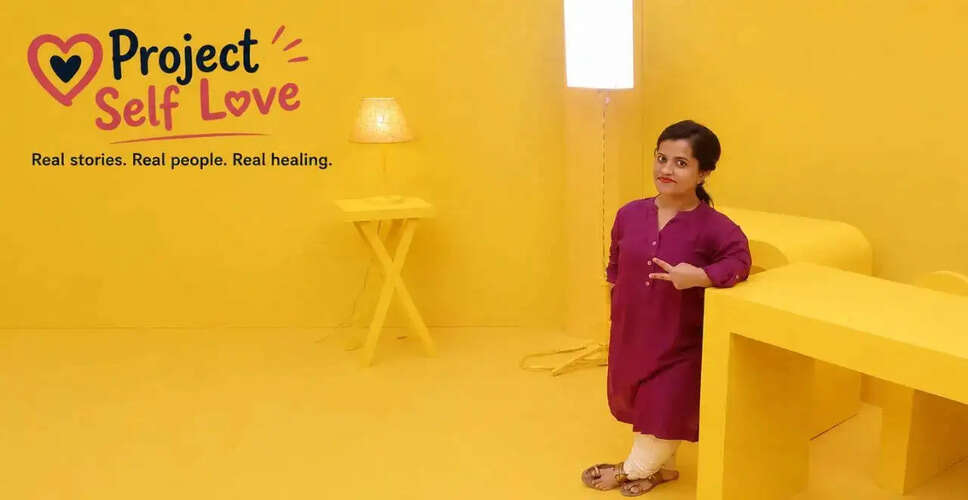
Disha Pandya recognized her uniqueness at a young age, around five or six, not due to any explanation of dwarfism, but rather through her own observations. Home was a sanctuary where she felt accepted. Now at 41, Disha is not only an accomplished para-athlete but also a graphic designer and a creative leader at a global firm, advocating for individuals with dwarfism. However, her childhood was marred by stereotypes and public mockery.
Born to parents who also have dwarfism, Disha was surrounded by understanding. Her mother was the only one with dwarfism among her nine siblings, and her father was the sole one among four. This familial background challenges the common misconception that dwarfism only occurs in families with similar traits. "Many children with dwarfism are born to average-sized parents," she explains. "My type is called achondroplasia, the most prevalent form." These distinctions were crucial for Disha as they clarified a condition often misunderstood by society.
Growing up in the 1980s and 1990s, Disha rarely encountered positive portrayals of dwarfism in media. Characters were frequently depicted as subjects of ridicule or pity. "Films like Appu Raja showcased characters with dwarfism being bullied," she recalls. "Such representations shaped public perception, leading to laughter and stares whenever I went out. It was tough as a child."
School was another hurdle. Disha had a passion for dancing and wanted to engage in cultural events, but she often found herself excluded. Sports teams and dance groups overlooked her. "There was always this notion that I couldn't do it," she reflects. This led her to doubt her abilities. Her younger brother, who also had dwarfism, faced even greater challenges. While Disha was outspoken, her brother was more reserved, and the constant teasing took a toll on him. "He would come home in tears, questioning our parents, 'Why did you give birth to us?'" This sorrow eventually morphed into anger, prompting him to confront those who mocked him. Disha witnessed the emotional strain on her brother, who was her strongest ally. Tragically, he passed away in a road accident at just 18, leaving her heartbroken.
Throughout her teenage years, Disha battled insecurities. Like many young women, she yearned for the simple joys of adolescence, such as wearing a saree or dancing at festivals, but often felt invisible. "I loved dancing, yet I never felt I belonged," she admits. Art became her refuge, allowing her to participate in creative competitions, gradually shifting the focus from her appearance to her talents.
After completing her education, Disha pursued a diploma in graphic design, believing her qualifications would lead to employment. However, she faced numerous rejections. "I would often inquire if I had made a mistake," she recalls, recounting an interview where her skills were praised, but the real reason for her rejection was their discomfort with hiring someone with a disability. Reflecting on this, Disha notes the lack of awareness about inclusion during that time. "This was around 2006 or 2007, and the concept of inclusion was foreign to many." Today, the dialogue has shifted significantly, with companies reaching out to her for diversity initiatives.
Another significant challenge arose when it came to marriage. Growing up in a traditional Gujarati household, Disha faced the complexities of arranged marriage in her 20s. Matrimonial ads often described her merely as short, and many suitors arrived without a true understanding of dwarfism. Some laughed, while others stared. After meeting several potential partners, she decided she would no longer tolerate such treatment. "I told my parents I didn't want to marry; I didn't want to be mocked anymore." Having lost her brother, she envisioned a future dedicated to caring for her parents.
In 2018, her life took a turn when she met Mark Dharmai, an international para-athlete with dwarfism, on a local train in Mumbai. He shared his achievements, and for the first time, Disha connected with someone like her outside her family. Encouraged by him, she ventured into sports. After a year of badminton training, she participated in her first national championship, returning home with three medals: gold in doubles, silver in mixed doubles, and silver in singles. At 35, she experienced a surge of confidence, a feeling she had never fully embraced before.
This journey also led her to a broader community of individuals with dwarfism across India. Together with Dharmai, she co-founded the Little People India Foundation, which has evolved from a small WhatsApp group to a network of over 400 members, including professionals from various fields. "You can find someone with dwarfism in every profession," she states. More importantly, this community fosters a sense of belonging. "When we gather, we don't feel like strangers; we feel like family." As the community expanded, so did Disha's advocacy efforts. She has delivered TEDx talks, spoken at educational institutions, and worked to dispel myths surrounding dwarfism. Her efforts have garnered recognition, including an invitation to Rashtrapati Bhavan in 2025 for her contributions to the disability community. "I felt honored, but every accolade belongs to the community," she emphasizes.
Disha married in 2020 and welcomed twins in 2022. During her pregnancy, a doctor questioned her decision to have children, given that both she and her husband have dwarfism. "I told her that disability doesn't come with a guarantee card; no one knows what life will bring," she asserts. Now, her twins are three and a half years old and have begun to notice differences. Recently, her son remarked that she was shorter than some of his friends' mothers. Disha chose to address this openly, using stories her children enjoy to explain. "I tell them that every animal is unique; a giraffe is tall, a rabbit is small, and an elephant is big. Each has its place in the world." She acknowledges that challenging conversations lie ahead, knowing her children may face similar questions. However, she is determined to instill in them that differences are not to be feared but embraced as part of who they are.