
Cyrus the Great: A Symbol of Iranian Identity Amidst Political Tension
The Legacy of Cyrus the Great
Each year, as October draws to a close, a remarkable event unfolds in the Fars province of southern Iran. Access to a humble limestone tomb, located on a desolate plain, is restricted by concrete barriers. Security personnel are stationed at checkpoints, and military exercises are announced nearby. Despite these measures, crowds gather, parking wherever possible and walking the remaining distance to pay their respects at the mausoleum of Cyrus the Great, the founder of the Achaemenid Empire, who passed away in 530 BCE. This situation highlights the ongoing tension between the Iranian populace and their government regarding the legacy of a ruler who lived over 2,500 years ago.
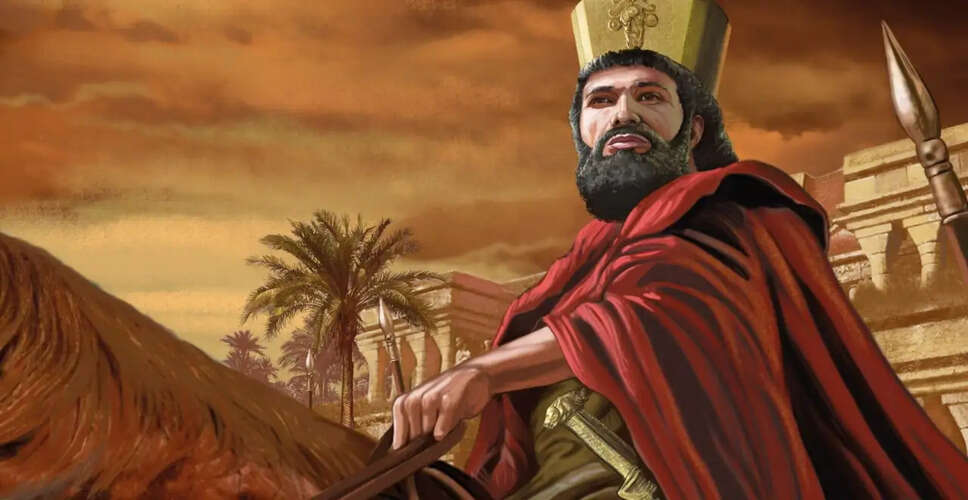
Cyrus established the first Persian Empire in 550 BCE after defeating the Median king Astyages. Within a decade, he expanded his realm from Anatolia to Central Asia, incorporating the Lydian and Babylonian kingdoms. His governance was notable not just for military conquests but for his approach to ruling the territories he acquired. Upon entering Babylon in 539 BCE, he did not impose Persian religious practices or dismantle local traditions. Instead, he presented himself as the chosen servant of Marduk, Babylon's supreme deity, and permitted displaced populations to return to their homelands. The Hebrew Bible refers to him as the liberator of the Jews from Babylonian captivity, granting him a unique reverence among non-Jewish rulers in that text. Greek historian Xenophon regarded him as the epitome of enlightened kingship, and centuries later, Thomas Jefferson kept a copy of Xenophon's writings about Cyrus on his desk.
At the heart of Cyrus's narrative lies a small baked clay cylinder, unearthed in Babylon's ruins in 1879 by Hormuzd Rassam, an Assyrian archaeologist affiliated with the British Museum, where it remains today. This cylinder, inscribed in Babylonian cuneiform, chronicles Cyrus's conquests and his policies promoting religious tolerance and the return of exiled communities. Whether it represents the first human rights charter, as claimed by Iranian nationalists and the United Nations, or merely serves as royal propaganda, as some historians suggest, is a matter of ongoing debate. Irving Finkel, a senior Assyriologist at the British Museum, has stated that human rights as we understand them did not exist in ancient times. Yale's Agnete Lassen argues that the cylinder's significance in a modern context reflects current political agendas rather than ancient intentions. The reality likely lies somewhere in between.
What is indisputable is the intensity with which this cylinder has been politicized. The last Shah of Iran, Mohammad Reza Pahlavi, had it flown to Tehran for the 1971 celebrations marking 2,500 years of Persian monarchy, showcasing it as evidence that Iran was the birthplace of human rights long before Western civilization embraced the concept. Following the 1979 revolution, Ayatollah Khomeini dismissed such pre-Islamic heritage as a sign of decadence and tyranny. The Islamic Republic has grappled with its relationship to Cyrus, as he embodies a glorious, cosmopolitan identity that predates the Revolution and does not require it for validation.
The ramifications of this discomfort have been evident for over a decade. In October 2016, tens of thousands of Iranians convened at Pasargadae to celebrate Cyrus Day, an unofficial observance linked to the anniversary of his entry into Babylon. What began as a cultural pilgrimage escalated into the largest anti-government demonstration since the unrest following the 2009 elections. Slogans such as "Iran is our country, Cyrus is our father" transformed into calls against clerical rule, resulting in hundreds of arrests. The following year, the government closed access to the site, citing construction work, and since then, fences, concrete barriers, and security forces have appeared every October. In 2024, authorities even allowed foreign tourists to visit Pasargadae freely while restricting access for Iranian citizens.
The youth-led protests of 2019 and 2022, particularly the Women, Life, Freedom movement, revived the image of Cyrus in public discourse. Symbols from the Achaemenid era appeared on protest signs, and Persepolis, the ceremonial capital of the empire, became the most frequented heritage site in Iran during the Nowruz holiday of 2023, despite ongoing political unrest. State media reported a 30% increase in domestic tourism to ancient sites projected by 2025, revealing the regime's struggle to suppress this cultural resurgence.
When Iranians invoke the memory of Cyrus, they are not yearning for monarchy or nostalgia. Instead, they seek an identity rooted in a rich, pre-Islamic past that predates the political divisions defining contemporary Iran. The tomb of Cyrus in Fars province has emerged as a powerful symbol of this longing. While governments can restrict access, they cannot erase the collective memory of their people.