
Cornelia Sorabji: Trailblazer for Women in Law
A Unique Case for a Royal Elephant
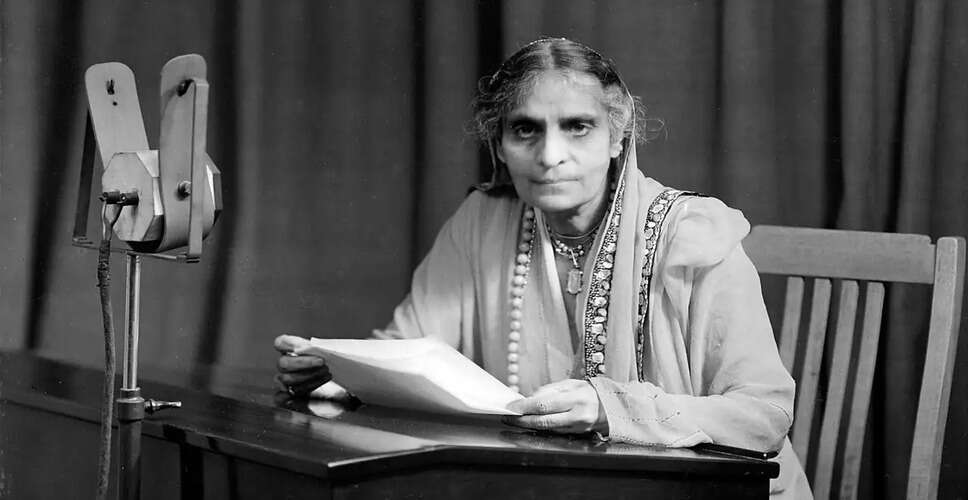
In a remarkable tale, a royal elephant found himself without his beloved banana grove and required legal representation. A woman adorned in a silk sari was transported by palanquin through the jungles of Gujarat, where tigers roamed, to present his case before a maharaja lounging on a swing. Before she could utter a word, the king declared her the winner, simply because his dog took a liking to her. This woman was Cornelia Sorabji, recognized as India's first female lawyer. This whimsical story aptly encapsulates her career, which was marked by extraordinary talent and absurd challenges.
The Girl Who Excelled Yet Faced Denial
The Girl Who Topped Everything and Was Denied Everything
Cornelia Sorabji was born on November 15, 1866, in Nashik, into a Parsi Christian family that valued education highly. Her father, Reverend Sorabji Karsedji, was a missionary who fought to enroll his daughter at Deccan College, a feat that was nearly impossible for women at the time. He succeeded, and Cornelia repaid his efforts by completing a five-year English literature course in just one year, achieving the highest marks in the Bombay Presidency. However, when it came time for her to receive a scholarship to study in Britain, she was denied solely because of her gender.
Undeterred, she took on a teaching role as a Professor of English at a men's college in Gujarat, becoming the only female faculty member. Meanwhile, supporters in England raised funds for her journey to Oxford, including notable figures like Florence Nightingale and Sir William Wedderburn. In 1889, Cornelia Sorabji made history as the first Indian woman to enroll at any British university, attending Somerville College.
A Degree Denied Despite Proficiency
Oxford Gave Her an Exam but Not a Degree
In 1892, thanks to a special decree advocated by Benjamin Jowett, the Master of Balliol, Sorabji was allowed to take the Bachelor of Civil Law examination, which she passed. However, Oxford refused to grant her the degree, as women were not permitted to receive degrees until 1920. Despite demonstrating her capabilities, she was essentially told that her competence was irrelevant.
Upon returning to India in 1894, Sorabji dedicated herself to advocating for purdahnashin women—high-caste Hindu and Muslim women who lived in seclusion and were prohibited from interacting with men outside their families. These women were unable to appear in court, manage their estates, and were often exploited by relatives and priests. Sorabji aimed to represent them, but the Indian legal system barred women from practicing law.
She successfully passed the LLB examination at Bombay University and the Pleader's Examination at the Allahabad High Court, yet she still lacked recognition as a barrister. It wasn't until 1923, nearly thirty years after her initial qualifications, that the law changed to allow women to practice law. She was finally called to the bar at Lincoln's Inn in London that same year.
A Legacy of Advocacy
Twenty Years Behind the Veil
In 1904, the Bengal government appointed her as Lady Assistant to the Court of Wards, a role she maintained for nearly twenty years. She traveled throughout northern India, entering zenanas where no male lawyer could venture, providing counsel to women on property disputes, inheritance, and custody issues. Sorabji championed their right to education and the opportunity to train as nurses. In recognition of her public service, she received the Kaiser-i-Hind Gold Medal in 1909. A bronze bust was unveiled in her honor at Lincoln's Inn in London in 2012, and Somerville College established a scholarship in her name in 2016.
However, Sorabji's legacy is not without its complexities. She supported the British Raj, opposed Gandhi's independence movement, and believed that political reform should not occur without universal education. History has often judged her harshly for these views. Nevertheless, her achievements are undeniable: she passed every examination, advocated for women who were otherwise unrepresented, and did so in a system that took decades to acknowledge her as a lawyer. Ultimately, Cornelia Sorabji did not need the law's approval to be a lawyer; she simply was one.