
Celebrating Pitru Paksha: Traditional Sattvic Dishes for Ancestors

Understanding Pitru Paksha
Pitru Paksha is a significant time for honoring and remembering one's forebears. According to Hindu traditions, during this sixteen-day period, it is believed that ancestors return to visit their families in various forms. As a result, rituals such as *Tarpan* and *Shraddha* are conducted, featuring food offerings that consist of various *Sattvic* (pure and wholesome) dishes.
Traditional Sattvic Dishes for Offerings
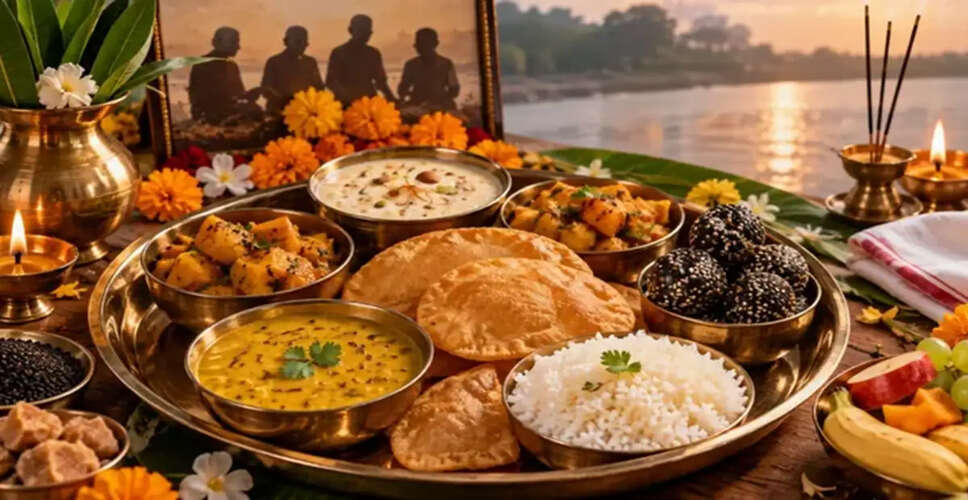
Here’s a glimpse of the *Sattvic* dishes commonly included in the ceremonial meal (*Thali*) presented to the ancestors:
**Kheer (Sweet Rice/Makhana Pudding)**
*Kheer*, made from either fox nuts (*makhana*) or rice, is a vital sweet dish in the offerings (*Bhog*) for ancestors. It is prepared with cow's milk and sweetened using rock sugar (*mishri*) or regular sugar.
**Pooris (Deep-fried Flatbreads)**
Freshly fried *pooris* made from wheat flour are essential for the *Shraddha* ritual. The dough is prepared by mixing shortening (*moyan*) and a pinch of salt before kneading it into a firm consistency, followed by deep-frying in hot oil.
**Pumpkin Vegetable Dish (*Kaddu ki Sabzi*)**
According to tradition, vegetables that grow on vines are offered to ancestors, making a pumpkin dish particularly significant. It is prepared in a *Sattvic* style, avoiding garlic and onion.
**Colocasia Dish (*Arbi ki Sabzi*)**
In various regions, it is customary to include root vegetables—those that grow underground—during *Shraddha*. A dish made from colocasia (*arbi*) is thus part of the meal, quickly prepared by tempering with asafoetida (*hing*), carom seeds (*ajwain*), and fenugreek seeds (*methi dana*).
**Simple Split Chickpea Lentils (*Chana Dal*)**
A basic lentil dish is included in the *Sattvic* meal. Begin by boiling the split chickpeas (*chana dal*), then temper with *desi ghee*, asafoetida (*hing*), and cumin seeds (*jeera*), ensuring no onion or garlic is added.
Black Sesame and Jaggery Laddoos
Rituals honoring ancestors are considered incomplete without black sesame seeds, making their inclusion in the offering platter essential. Roast one cup of black sesame seeds in a pan, prepare a syrup with water and jaggery, and add cardamom powder. Mix the roasted sesame seeds into the syrup and shape into laddoos.
Additionally, include plain-cooked rice and seasonal fruits in the offering. With these preparations, the special platter for the ancestors is complete.
PC Social Media