
Celebrating Navratri: A Guide to Colors and Traditions for 2026

Understanding Navratri and Its Significance
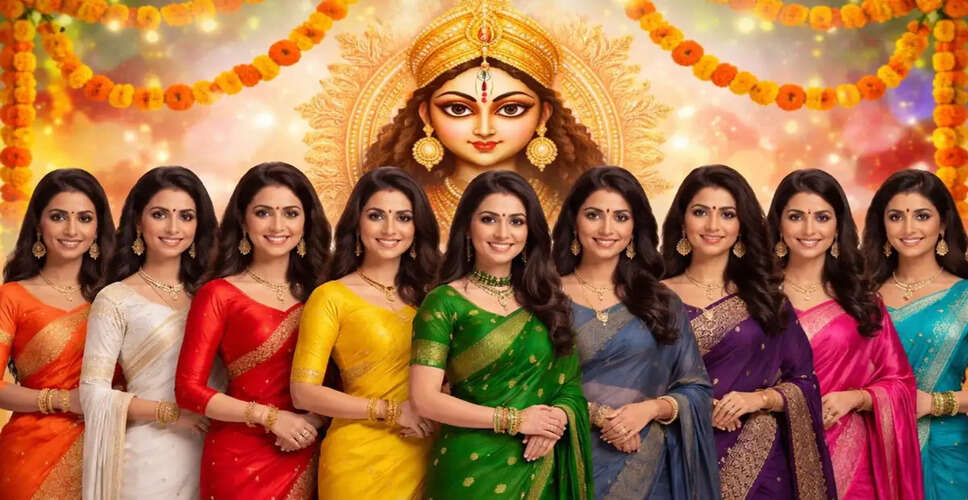
Navratri Colors: The nine days of Navratri are revered as a sacred period dedicated to the worship of the Goddess. Each day honors a different form of *Aadishakti* (the Primal Energy), and every Goddess is associated with a specific color. Wearing these colors during worship is believed to attract blessings and good fortune.
The Importance of Colors During Navratri
Colors play a vital role during Navratri, especially in regions like Gujarat and Maharashtra, where devotees wear the designated color of the day in their clothing and decorations as part of their worship rituals.
As Navratri approaches, many wonder, "What color should I wear today?" Knowing the color for each day, along with its associated emotions and qualities, can enhance your festive experience.
Navratri 2026 Color Calendar
In 2026, *Shardiya Navratri* will commence on Sunday, October 11, concluding on October 19. Below is the detailed color calendar for each day, along with traditional beliefs and style tips for incorporating these colors into your festive attire.
Day-by-Day Color Guide for Navratri 2026
October 11 – Orange for Day One
Orange symbolizes energy and positivity, making it the perfect choice for the first day. Consider wearing an orange saree, *kurti*, or *dupatta* to embrace the festive spirit.
October 12 – White for Day Two
On this day, Goddess Brahmacharini is honored. White represents purity and peace. Pair a white saree or kurta with light red or golden accessories for a beautiful look.
October 13 – Red for Day Three
Worshipping Goddess Chandraghanta on this day calls for red attire, symbolizing power and love. A red saree or *lehenga* is a great choice.
October 14 – Royal Blue for Day Four
On the fourth day, Goddess Kushmanda is celebrated. Royal blue is associated with peace and prosperity. A royal blue saree or *kurta* paired with silver jewelry can elevate your festive look.
October 15 – Yellow for Day Five
Wearing yellow on *Panchami* honors Goddess Skandamata, symbolizing happiness and warmth. A yellow outfit can brighten your festive celebrations.
October 16 – Green for Day Six
On the sixth day, Goddess Katyayani is worshipped. Green signifies growth and new beginnings. A green saree or *kurti* with golden accessories can create a stunning traditional appearance.
October 17 – Grey for Mahasaptami
Goddess Kalaratri is honored on this day. Grey symbolizes balance and practicality. A grey saree or suit with silver jewelry can be an elegant choice.
October 18 – Purple for Durga Ashtami
On this day, Goddess Mahagauri is worshipped. Purple represents grandeur and elegance. A purple saree or *lehenga* with a golden border can enhance your festive attire.
October 19 – Peacock Green for Mahanavami
On the final day, Goddess Siddhidatri is celebrated. Wearing peacock green, a blend of blue and green, is considered auspicious. A peacock green saree or *kurta* can be a splendid choice for this day.
Conclusion
Embracing the colors of Navratri not only enhances your festive spirit but also connects you to the rich traditions of worship. Incorporate these colors into your attire to celebrate the divine energy of the Goddess.