
Celebrating Guru Purnima 2026: A Day of Reverence and Knowledge

Guru Purnima 2026: A Day of Celebration
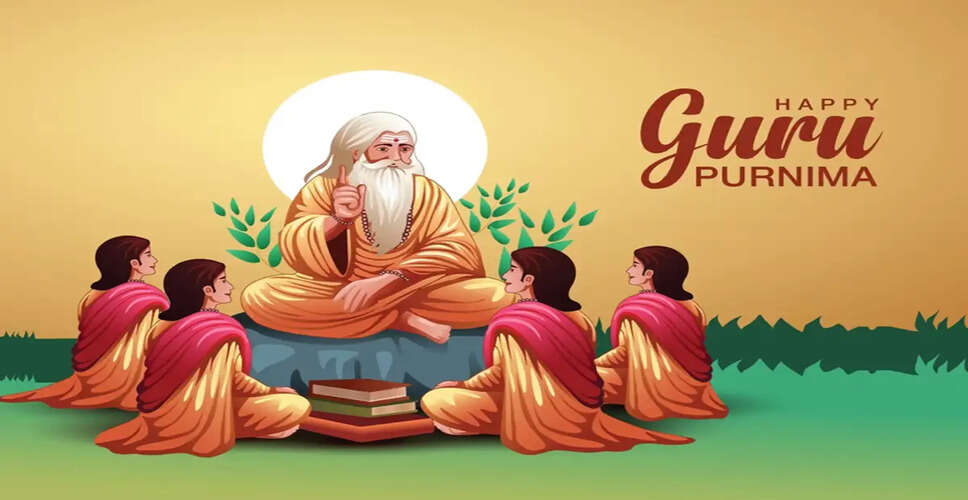
Guru Purnima 2026 Today: Celebrated on the full moon day of Ashadha during the bright fortnight, Guru Purnima holds immense significance in the Sanatan tradition. This festival is being observed with great fervor across the nation today. It serves as a moment to show respect, gratitude, and reverence towards one's Guru. According to tradition, this day marks the birth of Maharshi Vedavyasa, who contributed significantly to humanity by organizing the four Vedas, writing the Mahabharata, and compiling the 18 Puranas. He is honored as 'Adi-Guru' (the original teacher), and 'Vyasa Puja' is performed in his honor. Let's delve into the importance of Guru Purnima and the reasons for its celebration...
The Religious Importance of Guru Purnima
Religious Significance of Guru Purnima
In Indian culture, the Guru is revered even more than God. The Guru is the divine entity that removes ignorance and illuminates the path with knowledge. The Upanishads and Guru tradition describe the Guru as deserving of worship, similar to the Trinity—Brahma, Vishnu, and Mahesh. The well-known 'Guru Mantra'—*Gurur Brahma, Gurur Vishnu, Gurur Devo Maheshwarah*—highlights the esteemed position of the Guru. It is believed that without a Guru's guidance, achieving spiritual wisdom and *Moksha* (liberation) is challenging. From a spiritual viewpoint, Guru Purnima is a day for self-reflection, purification, and knowledge acquisition. This occasion is not just about honoring teachers; it is also a chance to express gratitude to all those who have guided us in life.
Reasons Behind the Celebration of Guru Purnima
Why is Guru Purnima Celebrated?
According to ancient legends, the esteemed sage Maharshi Krishna-Dwaipayana Vyasa, also known as Vedavyasa, was born on the full moon day of Ashadha. He is the distinguished author of the Mahabharata, the Shrimad Bhagavata, and the 18 Puranas. Maharshi Vedavyasa is honored as the 'Adi-Guru' for introducing the Vedas and Puranas to humanity. Thus, the full moon day of Ashadha is recognized as both Guru Purnima and Vyasa Purnima.
Lord Shiva: The Original Guru
Lord Shiva as the *Adi-Guru* (Primal Guru)
Guru Purnima is also linked to Mahadev, the supreme deity. Lord Shiva is regarded as the first Guru, or *Adi-Guru*. Ancient texts state that on this sacred day, Lord Shiva imparted universal knowledge—including Yoga and Tantra—to the *Saptarishis* (the seven great sages) who were engaged in deep penance. By taking on the role of a Guru, Shiva enlightened his disciples, freeing them from ignorance and motivating them to contribute to society's welfare.
Rituals for Honoring the Guru
Rituals for Worshipping the Guru
On Guru Purnima, it is customary to bathe early and wear clean attire. Set up a portrait or the *Charan-Paduka* (symbolic footwear) of your Guru or Maharshi Vedavyasa at your worship space. Light a lamp and offer sandalwood paste, *Akshat* (unbroken rice), flowers, fruits, and *Naivedya* (sacred food). Recite the Guru Mantra or the *'Gurur Brahma Gurur Vishnu...'* shloka; if your Guru is present, seek their blessings by touching their feet. Depending on your devotion, you may also donate items like clothing, books, food grains, or *Dakshina* (a voluntary offering).
Serving the Guru on Guru Purnima
Serving the Guru on Guru Purnima
Engaging in service to the Guru, participating in *Satsang* (spiritual discourse), chanting, meditation, and charitable acts on Guru Purnima brings blessings of wisdom, discernment, and spiritual growth. This festival is regarded as the most significant and inspiring celebration of the *Guru-Shishya* (teacher-disciple) tradition in Indian culture. In Yoga, Vedanta, and various spiritual practices, Guru Purnima is seen as an exceptionally auspicious day to begin spiritual endeavors (*Sadhana*) and seek the Guru's blessings.
Social Media
PC Social Media