
5 Kitchen Ingredients to Avoid for Sensitive Skin
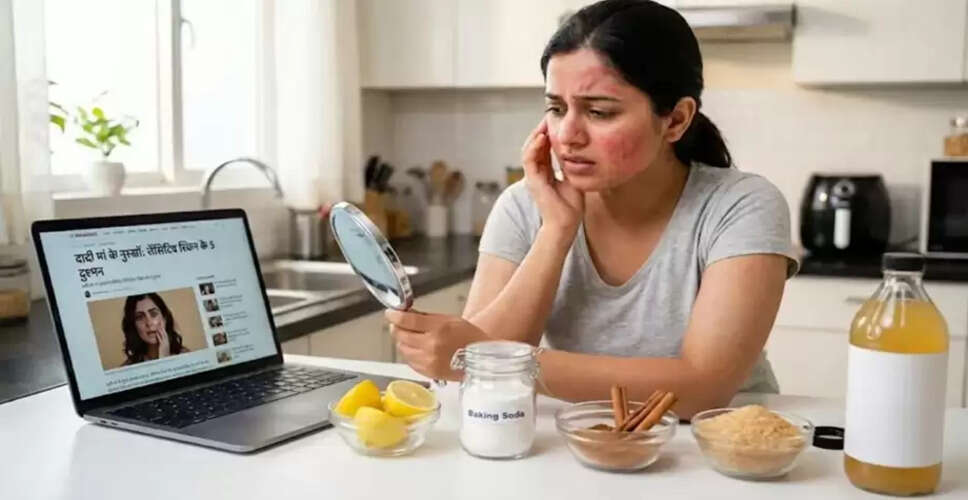
Understanding Sensitive Skin and Kitchen Ingredients
In India, many of us trust traditional "grandma's remedies" for skincare. When a blemish or pimple appears, we often head straight to our kitchens. While ingredients like gram flour, turmeric, and yogurt can be beneficial, not everything found in your kitchen is suitable for sensitive skin.
Individuals with sensitive skin have particularly fragile skin, and even minor errors can lead to redness, irritation, or breakouts. Here, we highlight five common kitchen items that can be detrimental to sensitive skin.
1. Lemon
Lemon is often touted for its ability to brighten skin and reduce blemishes, but this can be harmful for those with sensitive skin. The high citric acid content in lemons can damage the skin's outer layer, leading to severe burning, itching, and red rashes. Additionally, exposure to sunlight after applying lemon can further darken the skin.
2. Baking Soda
Baking soda is frequently promoted as a miracle treatment for the face, but it can disrupt the skin's natural pH balance. Our skin is slightly acidic, while baking soda is alkaline. Using it can strip moisture from the skin, resulting in dryness and increasing the likelihood of premature wrinkles.
3. Cinnamon
Cinnamon paste is often recommended for acne, but it can be too harsh for sensitive skin. This spice is considered "hot" and can cause a burning sensation upon application. In some cases, it may even lead to skin burns, leaving the face red for hours.
4. Sugar Scrub
While sugar is viewed as a natural exfoliant, its granules can be too coarse for sensitive skin. Rubbing sugar on the face can create tiny, invisible tears, which can invite bacteria and potentially worsen acne or lead to infections.
5. Vinegar
Apple cider vinegar is popular as a toner, but it is an acid that can severely irritate sensitive skin if used undiluted. Direct application can weaken the skin's protective barrier, making it even more sensitive.
Conclusion
While home remedies can be beneficial, they are not universally suitable. If you have sensitive skin, it's best to avoid experimenting with kitchen ingredients and always conduct a patch test. Remember, protecting your skin is more important than achieving a temporary glow.
PC Social Media