
Xi Jinping's Upcoming Visit to North Korea: Strengthening Ties Amid Nuclear Standoff
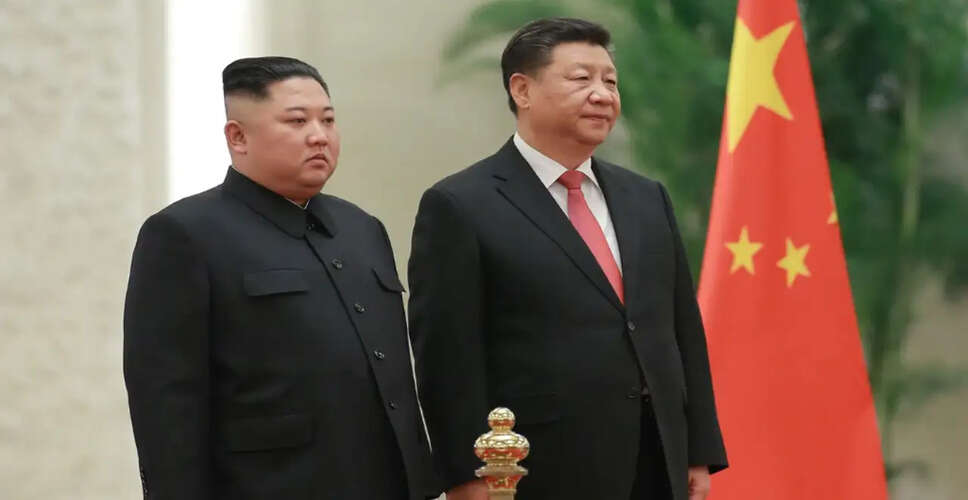

Xi Jinping's Significant Visit to North Korea
Chinese President Xi Jinping is preparing for a notable visit to North Korea on Monday, marking his first trip to Pyongyang in almost seven years. This visit comes as Beijing aims to reinforce its influence over its longstanding ally, particularly as Kim Jong Un strengthens relations with Russia. The meeting, which will be the first between the two leaders since Kim's attendance at a World War II commemoration in Beijing last year, occurs against a backdrop of North Korea's firm stance on its nuclear weapons program, which it deems "non-negotiable." Just prior to Xi's arrival, Kim Yo Jong, Kim's sister, emphasized that North Korea's nuclear status is a "line of no retreat," indicating that discussions on denuclearization are off the table, despite the leaders' intentions to bolster their strategic partnership. In a statement released by the Korean Central News Agency (KCNA), she reiterated that the nuclear weapons program is non-negotiable, dismissing international denuclearization efforts. "The DPRK's status as a nuclear weapons state is the line of no retreat, and it is a stark reality whether anyone recognizes it or not," she stated.
The upcoming Kim-Xi meeting may address the revival of Chinese tourism to North Korea and the potential opening of a bridge over the Yalu River, which has remained unused since its completion. Additionally, discussions could revolve around collaborative economic development initiatives in border areas shared by North Korea, China, and Russia.
Kim Jong-un's Objectives
Experts suggest that Kim Jong-un is eager to strengthen ties with China to further escape isolation, positioning Pyongyang as part of a united front against the United States in what is perceived as a "new Cold War." This shift follows years of prioritizing relations with Russia, including sending troops and munitions to support Moscow's actions in Ukraine. While North Korea has received vital support from Russia, including military technologies and aid, Kim is in need of increased economic assistance from China to fulfill his commitment to enhancing the living standards of his people. Koh Yu-hwan, a former president of Seoul's Institute of National Unification, noted, "North Korea pledges to maintain a self-reliant economic system and focus on advancing its nuclear capabilities, but in reality, it's nearly impossible to raise living standards by mobilizing internal resources alone." It remains uncertain whether Kim will leverage his enhanced diplomatic position to re-engage with Washington, especially after talks with former US President Donald Trump collapsed in 2019 over sanctions disagreements.
Xi Jinping's Goals
For China, this visit represents an opportunity to win back North Korea by potentially offering economic incentives and food aid. This marks Xi's first overseas trip in 2026, following meetings with both Trump and Russian President Vladimir Putin. In April, China's Foreign Minister Wang Yi visited Pyongyang and met with Kim, with observers noting the absence of the term "denuclearization" in the statements from that visit, a significant departure from China's usual stance advocating for denuclearization on the Korean Peninsula. This raises questions about whether Beijing has effectively accepted North Korea as a nuclear state, which aligns with its broader strategy against the US. In return, China may seek enhanced access to the Tumen River estuary, which forms part of the border between the two nations, as well as navigational rights in the waters off the eastern coast of the Korean Peninsula.
(With inputs from various sources)