
Xi Jinping and Donald Trump Discuss US-China Relations Amid Rising Tensions
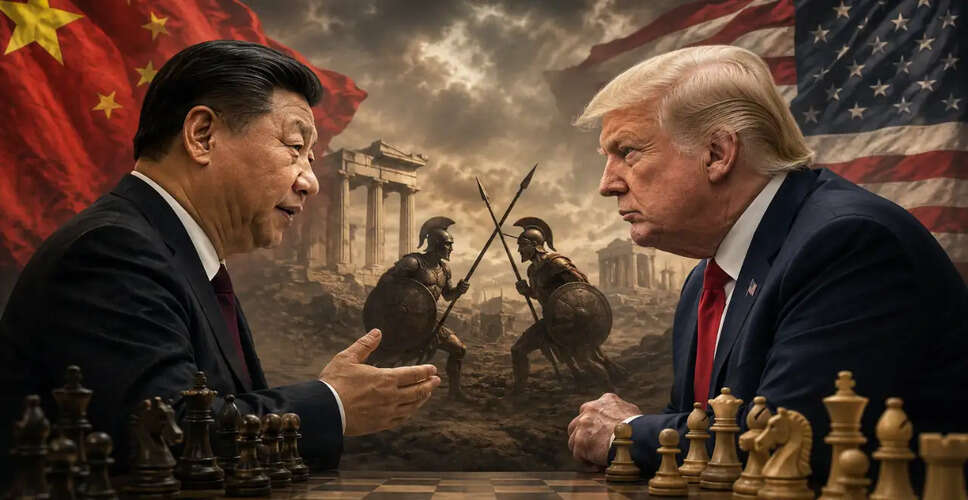

High-Stakes Meeting in Beijing
During a crucial meeting in Beijing, Chinese President Xi Jinping referenced the concept of the “Thucydides Trap” while engaging with US President Donald Trump. This term highlights the potential dangers stemming from the escalating rivalry between the two leading global powers, emphasizing the need for collaboration rather than conflict. This meeting marked Trump's second trip to China and his first in nearly a decade, occurring against a backdrop of heightened geopolitical tensions, trade disagreements, and technological competition between the two nations.
In his opening remarks, Xi characterized the future of US-China relations as a pivotal issue of our time. He questioned whether the two nations could rise above the Thucydides Trap and establish a new standard for relations among major powers, urging cooperation to tackle global challenges and enhance stability worldwide.
Understanding the ‘Thucydides Trap’
What Is The ‘Thucydides Trap’?
The term “Thucydides Trap” has gained traction in discussions about US-China relations, especially under Xi's leadership. It refers to a precarious scenario where an established power feels threatened by the swift ascent of another, often leading to conflict or war. This concept was popularized by political scientist Graham Allison, who analyzed the tensions between the two nations, drawing from the historical context provided by Thucydides, who documented the Peloponnesian War.
Thucydides noted that the fear of Athens' rise instigated inevitable conflict with Sparta. This analogy has been increasingly applied to modern power dynamics, particularly regarding China's emergence against the backdrop of American supremacy.
In recent times, Chinese officials have frequently referenced this term, arguing that the US should not perceive China's growth as a threat. Xi has consistently advocated for stable relations and collaboration, urging Trump to embrace coexistence rather than fear China's rise. He reiterated that cooperation benefits both nations, while conflict leads to mutual suffering.
Significance of Xi’s Statements
Why Xi’s Remarks Matter
Xi's comments come at a critical juncture, as relations between Beijing and Washington are strained over various issues, including Taiwan, trade tariffs, and military competition in the Indo-Pacific region. Analysts suggest that the US-China relationship increasingly mirrors the great-power rivalry described by the Thucydides Trap theory, raising concerns about potential miscalculations that could disrupt global economic and security stability.
Trump's visit to Beijing carries significant symbolism. His previous trip in 2017 was characterized by strong diplomacy, but relations soured in the following years due to tariff disputes and growing distrust. During the recent meeting, Trump adopted a notably optimistic tone towards Xi and China, expressing confidence in the future of US-China relations and praising Xi's leadership.
Trump remarked, “The relationship between China and the USA is going to be better than ever before... We're going to have a fantastic future together,” and described the summit as potentially historic, stating, “Those who say this is maybe the biggest summit ever can never remember anything like it.”