
Wildfire in Japan's Iwate Prefecture Expands, Evacuations Ordered
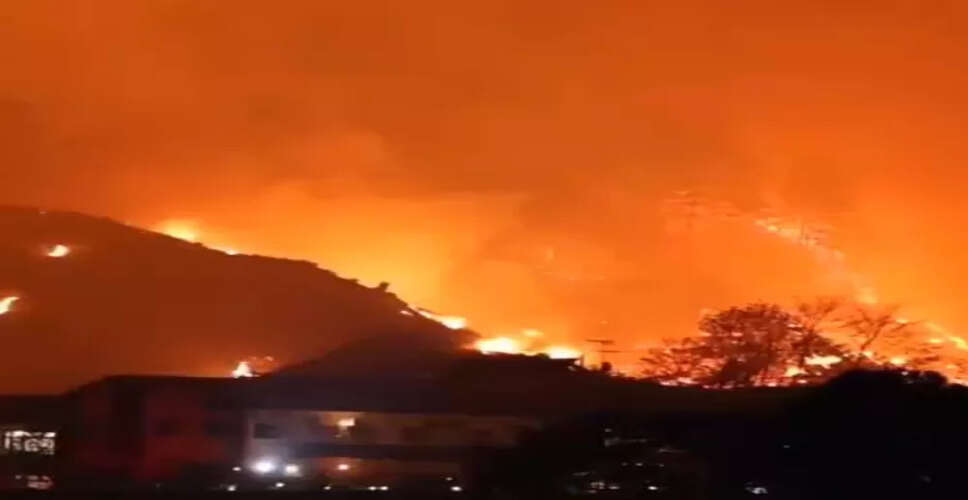

Severe Wildfire in Iwate Prefecture
A screen grab image of the accident site (source: X)
Tokyo, April 24: A wildfire in the Iwate Prefecture of northeastern Japan is currently not under control, with the affected area growing to nearly 1,200 hectares as of 6 a.m. local time on Friday, according to local news reports.
The fire ignited on Wednesday in a mountainous region of Otsuchi Town and has resulted in the destruction of eight structures, including homes, as reported by Kyodo News.
In response, Otsuchi has issued evacuation orders affecting approximately 2,600 residents, which is about a quarter of the town's total population.
Helicopters from the Iwate prefectural government and the Self-Defence Forces have been deployed for water-dropping efforts, alongside personnel from various fire departments throughout the prefecture.
Additionally, firefighting support has been requested from neighboring prefectures including Hokkaido, Yamagata, Fukushima, Tochigi, and Niigata.
Moreover, following a 7.7-magnitude earthquake that occurred off northeastern Japan on Monday, the Japan Meteorological Agency has issued a special weeklong earthquake alert for 182 municipalities across seven prefectures, including Iwate. Authorities have cautioned that vigilance is necessary for earthquake risks while managing the wildfire.
Japan experiences distinct dry seasons, particularly in late winter and early spring, during which vegetation becomes dry and highly flammable, heightening the risk of rapid fire spread. Strong seasonal winds associated with changing weather patterns can also exacerbate the situation once a fire ignites.
Another contributing factor is Japan's geography and vegetation. A significant portion of the country is forested, with many areas dominated by coniferous trees such as cedar and pine, which contain resins that ignite easily. The dense forest cover allows fires to spread quickly through continuous vegetation.
Human activities are also a major factor in wildfire occurrences. Many wildfires in Japan result from accidental ignitions, including unattended campfires, agricultural burning, discarded cigarettes, or sparks from equipment. Given that a large segment of Japan's population resides near forested areas, the interface between urban settlements and nature increases the likelihood of fire outbreaks.