
Why Is Pakistan Hesitant to Support Saudi Arabia Amid Rising Tensions?
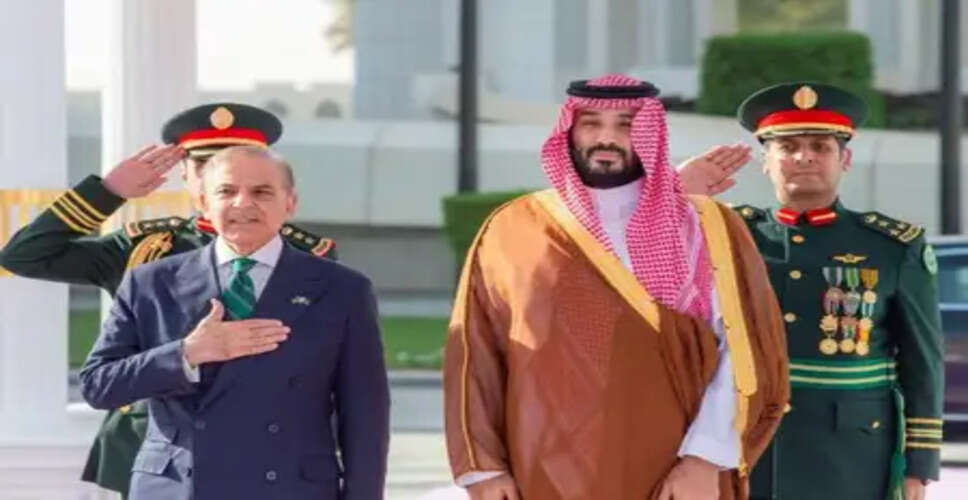
Pakistan's Strategic Dilemma in Supporting Saudi Arabia
Madrid: In light of recent Iranian attacks on Saudi Arabia amid escalating tensions in West Asia, Pakistan has notably refrained from sending substantial military support to Riyadh, despite their defense agreement.
This lack of action has sparked discussions among diplomats regarding the effectiveness of the defense pact between Islamabad and Riyadh, as well as the conditions necessary for its activation.
Fatima El Hashimi, a Moroccan journalist, noted in a Spanish media outlet that Pakistan and Saudi Arabia recently formalized a Strategic Mutual Defence Agreement, which aims to bolster their military collaboration. The agreement states that if either nation faces an external threat, the other will provide military assistance with available resources. However, the ongoing crisis has revealed the complexities involved in these strategic commitments.
El Hashimi pointed out that Pakistan's Army Chief, Asim Munir, communicated directly with Saudi Crown Prince Mohammed bin Salman, indicating that Pakistan is currently unable to deploy troops to Saudi Arabia, prioritizing security along its Afghan border.
According to diplomatic sources, Riyadh is closely monitoring developments in the border area. Some Saudi officials perceive the increased military activity as indicative of Pakistan's limited capacity or willingness to engage in external interventions amid their own security challenges.
The situation reflects a long-standing trend recognized by Pakistani foreign policy analysts, who argue that Islamabad adeptly balances its alliances to optimize economic, military, and diplomatic advantages.
From the Cold War era to the ongoing war on terror, Pakistan has maintained strategic relationships with the United States, China, and Gulf monarchies, positioning itself as a crucial partner, albeit one that acts based on its own interests.
This current scenario highlights a significant challenge within strategic defense alliances, where commitments are evaluated not merely by the wording of agreements but by the actual ability to respond during crises.
While Saudi Arabia is in search of concrete military assistance, Pakistan is leaning towards mediation and diplomatic efforts, which diverges from the original expectations of the pact.
The renewed focus of Islamabad on the Afghan border has garnered international attention. Analysts are debating whether this escalation is purely a response to security needs or if it is influenced by broader geopolitical considerations. For Saudi Arabia and other regional players, this situation raises questions about the reliability and extent of strategic alliances in an increasingly unpredictable landscape.
The report also raises the question of whether Pakistan's defense commitments to allies facing genuine threats are constrained by its military capabilities or if they are a result of a calculated political decision regarding when and with whom to engage.