
Why is Canada Targeting a Pakistani Businessman Linked to the 2008 Mumbai Attacks?
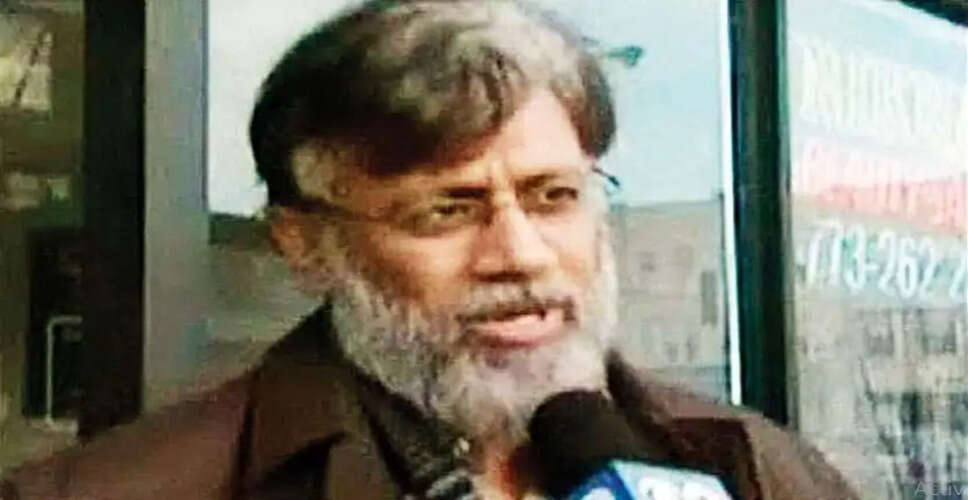
Canadian Government Moves to Revoke Citizenship of Tahawwur Rana
Toronto: In anticipation of Prime Minister Mark Carney's upcoming trip to India, the Canadian government is taking steps to revoke the citizenship of Tahawwur Rana Hussain, a businessman from Pakistan. He is alleged to have played a significant role in the 2008 Mumbai terror attacks.
At 64 years old, Rana is a Canadian citizen originally from Pakistan and has close ties to David Coleman Headley, one of the main conspirators behind the Mumbai attacks, who is a US national.
Documents acquired by Global News indicate that immigration authorities have informed Rana of their intention to revoke his Canadian citizenship, which he obtained in 2001.
Rana immigrated to Canada in 1997 and was later convicted in the United States for plotting an attack on a Danish newspaper's staff.
He is considered a key figure in the 26/11 attacks that resulted in 166 fatalities and was extradited from the US to India in April 2025. Upon arrival in New Delhi, he was immediately apprehended by the National Investigation Agency (NIA).
The Immigration, Refugees and Citizenship Canada (IRCC) stated that the revocation of Rana's citizenship was not due to terrorism charges but rather because he allegedly provided false information on his citizenship application.
When applying for citizenship in 2000, Rana claimed to have resided in Ottawa and Toronto for four years, with only a brief absence from Canada. However, an investigation by the RCMP revealed that he had spent most of that time in Chicago, where he owned multiple properties and businesses, including an immigration firm and a grocery store.
The decision to revoke his citizenship accused him of 'serious and deliberate deception' and indicated that his disregard for Canadian citizenship laws led to his initial approval.
IRCC's correspondence to Rana on May 31, 2024, highlighted that he misrepresented his residency during the citizenship application process by failing to disclose his absences from Canada.
The government has referred his case to the Federal Court, which will determine if his citizenship was obtained through 'false representation or fraud or by knowingly concealing material circumstances.'
Rana's attorney in Toronto has filed an appeal against the decision, claiming it is unjust and infringes on his rights, as reported by Global News.
A hearing regarding the revocation took place in Federal Court last week, where government lawyers sought permission to keep sensitive national security information confidential.
An immigration department representative stated that revoking citizenship for misrepresentation is crucial for upholding the integrity of Canadian citizenship.
To ensure fairness, the Federal Court has the final say in such matters, according to Mary Rose Sabater.
She emphasized that the government does not take citizenship revocation lightly, although she could not specify how many such cases have occurred, noting that a review by Global News found only three similar decisions in the last decade.