
Who is Balendra Shah? The Rapper-Turned-Politician Set to Lead Nepal
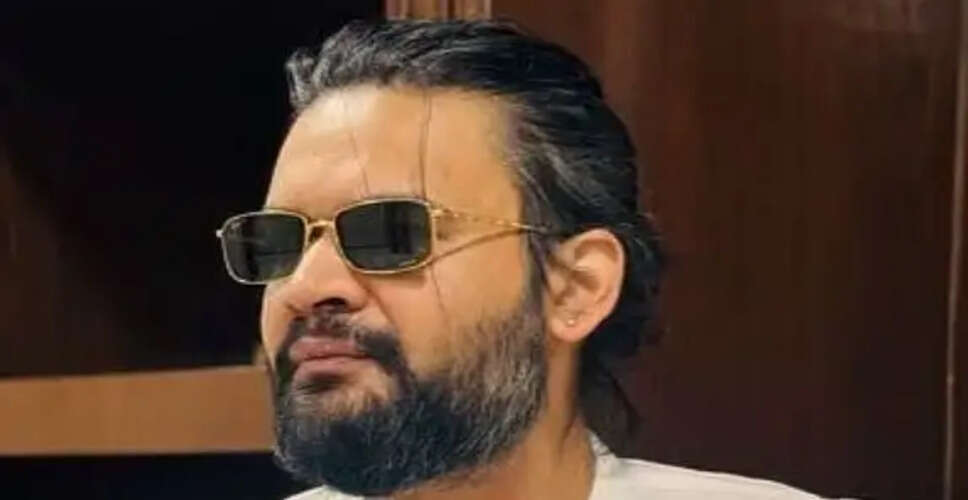
Balendra Shah's Historic Victory in Nepal's General Election
Kathmandu: Balendra Shah, popularly known as 'Balen', is poised to become the next prime minister of Nepal after his party, the Rastriya Swatantra Party (RSP), achieved a remarkable victory in the recent general elections held on March 5. The results, announced on Sunday, revealed a significant defeat for traditional political parties in this politically unstable nation.
The 35-year-old Shah, who transitioned from a rapper to a political figure, won against K P Sharma Oli, a former prime minister and leader of the Communist Party of Nepal (Unified Marxist-Leninist) (CPN-UML), by a staggering margin of approximately 50,000 votes in the Jhapa-5 constituency.
Shah garnered 68,348 votes, while Oli received only 18,734, according to the Election Commission (EC). His anticipated role as prime minister reflects a widespread public desire for change, moving away from established political entities.
The RSP, founded in 2022 by Ravi Lamichhane, has claimed victory in 100 out of the 129 declared seats, marking a significant shift in Nepal's political landscape.
Balen's election will make him the first Madhesi prime minister and the youngest leader in the history of Nepal's parliament.
The RSP's success includes winning all 10 seats in the Kathmandu district and leading in 25 other constituencies, as per the EC's data.
Voter dissatisfaction with legacy parties stemmed from issues such as corruption, nepotism, and a demand for generational change in leadership.
The Nepali Congress (NC) secured 13 seats and was leading in three, while the CPN-UML managed only seven seats with three leads. The Nepali Communist Party (NCP) won six seats and was leading in one, and the Shrama Shakti Party (SSP) was leading in three seats. The Rastriya Prajatantra Party (RPP) won one seat, with one Independent candidate also emerging victorious.
Notably, Gagan Thapa, the NC president and a prime ministerial candidate, lost in the Dhanusha-4 constituency to RSP's Amaresh Singh, who received 33,688 votes compared to Thapa's 22,831.
Several senior NC leaders, including general secretary Guru Raj Ghimire and Shekhar Koirala, also faced defeat.
The election saw a turnout of around 60%, with vote counting commencing late Thursday night. As of Saturday night, counting continued in the remaining constituencies.
India closely monitored the election, hoping for a stable government in Nepal to enhance their developmental partnership.
Prime Minister Narendra Modi congratulated the Nepali people and government for the successful election, expressing his commitment to working with the new administration for mutual progress.
Oli, who was also a prime ministerial candidate for CPN-UML, extended his best wishes to Balen for a successful five-year term, acknowledging the political instability that has seen 14 governments in 18 years.
Balen's campaign emphasized his identity as the 'son of Madhesh', with the slogan 'Ab ki bar Balendra sarkar' (This time there will be Balendra's government).
The RSP's clean sweep in the Kathmandu Valley, winning all 10 seats, can be attributed to a vigorous campaign led by Balen.
RSP chairman Lamichhane also won decisively in the Chitwan-2 constituency, marking his third consecutive victory.
Former prime minister Pushpa Kamal Dahal 'Prachanda' won in Rukum Purba district, while Gyanendra Shahi from the RPP secured a seat in Karnali province.
The election also saw 10 women candidates win, with nine from the RSP and one from the NC.
The RSP led in the proportional voting system, receiving over 1.1 million votes, followed by the Nepali Congress and CPN-UML.
Of the 275 parliamentary members, 165 are elected through direct voting, while the remaining 110 are chosen through proportional representation.
Approximately 3,400 candidates contested for the direct voting seats, with 3,135 candidates vying for the proportional seats.
The recent protests by Gen Z led to the ousting of Prime Minister Oli, who had a coalition government with the NC.
Although Balen was a popular choice for an interim government, he opted to run for a full term instead.
In January, he joined the RSP and was soon named the party's prime ministerial candidate.
Key issues raised during the election included anti-corruption, good governance, and a demand for generational change in leadership.
Political analyst Sunil Babu Pant remarked that the RSP's victory reflects the public's frustration with the old political order and their hopes for a new direction.
He emphasized that Balen's leadership must prioritize anti-corruption measures and navigate complex geopolitical challenges, ensuring Nepal's independent foreign policy.