
Who is Andy Burnham? The Rising Star Ready to Challenge Keir Starmer!
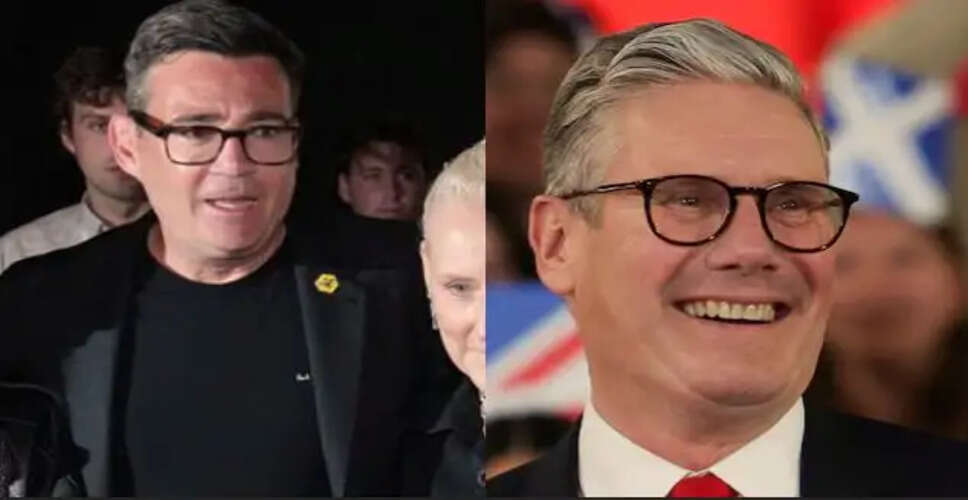

Andy Burnham's Triumph in Makerfield
London: Andy Burnham, the current mayor of Greater Manchester and a prominent Labour figure, has successfully secured a seat in Parliament through a special election, positioning himself as a formidable challenger to Prime Minister Keir Starmer.
Burnham achieved a significant victory in the Makerfield constituency, defeating Rob Kenyon from the anti-immigration party Reform UK.
This win, announced early Friday, solidifies Burnham's reputation as a leading candidate to succeed Starmer as the Labour Party leader and potentially the next Prime Minister. He garnered nearly 55% of the 45,510 votes cast, surpassing Kenyon by over 9,000 votes.
In his victory speech, Burnham expressed his ambition to lead the nation, emphasizing that he aims to be more than just one of the many Labour lawmakers in the 650-seat House of Commons.
"Everyone knows that politics isn’t functioning as it should," he remarked. "The country is not where it ought to be. Tonight could mark a pivotal moment."
Starmer congratulated Burnham on social media, stating that voters opted for Labour's message of hope and unity over division and animosity.
However, Starmer reaffirmed his commitment to remain in his position, stating, "Yes, I will run, I will stand," if a leadership contest arises. "I’ve made it clear that I won’t walk away from this."
Burnham has been at the helm of Manchester since 2017, overseeing significant revitalization efforts in the city known for its industrial heritage. He aims to replicate his successful approach, termed "Manchesterism," on a national level.
He pledged to ensure that "Makerfield becomes synonymous with the transformative change this country requires."
Burnham believes Labour has a crucial opportunity to regain the trust of voters, stating, "This result tonight offers a chance to forge a new political landscape rooted in unity and optimism, steering clear of the divisive politics seen in the United States."
Labour's Current Challenges
Despite being in power, Labour's popularity has plummeted since Starmer led the party to a significant electoral victory in July 2024.
Starmer has faced challenges in delivering promised economic improvements, restoring public services, and addressing the cost of living crisis, compounded by several missteps, including appointing Peter Mandelson, a controversial figure, as the U.K. ambassador to the United States.
Labour is losing support from liberal voters to the rising Green Party and facing competition from Reform UK, which has consistently topped national opinion polls. The party, led by Nigel Farage, has gained traction in post-industrial regions like Makerfield, located approximately 200 miles northwest of London.
Burnham's decisive win provides Labour with renewed hope to counter the Reform UK momentum. Farage expressed disappointment with the election outcome.
Following a poor performance in May's local elections, numerous Labour lawmakers have called for Starmer's resignation. While he has resisted these pressures, senior party members are advocating for a leadership change.
Wes Streeting, who resigned as health secretary in May, criticized the lack of vision within the party and indicated he would run in a leadership contest if one occurs.
Josh Simons, the Labour representative for Makerfield, stepped down to facilitate a special election, allowing Burnham to return to Parliament.
The U.K.'s parliamentary system permits governing parties to change leaders midterm, enabling the new leader to become Prime Minister without a national election. According to Labour rules, a lawmaker can challenge the leader with support from a fifth of the party's House of Commons members, which currently amounts to 81.
Burnham is expected to travel to London to be sworn in as a lawmaker on Monday and may seek a meeting with Starmer to discuss a potential transition of leadership.
Culture Secretary Lisa Nandy stated that Burnham and Starmer would need to discuss the future direction of the party in the coming days.
Labour lawmaker Louise Haigh, an ally of Burnham, suggested that Starmer should consider an orderly transition for the benefit of both the country and the Labour Party.
"Andy won’t act impulsively," she told a news outlet. "I’m optimistic that the Prime Minister and Andy can reach an agreement."
Increased Pressure on Starmer
Starmer has maintained that he intends to stay in his role, asserting that he was elected with a "mandate for change" and will continue to fulfill it.
He hinted at the possibility of offering Burnham a Cabinet position, stating, "I want him to have a significant role in government," although Burnham's allies indicated he may not be interested.
Despite Starmer's determination, he could face pressure to resign if several Cabinet members express their discontent and threaten to leave.
This could lead to a leadership contest or a smooth transition, depending on whether other potential candidates believe Burnham has a strong lead.
Rob Ford, a political science professor at the University of Manchester, noted that Burnham's return to Parliament intensifies the pressure on Starmer.
Ford remarked that Burnham's victory in Makerfield enhances his position as a valuable asset for Labour, stating, "No one else could have won that seat. I did. I bring something unique."