
What’s on the Agenda for South Korea’s Defence Minister During His US Visit?
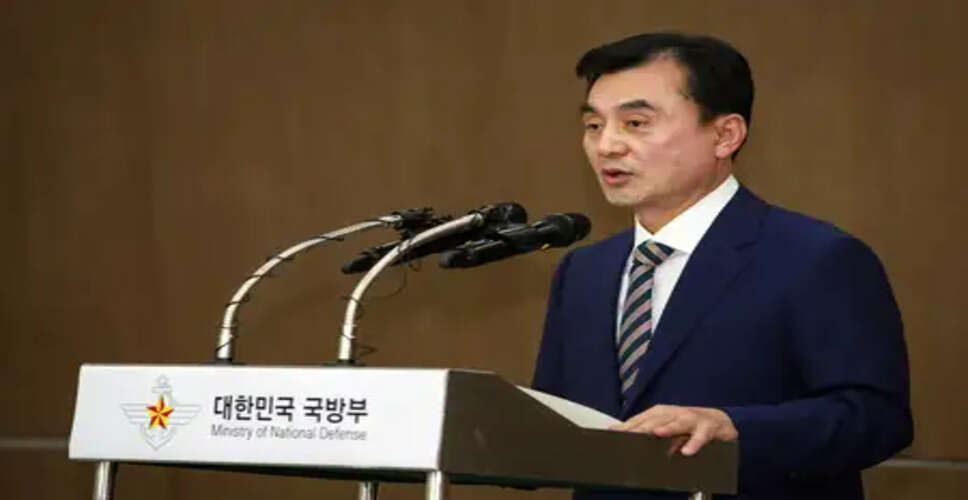

South Korean Defence Minister's Upcoming US Visit
Seoul: Ahn Gyu-back, the Defence Minister of South Korea, is set to travel to the United States next week for discussions with US Defence Secretary Pete Hegseth. This visit aims to address several critical issues, including the transfer of wartime operational control (OPCON).
Ahn's five-day trip to Washington will commence on Sunday, with a meeting scheduled for Monday (US time) with his American counterpart. This marks Ahn's inaugural visit to the US in his capacity as Defence Minister.
The backdrop of this visit is South Korea's ambition to regain wartime command of its military forces from the US, alongside efforts to develop nuclear-powered submarines with American assistance.
The administration of President Lee Jae Myung is advocating for a 'self-reliant' defence strategy, aiming to reclaim wartime OPCON before the end of its term in 2030, with a target year of 2028 for the transition, ideally while Donald Trump is still in office.
However, differing perspectives have surfaced, particularly after US Forces Korea commander Gen. Xavier Brunson indicated to Congress last month that both nations aim to fulfill the necessary conditions for the transfer by the first quarter of 2029. This timeline suggests that the OPCON transfer may not be finalized even after Trump's presidency concludes on January 20, 2029.
During his discussions with Hegseth, Ahn is expected to emphasize the importance of advancing this transition.
Operational control of South Korean forces was initially handed over to the US-led United Nations Command during the Korean War from 1950 to 1953. While South Korea regained peacetime OPCON in 1994, wartime command remains under US control.
The transfer of OPCON is also a significant topic for the upcoming high-level defence dialogue scheduled in Washington next week, following the ministerial discussions.
Additionally, the agenda will likely include South Korea's initiative to develop nuclear-powered submarines, a project that has seen limited progress since Trump approved it during his summit with President Lee last October.
The two nations may also explore ways for South Korea to assist US efforts in reopening the Strait of Hormuz, a crucial shipping route currently affected by the US-Iran conflict.
The US has proposed forming an international coalition to ensure free navigation in this vital waterway, termed the 'Maritime Freedom Construct.'
Moreover, discussions may touch on US restrictions regarding intelligence-sharing with Seoul concerning North Korea, particularly after a South Korean minister revealed information about the North's uranium enrichment facility in Kusong, which the US believes was based on shared intelligence.
While in Washington, Ahn plans to meet with acting US Secretary of the Navy Hung Cao, along with key members of the US Senate Armed Services Committee and the Senate Select Committee on Intelligence.