
What’s Next in the Escalating Conflict Between Iran and Israel?
Intensifying Strikes Amid Diplomatic Uncertainty
Dubai: A missile struck a central street in Tel Aviv as Iran continued its missile attacks on Israel and Gulf nations on Tuesday. This escalation occurred despite President Donald Trump's announcement that the U.S. was engaging in discussions with Iran to resolve the ongoing conflict.
Trump also postponed a deadline for Iran to reopen the Strait of Hormuz for shipping, which had been threatened with airstrikes, leading to a temporary dip in oil prices and a boost in stock markets.
This delay provided a brief respite after the U.S. and Iran exchanged threats over the weekend, which could have resulted in widespread power outages in Iran and the Gulf, as well as jeopardizing desalination plants crucial for water supply in arid regions.
However, Iran has disputed Trump's claims regarding the negotiations, with Iranian parliament Speaker Mohammad Bagher Qalibaf asserting on social media that no talks had taken place, labeling the reports as misinformation aimed at manipulating financial markets.
Israeli Prime Minister Benjamin Netanyahu stated that Israel would persist in its military actions against Iran and Lebanon, even as the U.S. considers a ceasefire, declaring, "There’s more to come."
Iran's Foreign Minister Abbas Araghchi has been discussing the conflict with officials from Azerbaijan, Egypt, Oman, Pakistan, Russia, South Korea, Turkey, and Turkmenistan this week, according to his office.
Iran's Missile Strikes and Israeli Retaliation
Iran launched multiple missile attacks on Israel early Tuesday, with reports indicating impacts in northern regions of the country.
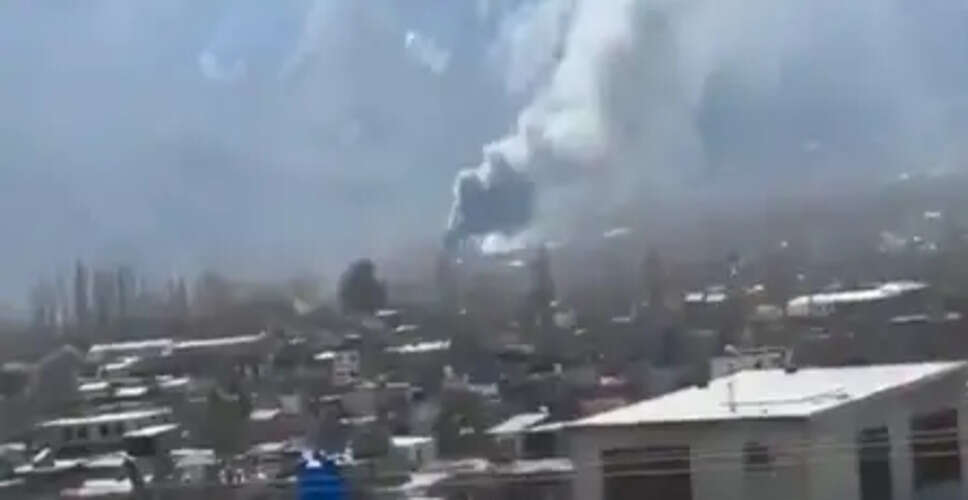
In Tel Aviv, a missile weighing 100 kilograms breached Israeli defenses, hitting a central street, shattering windows in nearby buildings, and sending plumes of smoke into the air.
"We witnessed destruction, smoke, and chaos," reported rescue worker Yoel Moshe shortly after the missile hit. Four individuals sustained minor injuries, he noted.
Emerging from a shelter, Amir Hasid expressed his fears, stating, "It feels like you’re a sitting duck, waiting for the missiles to hit you or someone next to you."
Earlier, Israel targeted southern suburbs of Beirut, claiming to strike infrastructure linked to the Iran-backed Hezbollah group.
A strike on a residential building southeast of Beirut resulted in at least two fatalities, according to the Lebanese Health Ministry.
In Kuwait, air defense debris damaged power lines, causing partial outages for several hours. Missile alert sirens were activated in Bahrain, while Saudi Arabia's Defense Ministry reported the destruction of 19 Iranian drones aimed at its oil-rich Eastern Province.
Oil prices briefly dipped below $100 per barrel following Trump's announcement of negotiations, but quickly rebounded to $104 per barrel in morning trading, reflecting a more than 40% increase since the onset of the conflict on February 28.
Iran Questions Trump's Intentions
Initially, Trump set a deadline for Iran to reopen the Strait of Hormuz by late Monday, threatening military action against its power plants. However, he extended this deadline by five days.
While Iran has permitted a limited number of vessels to pass through the strait, it has vowed to continue targeting ships associated with the U.S., Israel, or their allies.
Iranian leaders remain skeptical of Washington's intentions, recalling previous negotiations that were disrupted by military actions against its nuclear facilities, which ignited a 12-day conflict.
"Trump, Netanyahu, and their allies are inherently deceitful, aiming to create division," stated Esmail Kowsari, a member of Iran's parliament's national security committee, as reported by a semi-official news agency.
"We must think wisely. Their goal is to sow discord and undermine trust in officials, making people believe in actions that have not occurred," Kowsari added.
Trump's deadline extension coincided with the deployment of thousands of Marines to the region, raising speculation about a potential U.S. operation to seize Kharg Island, crucial to Iran's oil infrastructure.
The U.S. had previously bombed the island, targeting its defenses while leaving oil facilities intact.
Iran has warned that if the U.S. appears poised to land troops, it may mine the Persian Gulf, complicating any amphibious assault and threatening all shipping in the vicinity.
Analysts suggest that the delay in negotiations may align with the arrival of U.S. Marines, expected on Friday, indicating a possible military buildup under the guise of diplomacy.
While Trump has stated he does not intend to deploy ground forces in Iran, he has not completely ruled it out, and Israel has indicated its ground forces may participate in the conflict.
The Iranian death toll has reportedly exceeded 1,500, while 15 Israelis have died from Iranian strikes. Additionally, at least 13 U.S. military personnel and numerous civilians have lost their lives in the occupied West Bank and Gulf Arab states.