
What’s Next for Iran and the US? Trump’s Ultimatum and Global Reactions
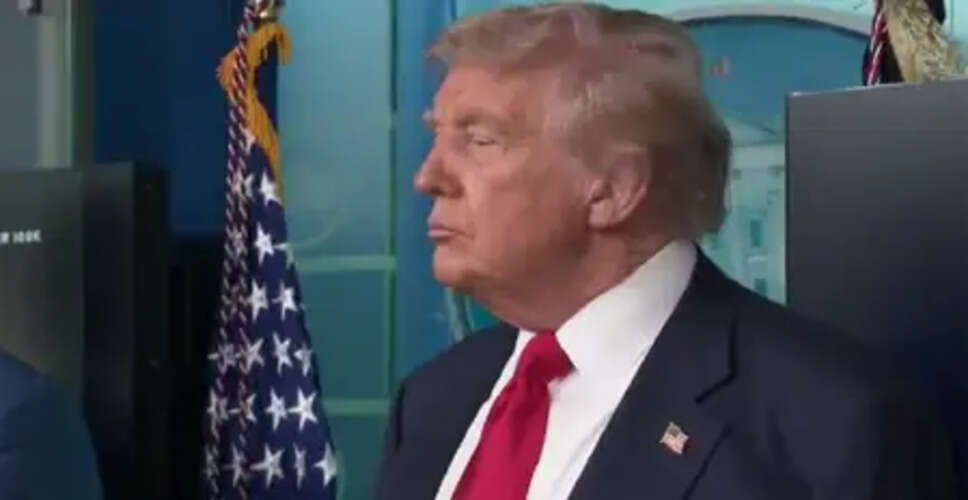

Iran Evaluates US Proposals Amid Rising Tensions
Dubai: Iran is currently assessing the latest proposals from the United States aimed at resolving the ongoing conflict, following a warning from President Donald Trump about potential military action unless an agreement is reached that allows international shipping through the vital Strait of Hormuz.
International markets reacted positively on Thursday, buoyed by hopes that the two-month-long conflict might soon conclude. This optimism came after the US military engaged an Iranian oil tanker that attempted to breach the blockade imposed on Iran's ports.
In a related development, US Secretary of State Marco Rubio addressed peace initiatives in the Middle East during a meeting at the Vatican with Pope Leo XIV, who has openly criticized the war against Iran.
On social media, Trump stated that the resumption of oil and natural gas shipments disrupted by the conflict hinges on Iran's acceptance of an unspecified agreement. He warned, "If they don’t agree, the bombing starts."
Since April 8, a fragile ceasefire has been in place between the US and Iran, although recent talks hosted by Pakistan failed to yield a resolution. The conflict began on February 28, following military strikes by the US and Israel against Iran.
Pakistan Optimistic About Peace Agreement
Pakistan anticipates a resolution soon
Tahir Andrabi, spokesperson for the Pakistani Foreign Ministry, expressed optimism on Thursday, stating, "We expect an agreement sooner rather than later. We hope the involved parties will find a peaceful and sustainable solution that contributes to regional and international peace."
However, he refrained from providing a specific timeline, emphasizing that Pakistan would keep the details of ongoing diplomatic efforts confidential.
When asked if a response from Iran was expected later that day, Andrabi declined to comment on the specifics of the communications.
Pakistani Prime Minister Shehbaz Sharif, in a televised address, confirmed that Islamabad is in "continuous contact with both Iran and the United States, day and night, to halt the conflict and extend the ceasefire."
Contradictory Messaging from the Trump Administration
Shifting narratives of the conflict
The Trump administration's communication regarding the Iran war has been inconsistent and often contradictory. This week, the president and his team presented a rapidly changing narrative concerning the US strategy to reopen the Strait of Hormuz and conclude the conflict.
Iran has effectively closed the strait, a crucial route for the transportation of oil, gas, fertilizers, and other petroleum products, while the US maintains a blockade on Iranian ports.
On Wednesday, a US fighter jet reportedly damaged the rudder of an Iranian oil tanker in the Gulf of Oman as it attempted to breach the blockade, according to a statement from US Central Command.
Iran Establishes New Agency for Strait Control
New agency for Hormuz passage
Iran has launched a new governmental body tasked with regulating transit and collecting tolls from vessels navigating the Strait of Hormuz, as reported by shipping data firm Lloyd's List Intelligence. This development has raised concerns regarding the potential infringement on the freedom of navigation essential for global trade.
The newly formed Persian Gulf Strait Authority aims to position itself as the sole authority granting passage to ships traversing the strait, formalizing an existing vetting process that allows vessels to navigate through northern waters near the Iranian coast. Iran has control over which ships can pass and imposes taxes on certain cargoes.
Experts in maritime law argue that Iran's demands for vessel vetting or taxation contravene international law, specifically the United Nations Law of the Sea treaty, which mandates that countries allow peaceful passage through their territorial waters.
Trump's Stance on Negotiations
Trump hints at possible coercion in negotiations
On Wednesday, Trump asserted that Iranian officials are eager to conclude the war. He stated, "We’re dealing with people that want to make a deal very much, and we’ll see whether or not they can make a deal that’s satisfactory to us."
By issuing threats of increased bombing, he implied that the US might compel a settlement.
An Iranian Foreign Ministry spokesperson, Esmaeil Baghaei, confirmed that Tehran is still reviewing the latest US proposals, which reportedly include a halt to Iranian uranium enrichment, lifting US sanctions, releasing frozen Iranian assets, and reopening the strait to shipping.
Saudi Arabia distances itself from US actions
A Saudi official, speaking anonymously, revealed that Trump did not consult Saudi Arabia prior to initiating a brief effort to reopen the strait. The official stated, "We informed them that we are not part of this and that they cannot use our territories and bases for this."
The official added that Saudi Arabia communicated to Iran that it would not participate in any US military actions related to Trump's attempt to reopen the strait.
Trump suspended this initiative, known as Project Freedom, just two days after its launch. Only two American-flagged merchant vessels are reported to have successfully navigated the US-guarded route, while the US military claimed to have sunk six Iranian small boats that posed a threat to civilian shipping.
Currently, hundreds of merchant vessels remain stranded in the Persian Gulf, unable to reach open waters without passing through the Strait of Hormuz. The closure of the strait has led to soaring fuel prices, disrupted the global economy, and placed significant economic strain on countries, including major powers like China.
As of Thursday, Brent crude oil prices stabilized around USD 100 per barrel as investors awaited news on the potential reopening of the strait.
In related news, French President Emmanuel Macron announced on Wednesday that France's aircraft carrier strike group is moving into the Red Sea in preparation for a possible joint French-British mission to restore maritime security in the Strait of Hormuz as soon as conditions permit.