
What’s Fueling the Ongoing Protests in Iran? A Deep Dive into the Unrest
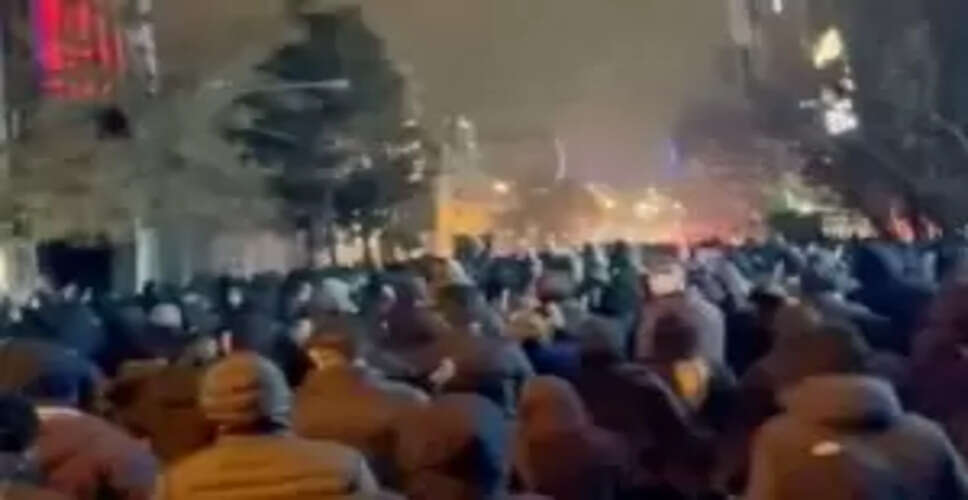
Protests Erupt Across Iran Amidst Rising Tensions
Dubai: Protests challenging the Iranian government have surged, with demonstrators filling the streets of Tehran and Mashhad as unrest continues into its third week. Reports indicate that at least 116 individuals have lost their lives amid the escalating violence, with over 2,600 people detained, according to activists.
The situation has become increasingly difficult to monitor due to internet outages and disrupted phone services in Iran. The Human Rights Activists News Agency, based in the US, has been tracking the rising death toll.
In a related development, Iran's parliamentary speaker issued a stark warning, declaring that the US military and Israel would be considered 'legitimate targets' should the US follow through on threats to strike Iran, as stated by President Trump. This declaration came amidst a charged atmosphere in the parliament, where lawmakers chanted anti-American slogans.
Concerns are growing that the information blackout could empower hard-liners within Iran's security forces to intensify their crackdown on dissent, despite Trump's assurances of support for peaceful protesters.
Trump expressed solidarity with the demonstrators, stating on social media that 'Iran is looking at FREEDOM, perhaps like never before. The USA stands ready to help!!!' Reports from major news outlets suggest that military options for a strike on Iran have been presented to Trump, although no final decision has been made.
The State Department cautioned, 'Do not play games with President Trump. When he says he’ll do something, he means it.'
Parliamentary Responses
During a live broadcast of the parliamentary session, Qalibaf, a hard-liner and former presidential candidate, praised the police and the Revolutionary Guard for their actions during the protests. He warned that the government would respond severely to those arrested during the unrest.
Qalibaf also issued direct threats towards Israel and the US military, stating that any attack on Iran would make both American military installations and Israel legitimate targets. He emphasized that Iran would not wait for a reaction but would act on perceived threats.
The seriousness of Iran's potential military response remains uncertain, especially after the damage to its air defenses during a recent conflict with Israel. Any decision regarding military action would ultimately lie with Supreme Leader Ayatollah Ali Khamenei.
The US military has stated that it is prepared to defend its interests and allies in the region.
Protests in Major Cities
Videos reportedly from Iran, possibly transmitted via Starlink satellite technology, show crowds gathering in northern Tehran's Punak neighborhood, where authorities have blocked streets. Protesters were seen waving their mobile phones and making noise with metal objects as fireworks lit up the sky.
In Mashhad, Iran's second-largest city, footage showed confrontations between protesters and security forces, with debris and burning materials obstructing roads. The significance of protests in Mashhad is heightened due to its status as home to the Imam Reza shrine, a key site in Shiite Islam.
Demonstrations were also reported in Kerman, located 800 kilometers southeast of Tehran.
In response to the protests, Iranian state television attempted to portray calm in various cities, broadcasting segments from areas that were not experiencing unrest. Notably, Tehran and Mashhad were excluded from these reports, which also featured pro-government rallies in Qom and Qazvin.
Khamenei has hinted at a forthcoming crackdown, despite warnings from the US. Iran's attorney general has declared that participants in the protests could be labeled as 'enemies of God,' a charge that carries the death penalty. This warning extends to anyone perceived to be aiding the protesters.
Future Demonstrations Anticipated
Following a nationwide internet blackout and disruption of international calls, Iran's exiled Crown Prince Reza Pahlavi has called for continued protests over the weekend. He encouraged demonstrators to display national symbols from the era before the 1979 Islamic Revolution.
The protests, which began on December 28 due to the plummeting value of the Iranian rial, have evolved into widespread calls for an end to the theocratic regime, fueled by economic hardships exacerbated by international sanctions.