
What to Expect from Trump's Upcoming Meeting with Zelensky: A New Peace Initiative?
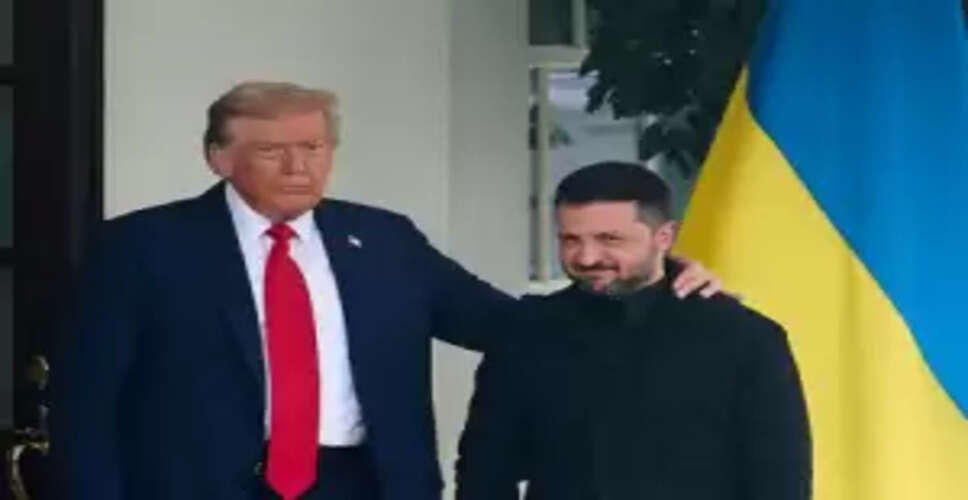
Trump and Zelensky Set for Key Meeting in Florida
Washington: President Donald Trump is scheduled to meet with Ukrainian President Volodymyr Zelensky in Palm Beach, Florida, this Sunday. This meeting comes as Ukraine advances a new 20-point peace initiative aimed at resolving the ongoing conflict with Russia, which has persisted for nearly four years.
The White House confirmed the meeting will take place on December 28. In anticipation of the discussions, Trump positioned himself as a crucial decision-maker regarding any agreements between Ukraine and Russia, expressing a cautious stance on Zelensky's latest proposals. He stated, "He doesn’t have anything until I approve it," during an interview with POLITICO.
Zelensky plans to present a revised peace framework that includes ideas for a demilitarized zone and discussions about U.S. security assurances. Speaking to the press before the meeting, he mentioned that both parties would aim to finalize as much as possible, although he could not guarantee a solid agreement would emerge.
Earlier, Zelensky expressed hope on social media, indicating that significant decisions could be made before the New Year. Trump, on his part, expressed optimism about the talks, suggesting a positive outcome with both Zelensky and Russian President Vladimir Putin, stating he anticipates speaking with Putin soon.
Trump's remarks highlight the pivotal role the U.S. is playing in the peace negotiations, despite Russia's apparent reluctance to shift its stance. He noted that Russia's economy is struggling, saying, "Their economy is in tough shape, very tough shape."
In preparation for the meeting, Zelensky has ramped up diplomatic efforts, engaging with leaders from NATO, Canada, Germany, Finland, Denmark, and Estonia to align their positions, emphasizing that Ukraine will not be an obstacle to peace.
This meeting follows Zelensky's recent discussions with U.S. special envoy Steve Witkoff and Jared Kushner, which he described as productive. He mentioned that the 20-point plan, crafted by Ukrainian and U.S. officials, is nearly complete and aims to secure future security guarantees for Ukraine while showing flexibility on longstanding demands.
Trump also confirmed that Israeli Prime Minister Benjamin Netanyahu would be visiting him this weekend, stating, "I have Zelensky, and I have Bibi coming. They’re all coming. They all come; they respect our country again." Reports suggest Netanyahu will discuss Israel's concerns regarding the escalating threat from Iran.
In the interview, Trump addressed recent U.S. airstrikes against ISIS in Nigeria, revealing he had postponed the operation for a day for symbolic reasons, stating, "They were going to do it earlier, and I said, ‘No, let’s give a Christmas present.’ They didn’t think that was coming, but we hit them hard. Every camp got decimated."
Zelensky indicated that the discussions would also cover sensitive topics such as the management of the Zaporizhzhia nuclear power plant and control over Ukraine's eastern Donbas region, which Russia claims. Ukrainian officials view the latest peace proposal as a means to demonstrate flexibility without conceding territory, including a demilitarized zone linked to a reciprocal Russian withdrawal from parts of Donetsk.
Russia has not publicly indicated a willingness to accept these terms. Kremlin spokesperson Dmitry Peskov mentioned that Yuri Ushakov, a senior foreign policy advisor to President Putin, had communicated with members of the Trump administration regarding the latest proposals, though he did not specify when this occurred.
Earlier this week, Zelensky stated that Ukraine is no longer seeking immediate NATO membership but is looking for security guarantees that would reflect NATO's Article 5. He reiterated that any changes to borders must be approved by a referendum, emphasizing that "the fate of Ukraine should be decided by the people of Ukraine."
This renewed diplomatic initiative coincides with Canada reaffirming its support for Ukraine. On December 26, Canadian Prime Minister Mark Carney spoke with Zelensky, praising his efforts to achieve "a just and lasting peace" and stressing the importance of maintaining pressure on Russia.