
What to Expect from the Upcoming NATO Summit in Ankara: Security Measures and Political Dynamics
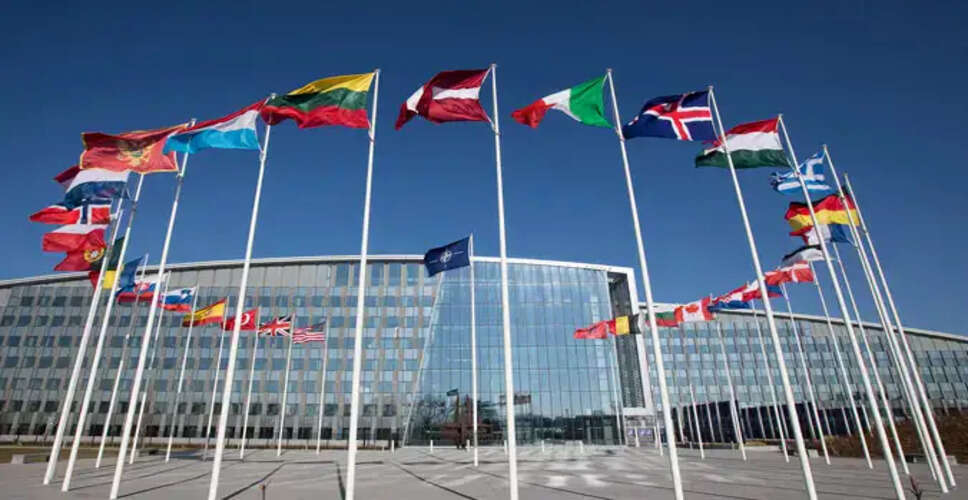

Ankara Prepares for NATO Summit
Ankara: In preparation for the NATO summit scheduled for next month, Turkiye is implementing extensive security protocols, including the deployment of tens of thousands of police officers and heightened air defense readiness. Public gatherings have been prohibited, and there are contentious restrictions on freedom of expression and assembly.
These measures aim not only to protect the summit but also to demonstrate Turkiye's strength and commitment to NATO, despite often being viewed as a nonconformist member.
On July 7-8, leaders from all 32 NATO member countries, including U.S. President Donald Trump, are anticipated to gather in the Turkish capital. Trump's previous threats to withdraw from NATO and reduce U.S. troop presence have raised concerns about the alliance's future.
Turkiye has also introduced a new VIP airport, repurposed from a former military base, specifically for the NATO leaders' arrival.
Focus on Unity Among Allies
During the Ankara summit, NATO allies are expected to discuss defense spending and the evolving role of the U.S. within the alliance.
A key topic will be fostering unity, especially after Trump criticized allies for not supporting the U.S.-led efforts in Iran and the reopening of the Strait of Hormuz.
Fatih Ceylan, a former Turkish ambassador to NATO and security analyst, noted that while significant breakthroughs are unlikely, any convergence of ideas emphasizing NATO's importance would be a positive outcome.
Turkiye's role as host appears to have facilitated Trump's attendance, as he expressed that he might not have participated if it were held elsewhere.
Turkiye's Independent Stance in NATO
Ahead of the summit, Erdogan has portrayed Turkiye as a dependable ally that consistently contributes to NATO's southeastern defense and aims to make the Ankara Summit a significant moment in NATO's history.
As a NATO member since 1952, Turkiye possesses the second-largest military in the alliance, following the United States, and has a rapidly expanding defense sector, strategically located at the crossroads of Europe, the Middle East, the Black Sea, and the Caucasus.
However, Turkiye has frequently acted autonomously, causing frustration among allies by abstaining from sanctions against Russia, engaging in disputes with Greece, and acquiring Russian missile defense systems, which led to its removal from the U.S.-led F-35 program in 2019.
Turkiye also delayed the NATO membership of Finland and Sweden until it received assurances on counter-terrorism cooperation and the lifting of arms export restrictions, and it previously blocked the appointments of NATO leaders until its demands were met.
Despite its independent approach, Turkiye has also played a mediating role, facilitating a grain shipment agreement between Ukraine and Russia in 2022 and supporting initiatives to end the conflict in Iran.
Ankara has expressed frustration with NATO allies, particularly regarding perceived lack of support during the 2016 coup attempt and arms sales restrictions following its intervention in Syria.
Murat Aslan, an analyst at the Ankara-based SETA think tank, remarked that Turkiye has learned to navigate its turbulent relations with the U.S. and Europe, noting that Europe is now also discussing strategic autonomy from the U.S.
Turkiye can assist NATO in managing U.S.-Europe tensions by demonstrating how to balance independence with alliance obligations.
Shifting Back Towards the West
Recently, Turkiye has been leaning closer to NATO, especially highlighted during the Iran conflict when NATO missile defenses intercepted missiles launched from Iran into Turkish territory. In the weeks leading up to the summit, Italy and Germany have deployed air defense systems to bolster Turkiye's response capabilities.
Hamish Kinnear, a principal analyst at Verisk Maplecroft, noted that while Turkiye aims to establish itself as an independent foreign policy actor, it is increasingly aligning with the West, primarily due to NATO's significance.
Strict Security Measures Implemented
In Ankara, strict access restrictions will be enforced on major city routes, around airports, the presidential complex hosting the summit, and hotels accommodating delegations, significantly disrupting daily life in the city of nearly 6 million residents.
As part of the summit preparations, Erdogan inaugurated a new airport, transformed from a military airfield into a modern facility with expanded runways. This new Ankara Airport is expected to remain a VIP facility post-summit and will not cater to the general public.
To enhance the city's appearance, facades of buildings along the route from the new airport have been repainted, as reported by Cumhuriyet.
Given its history of terrorist incidents, Turkiye's capital is accustomed to stringent security measures, but the current protocols for NATO appear to be unprecedented.
Authorities have prohibited protests, concerts, and graduation ceremonies during the summit, and non-essential government employees have been placed on leave to alleviate congestion.
Security forces have detained over 200 individuals suspected of connections to extremist groups, including the Islamic State. Reports indicate that several activists, lawyers, and an academic were among those apprehended.
A Turkish court has blocked access to websites critical of NATO and the summit, citing security and public order concerns, according to Engelli Web, which monitors banned websites in Turkiye. Several journalists from opposition media outlets were denied accreditation to cover the summit, prompting backlash from media rights organizations.
Namik Tan, a former Turkish ambassador and legislator from the main opposition party, remarked that the security measures in Ankara for this summit are unprecedented in their severity.
Personal trainer Selin Karakoc expressed relief that her wedding on July 5 falls just before the start of the restrictions.