
What Lies Ahead for Iran After US and Israeli Strikes? A Look at Regime Change Challenges
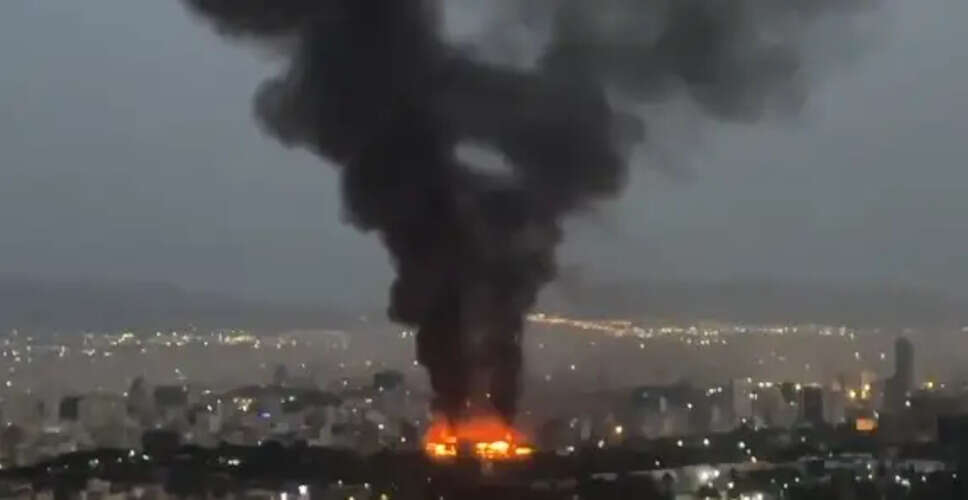
Minneapolis: A Call for Change
Minneapolis: Shortly after the initial missile strikes by the US and Israel on Iran, President Donald Trump expressed his desire for a change in the Iranian regime. In a video message, he urged the Iranian populace, stating, "Now is the time to seize control of your destiny. This is the moment for action. Do not let it pass."
At first glance, the situation appears straightforward. With Iran's unpopular government facing significant airstrikes, many of its leaders either dead or missing, and the US showing support, one might wonder how challenging it could be to topple a repressive regime.
However, history suggests it could be quite difficult.
The United States has a complex history with regime change, including events in Vietnam during the 1960s and 70s, Panama in 1989, Nicaragua in the 1980s, and the wars in Iraq and Afghanistan post-9/11, as well as recent actions in Venezuela.
Iran itself has a history of US intervention; in 1953, the CIA orchestrated a coup that removed Iran's democratically elected leader, granting near-total power to Shah Mohammad Reza Pahlavi. Yet, as seen with the Shah's overthrow during Iran's 1979 Islamic Revolution, regime change rarely unfolds as intended.
Efforts to establish US-friendly governments often begin with noble intentions, such as promoting democracy in Iraq or supporting anti-Communist leaders during the Cold War. However, these efforts frequently devolve into political chaos, leading to civil wars, disillusioned dictators, and American casualties.
This historical context has been a recurring theme in Trump's rhetoric. He stated in 2016, "We must abandon the failed policy of nation-building and regime change." In a 2025 address in Saudi Arabia, he criticized US interventions in Afghanistan and Iraq, claiming that the so-called nation-builders caused more destruction than they created.
Following the recent military actions, a pressing question arises: Does the current US administration fully comprehend the complexities of the situation?
Defining Regime Change
The state of Iran's economy is dire, and despite a harsh crackdown on protests in January that resulted in thousands of deaths and arrests, dissent remains prevalent. Many of Iran's key military allies, such as Hamas in Gaza and Hezbollah in Lebanon, have been weakened or eliminated. Furthermore, Iranian state media reported that Supreme Leader Ayatollah Ali Khamenei was killed by US and Israeli forces.
The US has not articulated a clear vision for a post-conflict Iran and may not even seek a complete overthrow of the current leadership. Similar to the situation in Venezuela, there may already be potential allies within the Iranian government ready to fill any power void.
"However, numerous developments must occur before such a scenario can materialize," remarked Jonathan Schanzer, executive director at the Foundation for Defence of Democracies, a think tank critical of the Iranian regime. "There needs to be a consensus that the regime has no future and that they must collaborate with the United States."
In a nation where leaders are deeply united by ideology and faith, achieving this consensus may prove exceedingly challenging.
"The critical question now is whether we can identify pragmatic elements within the regime who are not true believers," Schanzer added. "I doubt that the true believers will change their stance."
It remains uncertain if the political landscape in Tehran is shifting. The next leaders could be just as oppressive or perceived domestically as illegitimate puppets of the US.
"We will observe if factions within the regime begin to turn against one another," noted Phillips O'Brien, a strategic studies professor at the University of St. Andrews in Scotland. "Air power can weaken a leadership, but it cannot ensure the emergence of something new."
A Historical Perspective on US Intervention in Latin America
The US has a long-standing history of intervention in Latin America, dating back to President James Monroe's declaration of the hemisphere as part of the US sphere of influence over 200 years ago.
Initially, the Monroe Doctrine aimed to prevent European interference in the region, but by the 20th century, it justified various actions, including coups in Central America and the failed Bay of Pigs invasion of Cuba in 1961. Historians often argue that such interventions led to violence, bloodshed, and widespread human rights abuses, serving as a cautionary tale.
Direct US involvement has seldom resulted in lasting democratic stability, according to Christopher Sabatini, a senior fellow for Latin America at Chatham House. He cites Guatemala, where US intervention in the 1950s sparked a civil war lasting four decades and resulting in over 200,000 deaths.
Nicaragua's experience, where US support for Contra rebels against the Sandinista government in the 1980s fueled a devastating civil conflict, is another example of the consequences of intervention.
While overt US involvement in the region diminished after the Cold War, Trump has reignited this legacy.
Since taking office, Trump has ordered strikes against alleged drug traffickers in the Caribbean, imposed a naval blockade on Venezuelan oil exports, and engaged in electoral politics in Honduras and Argentina. Recently, US forces captured Venezuelan leader Nicolas Maduro, extraditing him to face drug and weapons charges.
What transpired in Caracas may foreshadow the White House's aspirations for Tehran. Many observers anticipated US support for Maria Corina Machado, a prominent figure in Venezuela's political resistance. Instead, Washington effectively sidelined her and has shown a willingness to collaborate with President Delcy Rodriguez, Maduro's former deputy.
"Some might argue that our actions in Venezuela do not constitute regime change," Schanzer stated, reflecting on the complexities of US involvement.