
What Led to Xu Jiayin's Guilty Plea? The Downfall of Evergrande Explained
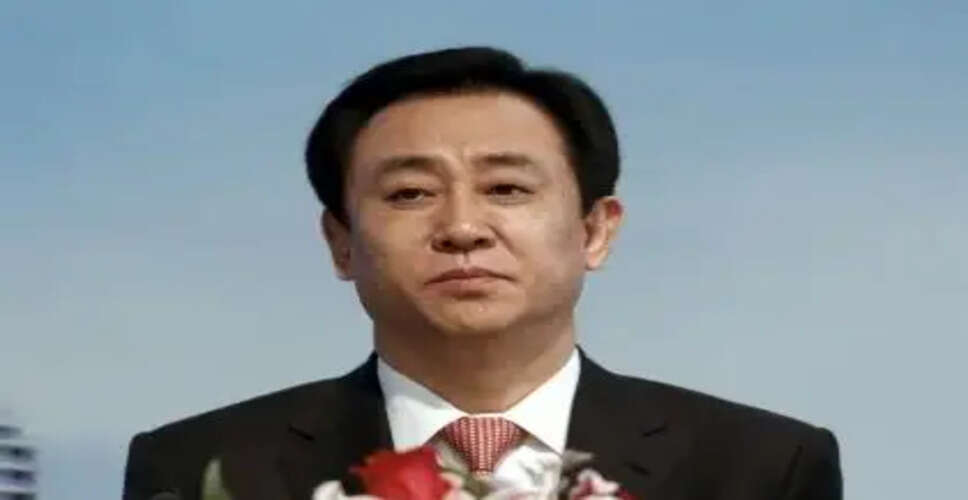

Xu Jiayin's Legal Troubles Unfold
Beijing: Xu Jiayin, the former chairman of Evergrande Group, a major player in China's real estate sector, has admitted guilt to charges related to embezzlement and bribery. His company's downfall has triggered a significant crisis within the Chinese property market.
The Shenzhen Intermediate People's Court has been conducting a public trial since Monday, where Xu acknowledged his guilt and showed remorse for his actions.
Known also as Hui Ka Yan, Xu faces serious allegations, including the illegal acquisition of public deposits, fraudulent fundraising, and unauthorized loan approvals, as stated by the court on Tuesday.
Prosecutors have also implicated Evergrande Group and its real estate division in various offenses, such as the fraudulent issuance of securities.
The court's ruling is expected to be revealed at a later date, according to reports from state-run media.
The accusations against Hui and Evergrande encompass a range of serious financial crimes, including the illegal collection of public deposits and misleading fundraising practices.
With total liabilities reaching USD 332 billion in 2023, Evergrande has earned the title of the world's most indebted property developer.
The company's collapse has severely impacted China's property sector, a crucial component of its economy, leading to government interventions to prevent a total market failure.
Following its downfall, the property crisis spread across China, and recovery has been slow.
In January 2024, a Hong Kong High Court mandated the liquidation of Evergrande.
In March 2024, the China Securities Regulatory Commission imposed a fine of 4.2 billion yuan (approximately USD 616 million) on the bankrupt developer, citing inflated sales figures prior to its collapse.
Hui himself was fined 47 million yuan (around USD 6.71 million) and permanently banned from participating in capital markets.
Hui's journey began in a small village in Gaoxian, Henan province, where he was raised by his grandmother. He studied metallurgy at the Wuhan Institute of Iron and Steel before starting his career in a local steel mill, as reported by the South China Morning Post.
In 1992, he left his job to establish Evergrande in Guangzhou, focusing on affordable housing for the masses.
By utilizing borrowed funds to build at low costs and selling properties before completion, he generated cash flow that fueled the company's rapid growth.
By 2017, Evergrande had become the largest property developer globally by sales, overtaking its competitor Vanke.
In 2020, the Chinese government introduced the 'three red lines' policy aimed at reducing developers' debt, which ultimately led to a liquidity crisis for Evergrande and others in the industry.