
What Does Trump's Military Decision Mean for US-South Korea Relations?

Concerns Over US-South Korea Military Exercises
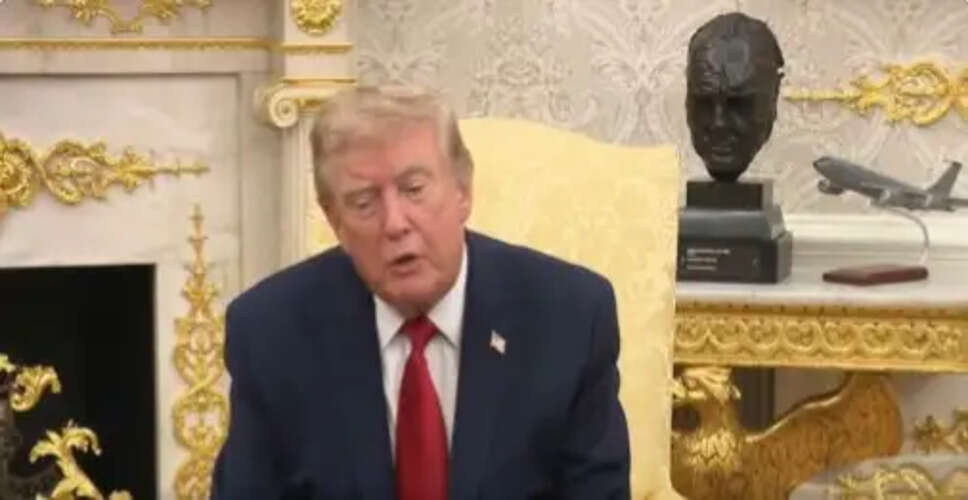
Seoul: The President of South Korea emphasized on Tuesday that a robust partnership with the United States is crucial for national security, especially as many citizens express confusion and worry over President Donald Trump's unexpected directive to significantly cut back on joint military drills.
Trump's surprising announcement came just before the commencement of the annual Ulchi Freedom Shield exercises, which are primarily aimed at enhancing readiness against potential threats from North Korea.
In his social media statement, Trump referenced his positive rapport with North Korean leader Kim Jong Un and noted South Korea's refusal to participate in the US-led campaign against Iran.
This decision appeared to be made without prior discussions with South Korea, raising alarms about the reliability of the US-South Korea alliance, which was established during the Korean War from 1950 to 1953.
Trust in the US has diminished among many South Koreans, partly due to Trump's trade policies and last year's immigration enforcement actions in Georgia that resulted in the detention of numerous South Korean workers.
An editorial in South Korea's Hankook Ilbo highlighted the troubling implications of Trump's announcement, suggesting it reflects a weakening Korea-US alliance and has heightened public anxiety.
The editorial criticized the US for seemingly treating North Korea with more respect than its ally, South Korea.
During a Cabinet meeting, President Lee Jae Myung reiterated the necessity of a strong military alliance with the US, asserting that national security would be bolstered by a solid partnership.
Lee, who advocates for a more self-sufficient defense strategy, stated that enhancing their military capabilities would increase South Korea's value as an ally.
Details regarding which aspects of the 11-day South Korea-US exercises would be scaled back remain unclear. However, military officials had previously indicated that this year's drills would mirror those of past years and incorporate lessons learned from recent conflicts, including North Korea's experiences in the Russia-Ukraine war.
North Korea's Foreign Ministry accused the US and South Korea of planning provocative military exercises and vowed to respond with enhanced deterrence.
Since the collapse of his high-profile diplomacy with Trump in 2019, Kim has avoided any negotiations with the US and South Korea.
Experts suggest that Kim is unlikely to accept Trump's overtures or return to negotiations unless he is offered significant concessions from the US. In recent years, Kim has expanded his military capabilities and strengthened ties with Russia amid its conflict with Ukraine.
Lee's presidential office expressed hope that a cordial relationship between Trump and Kim could pave the way for constructive dialogue aimed at fostering peace on the Korean Peninsula.
This stance drew criticism from conservative opposition members, who accused Lee's administration of prioritizing Kim-Trump diplomacy over pressing security issues.
Park Chung-kwon, a spokesperson for the conservative People Power Party, stated that the foundations of South Korea's security are being undermined.
A decline in US defense commitments could jeopardize South Korea's national security, as the country lacks nuclear weapons and relies on the US nuclear umbrella for protection against North Korea's nuclear threats.
Currently, approximately 28,500 US troops are stationed in South Korea.
In his social media post, Trump argued that military exercises with South Korea are not only expensive but also send an inappropriate and hostile message to North Korea, which he claimed has been non-threatening during his presidency.
Trump mentioned that he had asked Lee if South Korea would join the US in denuclearizing Iran, to which they reportedly declined.
Lee's office indicated that South Korea and the US are actively discussing practical military contributions to ensure freedom of navigation in the Strait of Hormuz.
Leif-Eric Easley, a professor at Ewha University in Seoul, remarked that Trump views alliances as investments that should yield consistent returns, suggesting a transactional approach to international relations.
South Korean leaders recognize that their relationship with the Trump administration will involve ongoing negotiations linking economic and security matters, prompting a cautious response to recent developments.
A recent survey conducted by South Korea's JoongAng Ilbo and the East Asia Institute revealed that 46.4% of South Koreans perceive the US as an untrustworthy partner, while 45.4% still consider it trustworthy.
This marks the first instance since 2017 that more South Koreans expressed distrust towards the US than trust.