
What Does the US Troop Withdrawal Mean for Iraq's Future?
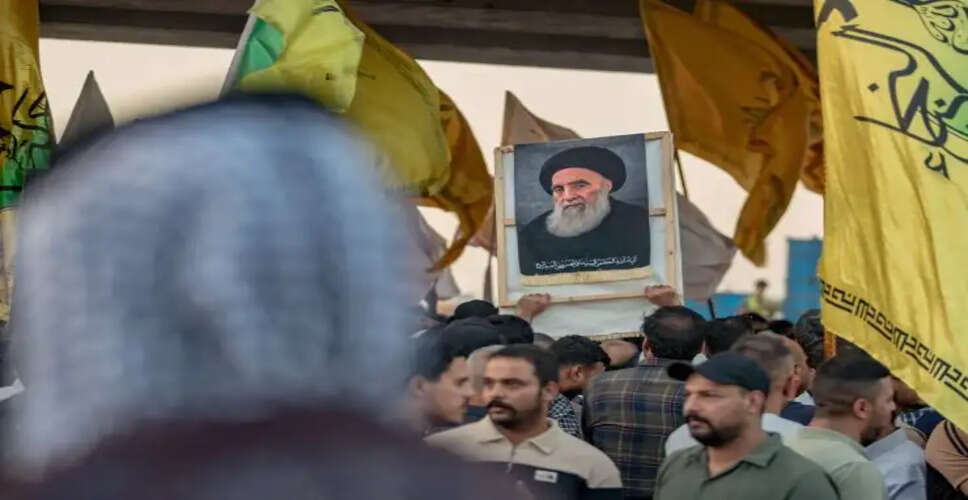

US Troops Set to Leave Iraq Amid Mixed Reactions
Baghdad: The final contingent of US military personnel is expected to exit Iraq on Wednesday, following an agreement between the Iraqi government and Washington. This development has been welcomed by groups aligned with Iran, although it raises concerns among other Iraqi factions, particularly in the Kurdish areas.
The US invasion of Iraq in 2003 aimed to remove Saddam Hussein from power. After a withdrawal in 2011, a smaller US-led coalition was invited back in 2014 to combat the Islamic State, which had taken control of significant territories in Iraq.
With the Islamic State now largely diminished to isolated sleeper cells, the two nations agreed in 2024 to conclude the military mission.
Last year, US forces vacated most bases across Iraq but retained a limited number of troops in the semi-autonomous Kurdish region, which has faced frequent attacks since the onset of the US-Israel conflict with Iran on February 28. Iran-backed militias in Iraq have also collaborated with Houthi rebels from Yemen to target Saudi Arabia.
Initially, the Iraqi government tied the September 30 deadline for US troop withdrawal to the disarmament of non-state armed groups by that date.
While some lesser-known militias have consented to disarm, more influential factions with ties to Iran have either rejected disarmament or imposed conditions that the Iraqi government is unlikely to fulfill.
Prime Minister Ali al-Zaidi has since revised the disarmament deadline, stating earlier this month that it has been extended to June 2027.
The immediate impact of the US withdrawal may not be apparent, especially since the military presence had already been reduced. However, officials in the Kurdish region have voiced concerns regarding the exit and the removal of US air defense systems.
The Peshmerga Ministry of the Kurdish regional government reported over 1,000 drone and missile attacks during the recent US-Iran tensions.
"The exit of the United States from the Kurdistan Region under these complicated regional dynamics, without a defense system in place, is alarming," the ministry stated.
Conversely, Iran-aligned factions in Iraq have celebrated the US departure.
"The removal of the occupation forces from Iraq marks the beginning of complete sovereignty," stated Abu Mujahid al-Assaf, a security official with the influential Kataib Hezbollah militia.
He cautioned Prime Minister al-Zaidi and his administration against pursuing American interests, threatening that "any government that fails to serve the people's interests will face consequences."