
What Did India's Jaishankar and Canada's Anand Discuss at the G7 Meeting?
Key Discussions at the G7 Meeting
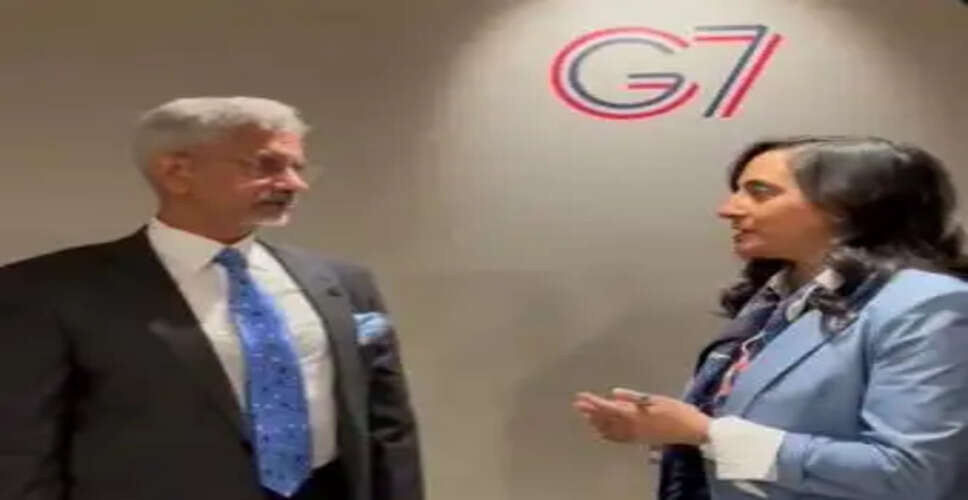
Paris: The ongoing crisis in West Asia was a significant topic during a meeting between India's External Affairs Minister S. Jaishankar and Canadian Foreign Minister Anita Anand, which took place on the sidelines of the G7 Foreign Ministers' Meeting in France.
Jaishankar arrived in Paris on Thursday to participate in the G7 discussions.
During their meeting, they revisited the partnership that was established during the Prime Ministers' visit to India earlier this year, as noted by Anand in a post on X.
The two leaders also explored various topics, including trade relations, the situation in the Middle East, and potential areas for enhanced collaboration, such as critical minerals, agriculture, and education.
At the two-day G7 meeting, Jaishankar is expected to address the West Asia crisis, particularly focusing on efforts to keep the Strait of Hormuz accessible for international shipping.
This vital shipping route, connecting the Persian Gulf to the Gulf of Oman, is responsible for approximately 20% of the world's oil and LNG (Liquefied Natural Gas) transport, and prices have surged following Iran's near-blockade of the area.
The G7 meeting, hosted at Abbaye des Vaux-de-Cernay from March 26-27, was convened by France's Minister for Europe and Foreign Affairs, Jean-Noel Barrot.
The Group of 7 (G7) consists of seven of the globe's most developed economies: Canada, France, Germany, Italy, Japan, the UK, and the US, with the European Union also participating.
In addition to India, France has extended invitations to Saudi Arabia, South Korea, and Brazil.
The G7 serves as a key platform for its members to deliberate and coordinate responses to significant economic, financial, and geopolitical challenges worldwide.