
Violent Protests Erupt in Pakistan Following Iranian Leader's Death
Clashes in Karachi and Northern Regions
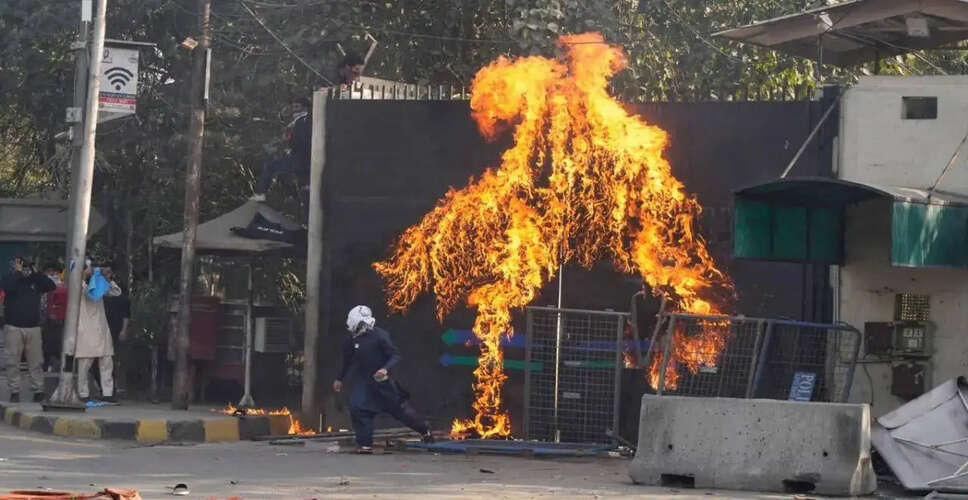
In Pakistan, violent confrontations erupted between demonstrators and security personnel in Karachi and northern regions, resulting in at least 22 fatalities and over 120 injuries. The unrest was sparked by supporters of the Iranian government attempting to breach a U.S. Consulate on Sunday, as reported by local authorities. In the northern areas, protesters targeted U.N. and government facilities.
This turmoil followed a U.S. and Israeli assault on Iran that resulted in the death of Supreme Leader Ayatollah Ali Khamenei. Medical officials in Karachi indicated that around 50 individuals sustained injuries, with several in critical condition. President Asif Ali Zardari expressed deep condolences for Khamenei's death, stating that Pakistan stands in solidarity with the Iranian people during this sorrowful time.
Dr. Summaiya Syed Tariq, a police surgeon at Karachi's main hospital, confirmed that six deceased individuals and numerous injured were admitted. The death toll later increased to 10 as four critically injured succumbed to their wounds. In the Gilgit-Baltistan region, 12 people lost their lives and over 80 were injured during clashes with police, as thousands protested against the U.S. and Israeli actions.
Local police official Asghar Ali reported that demonstrators attacked the offices of the U.N. Military Observer Group and the U.N. Development Programme (UNDP). A government spokesperson assured that all personnel from these organizations were safe, while protesters clashed with police, vandalized a local charity's offices, and set fire to police stations. Authorities have since deployed troops to restore order.
The U.S. Embassy in Pakistan stated that it is closely monitoring the ongoing protests at its consulates in Karachi and Lahore, as well as potential demonstrations at the U.S. Embassy in Islamabad and the consulate in Peshawar. U.S. citizens in Pakistan have been advised to stay informed about local news, remain vigilant, avoid large gatherings, and keep their travel registrations updated.
Attacks on U.S. Consulate in Karachi
U.S. Consulate Windows Smashed
In Karachi, the capital of Sindh province and Pakistan's largest city, senior police official Irfan Baloch reported that protesters briefly assaulted the perimeter of the U.S. Consulate before being dispersed. He denied claims that any part of the consulate was set ablaze, although protesters did set fire to a nearby police post and broke windows of the consulate prior to the arrival of security forces.
Protests continued for hours around the consulate, with many youths, some with their faces covered, throwing stones at law enforcement and vowing to reach the consulate, where hundreds of police and paramilitary officers were stationed. In response to the violence, Interior Minister Mohsin Naqvi called for calm, stating that all citizens of Pakistan share in the grief of the Iranian people following Khamenei's death. He urged peaceful protests and warned against violence.
Nationwide Protests
Protests Took Place Elsewhere in Pakistan
In Islamabad, police deployed tear gas and batons as hundreds of protesters attempted to march toward the U.S. Embassy, leading to clashes outside the diplomatic enclave. In Peshawar, authorities similarly used tear gas and batons to disperse thousands of demonstrators who were rallying against the killing of Khamenei.
Meanwhile, a peaceful rally occurred in Multan, Punjab, where participants chanted against Israel and the United States. Attendee Mamoona Sherazi expressed her determination not to submit to American and Israeli influence. In Lahore, clashes with police were reported near the U.S. Consulate, prompting the government to enhance security measures around the U.S. Embassy and consulates nationwide to prevent further violence.