
Venezuela Earthquake: Urgent Rescue Efforts Continue Amidst Rising Casualties
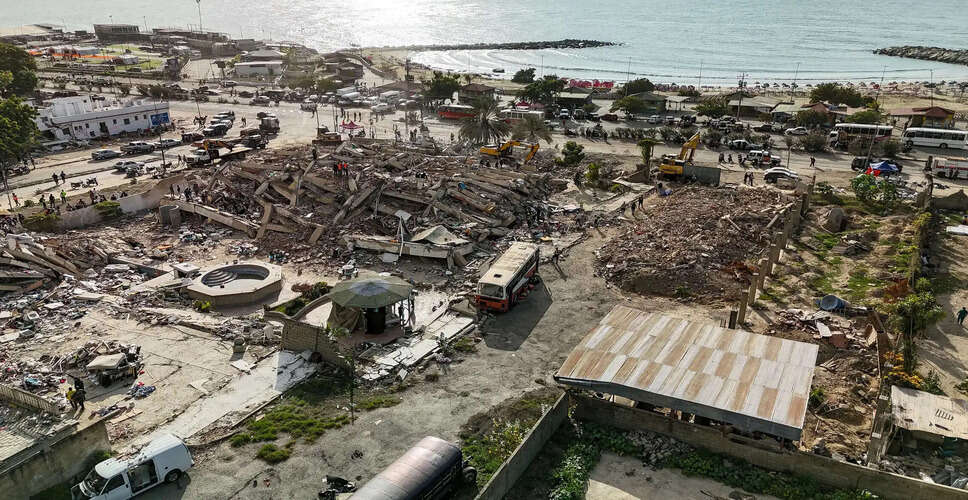

Desperate Search for Survivors in Venezuela
In Venezuela, search-and-rescue teams are working tirelessly to locate survivors five days after two significant earthquakes struck the northern coast, resulting in at least 1,450 fatalities and leaving tens of thousands unaccounted for. Authorities report that approximately 68,900 individuals are still missing following the 7.2 and 7.5 magnitude earthquakes that occurred on June 24. The U.S. Geological Survey has indicated that the final death toll may rise significantly.
Rescue operations have gained momentum with the arrival of additional international teams, including American emergency responders who reached the affected area on Sunday. More U.S. personnel are anticipated to join the efforts on Monday as teams continue to search through collapsed structures around the clock.
The humanitarian crisis has intensified political scrutiny on Acting President Delcy Rodríguez, whose administration has faced backlash regarding the speed and effectiveness of the response, especially in the severely impacted coastal state of La Guaira. Rodríguez took office earlier this year after the ousting of former president Nicolás Maduro, but her government is now contending with extensive infrastructure damage, economic difficulties, and increasing public discontent.
Venezuela's already fragile infrastructure has complicated relief efforts. Damaged hospitals, obstructed roads, and ongoing aftershocks have hindered rescue operations and delayed aid delivery to affected areas. Emergency officials have noted that the likelihood of finding survivors diminishes sharply after the first 72 hours post-earthquake due to a lack of essential resources like water, food, and medical care. Nevertheless, rescuers continue to discover isolated instances of survival.
On Monday, El Salvador's President Nayib Bukele announced the rescue of a 21-year-old man, Aaron Levi Cantillo Vargas, who was pulled alive from the rubble in La Guaira during a collaborative operation involving Venezuelan, Mexican, and Salvadoran teams. Doctors managed to provide fluids to the survivor before safely extracting him from the challenging conditions of the collapsed building.
This rescue followed another successful operation on Sunday, where a father and son were found alive beneath the debris. Rodríguez has pledged that rescue efforts will persist as long as there is hope of finding more survivors. "We always maintain hope," she stated during a televised address.
Earlier, the U.S. State Department released footage of American rescue teams saving an infant trapped under rubble, describing the rescue as a testament to resilience, stating, "Against impossible odds, hope endures." Among the survivors is Dayana Patiño, who was rescued alongside her 18-day-old son from the ruins of their home. While Patiño sustained leg injuries, her newborn suffered only minor injuries.
The United States has significantly ramped up its humanitarian response following the disaster. Washington has dispatched search-and-rescue specialists, medical supplies, and military resources to aid relief efforts. The U.S. Space Force has provided satellite imagery to help pinpoint the hardest-hit areas, while U.S. Southern Command confirmed that an additional 100 Air Force personnel arrived on Sunday to enhance logistics and aid distribution through Venezuela's primary international airport.
American military officials also reported that five C-17 Globemaster transport aircraft carrying emergency supplies are en route to Venezuela. The USS Fort Lauderdale delivered humanitarian aid to La Guaira's port on Sunday using landing craft, while Marine helicopters continue to transport relief workers and equipment into the disaster zones. An additional 130 U.S. Marines are expected to arrive to bolster sea-based aid deliveries, alongside Army helicopters and personnel from Joint Task Force-Bravo, which specializes in disaster response throughout Latin America.
Despite the increasing international assistance, officials caution that the upcoming days will be crucial as rescue teams persist in their search for signs of life beneath the rubble.