
USS Gerald R. Ford Sets Record for Longest Deployment Amidst Ongoing Crises
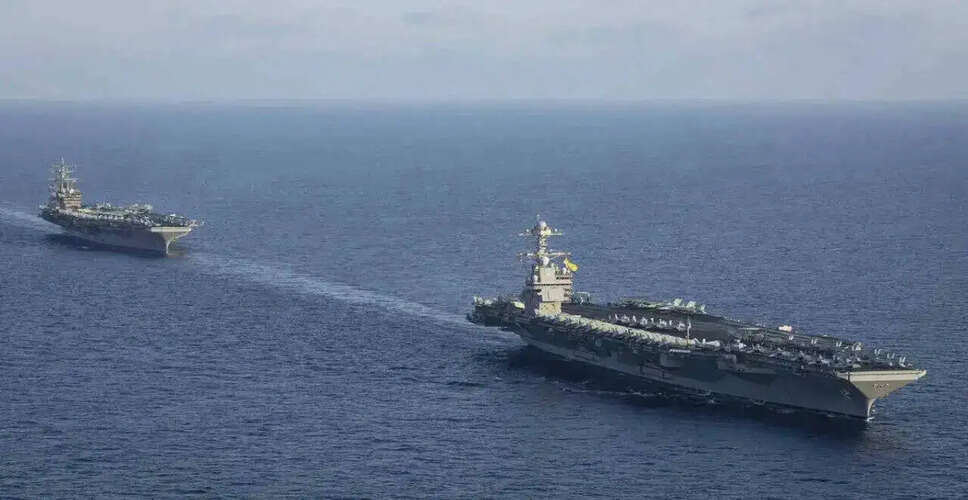

USS Gerald R. Ford's Historic Deployment
The USS Gerald R. Ford, recognized as the most advanced aircraft carrier in the U.S. Navy, is poised to achieve an unprecedented milestone. It is on track to set the record for the longest deployment of an aircraft carrier since the Vietnam War, as reported by the U.S. Naval Institute. This $13 billion vessel, which accommodates around 4,500 sailors and numerous tactical aircraft, has been deployed since its departure from Virginia last June, with the military extending its mission twice. What began as a routine Atlantic deployment has evolved into a challenging mission, influenced by various crises that have kept the carrier operational for nearly a year.
Crisis Response Across Regions
The deployment of the Ford resembles a checklist for crisis management rather than a standard military schedule. Initially set to navigate the Mediterranean and Norway, the ship was redirected to the Caribbean to assist in the operation that led to the capture of Venezuelan President Nicolás Maduro in January. Subsequently, it was ordered to swiftly head towards the Middle East amid rising tensions with Iran, pausing briefly to address a malfunction in the ship's toilets. The Ford has since played a crucial role in the ongoing U.S.-Iran conflict, launching numerous aircraft as part of military operations. It made stops in Greece for repairs and Croatia before returning to sea, ready for potential military actions against Iran.
Challenges Faced by the Crew
In mid-March, while operating in the eastern Mediterranean, a fire erupted in the ship's laundry area, taking the crew 30 hours to fully manage and clean. Approximately 600 sailors lost access to their bunks due to the damage, and laundry services were disrupted, though fortunately, there were no serious injuries. Just two days after the incident, the ship resumed flying sorties. While the laundry fire and toilet issues are specific to the Ford, extended deployments generally lead to a buildup of wear and tear on any vessel. Problems such as fraying arresting cables and saltwater intrusion into systems can escalate from minor to significant issues, complicating repairs at sea.
Impact on Sailors' Families
The prolonged deployment has taken a toll on the families of the sailors stationed on the Ford. Amini Osias, whose daughter serves on the ship, expressed the emotional strain of living with uncertainty. "It's constant uncertainty that we live on a daily basis," he shared. "Sometimes I can hardly sleep." The recent downing of a U.S. fighter jet by an Iranian missile heightened concerns about the risks involved. "That could have been my daughter if she would have joined the Air Force," Osias remarked.
Concerns Over Naval Readiness
Beyond the immediate challenges faced by the Ford's crew, this demanding deployment raises significant questions within defense circles regarding the Navy's preparedness for future conflicts, particularly with China in the Pacific. The Ford, as the flagship of the U.S. fleet of 11 nuclear-powered aircraft carriers, symbolizes both the capabilities and limitations of American naval power. The sustainability of its current operational tempo without adversely affecting long-term readiness remains an open question.