
US Takes Charge of Maritime Insurance Amid Iran Tensions
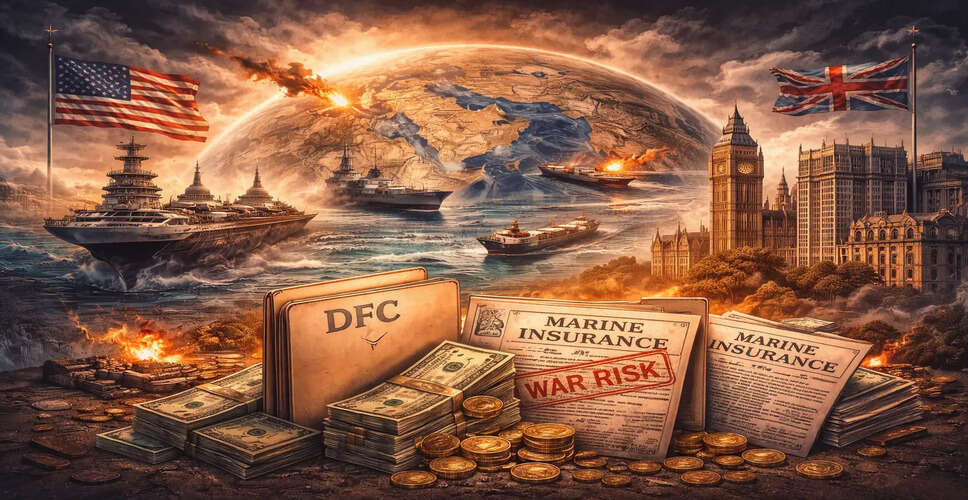
Global Attention Shifts to Maritime Insurance
On February 28, 2026, as the United States and Israel initiated Operation Epic Fury, the focus was primarily on the missile strikes targeting Tehran and Iran's retaliation against Israel and its allies. However, a significant development that went unnoticed was the reaction of the insurance markets in London. Within hours of the military actions, major marine insurers began withdrawing from the Persian Gulf. Notably, NorthStandard, the London P&I Club, and the American Club—three leading maritime insurance mutuals—halted war-risk coverage for vessels operating in the area. This sent a clear message to the global shipping industry: they were on their own.
In response, Iran swiftly moved to close the Strait of Hormuz, a crucial passage for approximately 20% of the world's oil supply. This action led to a dramatic slowdown in tanker traffic, with transit through the strait plummeting by 81% during the peak of the crisis, leaving around 200 crude oil and product tankers stranded in the Gulf. Consequently, oil prices surged, with the American Automobile Association reporting an overnight increase of over 11 cents per gallon in the US on March 3, as noted by Al Jazeera.
US Government Steps In
Washington Takes Action
On March 3, President Donald Trump announced via Truth Social that he had instructed the US International Development Finance Corporation (DFC) to offer 'political risk insurance and guarantees for the Financial Security of ALL Maritime Trade, especially Energy, traveling through the Gulf' at a 'very reasonable price.' He also indicated that the US Navy would provide escort for tankers through the Strait of Hormuz if necessary. Just three days later, on March 6, DFC CEO Ben Black and Treasury Secretary Scott Bessent unveiled a $20 billion maritime reinsurance facility, set to operate in coordination with US Central Command. Black expressed confidence that their reinsurance plan would facilitate the flow of oil, gasoline, LNG, jet fuel, and fertilizer through the Strait of Hormuz back to the global market.
On March 11, the DFC revealed that Chubb, a major global insurance firm, would act as the lead underwriter for this initiative. Chubb's Chairman and CEO Evan Greenberg emphasized the importance of providing insurance protection for vessels to restore trade flows through the Strait of Hormuz.
A Shift in Maritime Insurance Leadership
The Break with Britain
This announcement from the DFC did not occur in a vacuum; it coincided with a significant strain in the US-UK 'special relationship.' Reports indicated that the US had formally requested permission on February 11 to utilize RAF Fairford and Diego Garcia as staging bases for the Iran operation. Prime Minister Keir Starmer initially denied this request, arguing that the strikes did not meet the self-defense criteria under the UN Charter and could implicate the UK in unlawful actions. Starmer asserted that the UK did not support regime change through military means.
Trump's reaction was both public and pointed. During a press conference with German Chancellor Friedrich Merz, he remarked, 'This is not Winston Churchill that we’re dealing with,' criticizing the UK for its lack of cooperation. Following Britain's offer of two aircraft carriers, Trump dismissed the need for them, stating, 'We don’t need people that join Wars after we’ve already won!'
Starmer eventually reversed his stance after an Iranian drone attack on RAF Akrotiri in Cyprus on March 1, which endangered British personnel. He authorized the use of UK bases for limited defensive operations on March 2, but by then, the DFC's announcement was already in the works.
Implications of the Shift
Structural Changes in Maritime Insurance
The unfolding events have led to a significant shift in the maritime insurance landscape. The London insurance market, which has historically underwritten global maritime trade, including during both World Wars and the Iran-Iraq Tanker War, faced a rapid withdrawal due to political risk. The US government stepped in to fill this void, appointing Chubb as its lead insurer. Analysts from JPMorgan estimated that the Gulf requires coverage for around 329 vessels, translating to an insurance exposure of approximately $352 billion that private markets are currently unable to provide. The DFC's risk ceiling stood at $205 billion as of December 2025, suggesting that the program may already be approaching its legislative limits.
Concerns have been raised regarding the program's effectiveness. Major shipping lines are reportedly hesitant to operate in the region despite the announcement, citing the inherent dangers of navigating a conflict zone. Credit rating agency Morningstar DBRS noted that many shipowners might remain reluctant to transit the strait, regardless of government-backed coverage. Additionally, some US lawmakers pointed out the irony that China, which accounted for 91% of Iranian oil exports in 2023, could benefit from US-subsidized shipping insurance. Texas Congressman Joaquin Castro remarked on social media that it appeared the US would be subsidizing oil shipments to China.
The Significance of This Shift
Why This Transition Matters
Geopolitical changes of this scale often occur quietly, through agreements, financial instruments, and insurance frameworks—the less glamorous aspects of global power dynamics. The UK lost its 300-year role as the underwriter of global energy trade during the same week it experienced a significant rift with its key ally. Regardless of the DFC program's success or failure, a precedent has been established: when London withdrew, Washington stepped in. For energy-dependent nations, including India, which has navigated the Iran oil trade through careful diplomacy, the implications are profound. The authority to determine who can transport energy through the world's most critical chokepoint, and at what cost, has shifted from a private market in London to a US government agency accountable to the White House. History, as this week's events have shown, rarely announces itself with fanfare.