
US Supreme Court's Ruling Undermines Voting Rights Act Protections
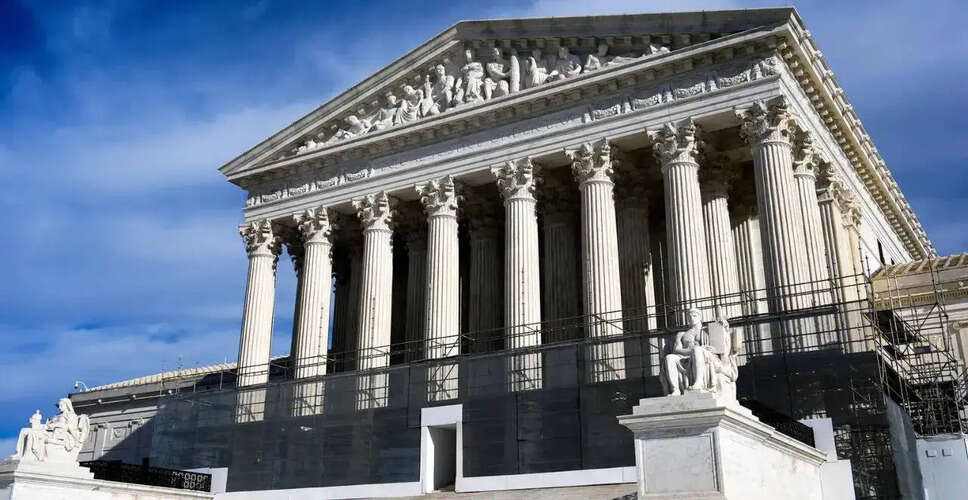

Supreme Court Decision on Voting Rights
In a ruling that voting rights advocates deem a major blow to minority representation, the US Supreme Court on Wednesday significantly diminished a crucial aspect of the Voting Rights Act of 1965. This decision arose from a congressional redistricting case in Louisiana, where the court invalidated a congressional map that had established a second majority-Black district, labeling it an unconstitutional racial gerrymander due to the predominant role of race in its creation.
Justice Samuel Alito, writing for the conservative majority, contended that Section 2 of the Voting Rights Act was designed to shield voters from deliberate discrimination rather than to ensure proportional representation for racial groups. In a strong dissent, Justice Elena Kagan cautioned that the high threshold set by the majority for demonstrating intentional discrimination could create an 'almost insurmountable barrier' for future voting rights challenges.
A Landmark Law in American History
Enacted by President Lyndon B. Johnson on August 6, 1965, shortly after the Bloody Sunday events in Selma, Alabama, the Voting Rights Act is regarded as one of the most significant legislative achievements in US history. It abolished legal obstacles that had long prevented Black Americans from voting in the South, leading to a substantial increase in political engagement among minorities.
In 1970, there were approximately 1,500 Black elected officials nationwide; today, that figure has surpassed 10,000. Civil rights advocates assert that this transformation would not have been possible without the safeguards provided by the Voting Rights Act, which has played a vital role in combating 'vote dilution' tactics, such as cracking and packing, aimed at diminishing the political influence of minority voters.
Continued Erosion of Voting Rights
Wednesday's ruling is part of a broader trend of Supreme Court decisions that have gradually weakened the Voting Rights Act. In 2013, the court dismantled the law's preclearance requirement in Shelby County v. Holder, allowing states with histories of discrimination to modify their voting laws without federal oversight. This opened the floodgates for numerous new voting restrictions, particularly in Republican-led states.
In 2023, the court surprised many by upholding Section 2 in an Alabama redistricting case, resulting in the establishment of a new majority-Black district. However, Wednesday's ruling effectively reverses much of that progress, making it considerably more challenging to contest maps that undermine minority voting power.
Future Implications
Voting rights organizations warn that this ruling will facilitate mapmakers at all levels—from Congress to state legislatures and local school boards—to create districts that weaken the voting strength of Black and Hispanic communities. 'It means entire communities could lack representation,' stated Cliff Albright, co-founder of Black Voters Matter. 'This is a blatant regression to the Jim Crow era.'
Representative Ritchie Torres (D-NY) described the decision as 'the dismantling of America’s most significant legislative achievement by a far-right Supreme Court.' In Louisiana, this ruling jeopardizes the seat of Democratic Rep. Cleo Fields, while in Alabama, the newly formed majority-Black district that elected Rep. Shomari Figures may face legal challenges ahead.
Maria Teresa Kumar, president of Voto Latino, cautioned that this decision will likely promote more aggressive 'cracking and packing' of minority populations, not only in congressional districts but also in state legislatures, county commissions, school boards, and city councils. Currently, the Supreme Court has rendered Section 2 of the Voting Rights Act nearly ineffective. Advocates fear that without robust federal protections, minority communities will lose their political voice on vital issues such as healthcare, education, and infrastructure.
Sixty-one years after President Johnson signed the Voting Rights Act into law—a courageous act for many lawmakers at the time—the legislation that reshaped American democracy now stands significantly diminished.