
US Supreme Court Ruling on Telecom Companies and FCC Fines
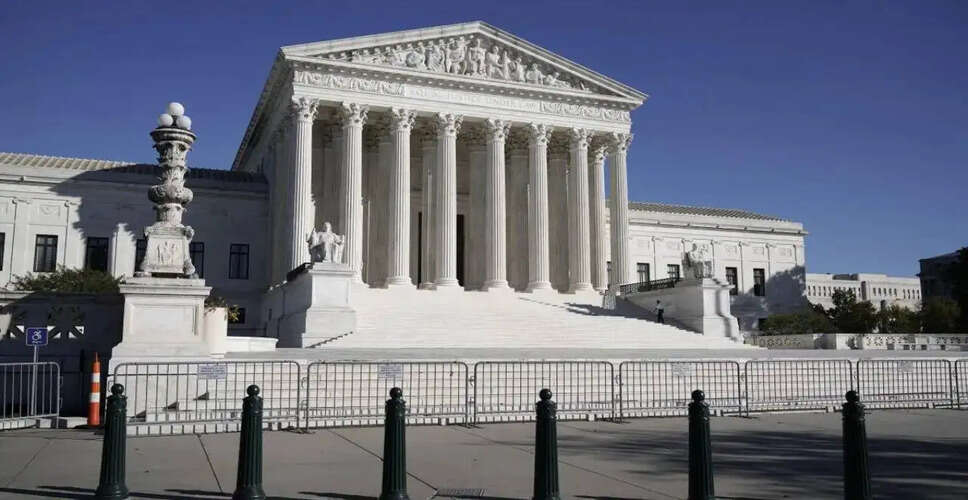

Supreme Court Decision Overview
The United States Supreme Court has determined that telecommunications firms are not entitled to an immediate jury trial when the Federal Communications Commission (FCC) imposes fines. The ruling, which passed with an 8 to 1 vote, involved major companies like AT&T and Verizon. Chief Justice John Roberts authored the majority opinion, clarifying that FCC forfeiture orders represent the agency's stance rather than a conclusive legal determination. Consequently, he stated that the Constitution does not breach any rights when the FCC issues these orders without jury involvement.
Additionally, the ruling provided favorable news for the companies involved. Roberts emphasized that these forfeiture orders do not necessitate immediate payment. A jury trial becomes relevant only if the Justice Department opts to pursue legal action to collect the fines. As Roberts noted, a jury must have the final say before any company is compelled to make a payment.
Background of the Case
The case arose when AT&T and Verizon contested the FCC's actions after being accused of unlawfully sharing customer location information and lacking sufficient safeguards against unauthorized disclosures. AT&T faced a forfeiture order amounting to $57 million, while Verizon's penalty was nearly $47 million. Both orders indicated that the companies were liable and required payment within 30 days.
The companies argued that this system infringed upon their constitutional right to a jury trial. The Supreme Court took on the case to evaluate this right and to potentially extend a previous ruling from 2024 that had restricted certain agencies' powers to impose fines through internal processes.
Significant Concession from the Previous Administration
Despite the companies losing the jury trial aspect, the ruling confirmed a notable concession made by the Trump administration during the legal proceedings. Historically, businesses interpreted forfeiture orders as requiring immediate payment. However, the administration and the FCC clarified that companies could defer payment until all legal processes were completed without facing penalties for the delay.
Dissenting Opinion
Justice Clarence Thomas was the sole dissenter in this case. He contended that AT&T and Verizon had valid reasons to believe that the FCC was demanding immediate payment based on the language of the orders. Thomas argued that it was unjust to penalize companies for acting in good faith based on their reasonable interpretation of a binding obligation.
Unresolved Issues
The court did not address whether AT&T and Verizon are eligible for a refund, as they may have been misled into making payments sooner than necessary. This question remains open and unresolved.