
US Supreme Court Rules in Favor of Chevron in Environmental Lawsuit

Chevron's Legal Victory
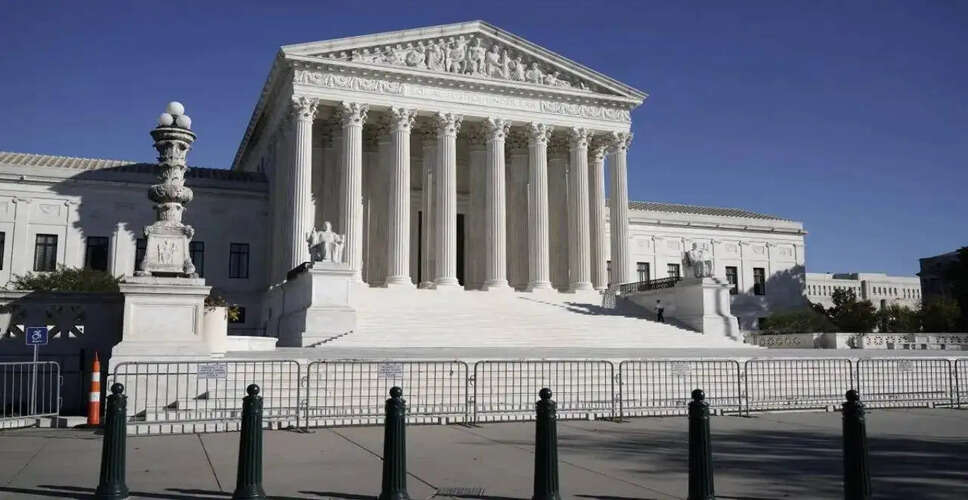
On Friday, the US Supreme Court delivered a pivotal legal win for Chevron, unanimously deciding that a significant environmental lawsuit against the corporation should be adjudicated in federal court instead of state court. This ruling has the potential to alter the legal framework for numerous similar cases nationwide.
Background of the Case
The case revolves around the environmental degradation of Louisiana's coastal wetlands, attributed to crude oil extraction activities dating back to World War II. A Louisiana state jury had previously mandated Chevron to pay $745 million for the restoration of these wetlands, a ruling now uncertain following the Supreme Court's decision. Chevron sought to transfer the case from state to federal court, asserting that its predecessors operated under direct federal oversight during the war, producing aviation fuel to meet urgent military needs. The company contended that any claims related to this work should be addressed in a federal court.
Supreme Court's Reasoning
Justice Clarence Thomas, writing for the majority, articulated the court's rationale. He stated, "In this all-hands-on-deck, wartime context, Chevron needed to produce more crude oil as quickly as possible to facilitate more avgas refining, including its own." He emphasized that Congress has historically permitted federal officers and their agents to transfer lawsuits from state to federal courts, particularly when actions are closely tied to federal responsibilities. Justice Samuel Alito recused himself from the case due to financial interests in a related company.
Implications of the Ruling
This ruling has implications that extend beyond this particular case. Federal courts have traditionally been less favorable towards lawsuits aimed at holding fossil fuel companies accountable for environmental harm, including issues related to climate change. Transitioning cases to federal courts typically makes it more challenging for plaintiffs to succeed. Chevron expressed satisfaction with the ruling, with spokesperson Bill Turenne stating that the claims are linked to activities conducted under federal supervision during World War II and are flawed under both state and federal law.
Ongoing Legal Challenges
This decision comes at a time when the intersection of environmental litigation and the judicial system is undergoing significant changes. Earlier this year, the Supreme Court agreed to review a separate case involving Exxon Mobil and Suncor Energy, which are contesting a Colorado Supreme Court ruling that permitted a climate change lawsuit from Boulder to proceed in state court. These companies are making similar arguments to those presented by Chevron, asserting that such cases should be handled in federal court. Many climate lawsuits against major oil and gas firms by various cities and states are modeled after successful legal strategies used against the tobacco industry in the 1990s, although none of these climate cases have yet reached trial.