
US Supreme Court Reviews Controversial Birthright Citizenship Case
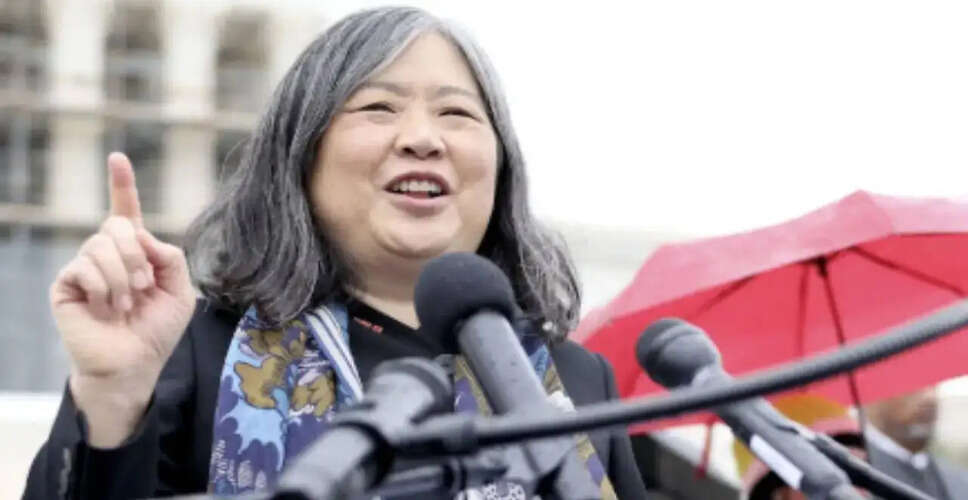
Supreme Court Case on Birthright Citizenship
The United States Supreme Court is currently deliberating on a significant case that questions an executive order issued by Donald Trump regarding birthright citizenship. Leading the opposition is civil rights attorney Cecillia Wang, who is the National Legal Director at the American Civil Liberties Union (ACLU). With over two decades of experience at the ACLU, Wang has been instrumental in various Supreme Court litigations and manages a team of more than 200 legal professionals. Her tenure includes a role as deputy legal director from 2016 to 2024, where she focused on critical issues such as immigrant rights, voting rights, and privacy concerns.
Wang has played a key role in legal battles against several controversial policies during the Trump administration, including the travel ban affecting predominantly Muslim nations and the family separation policy at the US-Mexico border. She has also worked on challenges related to the proposed citizenship question in the 2020 census. Earlier in her career, she led the ACLU's Immigrants' Rights Project and has taught law at prestigious institutions like the University of California, Berkeley, and Stanford. Wang, a Yale Law School graduate, began her career as an ACLU fellow and has also served as a public defender in New York.
The case, referred to as Trump v. Barbara, has been initiated by the ACLU in collaboration with various advocacy organizations, contesting an executive order that aims to revoke citizenship for certain children born in the US. Lower courts have halted the order, citing potential violations of the Fourteenth Amendment and established Supreme Court rulings. A preliminary injunction is currently in effect as the case unfolds. Wang represents children who may be impacted by this policy, arguing that birthright citizenship is a fundamental constitutional right that cannot be modified through executive action. This principle has been upheld by all branches of government for generations.
In a recent interview, Wang emphasized that this case represents the culmination of her extensive efforts to protect the rights of non-citizens. She shared a personal connection to the issue, noting that her parents immigrated from Taiwan in the late 1960s for graduate studies, a journey facilitated by the Immigration and Nationality Act of 1965, which eliminated race-based immigration quotas. Wang was born in Oregon in 1971 while her parents were on student visas, granting her US citizenship by birth. She spent her childhood in Fremont, California, attended the University of California, Berkeley, and later Yale Law School, where she clerked for Supreme Court Justices Harry A. Blackmun and Stephen G. Breyer.