
US Supreme Court Limits Gun Ownership Restrictions for Drug Users
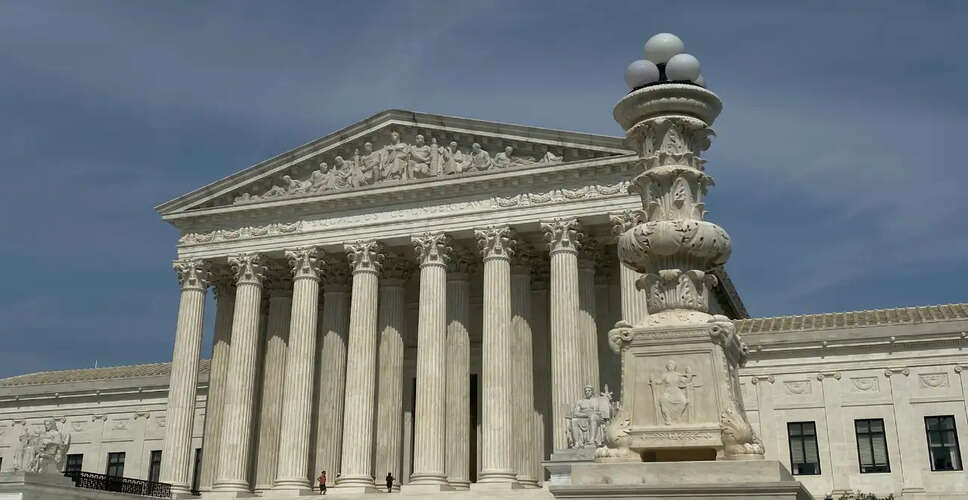

Supreme Court Ruling on Gun Ownership and Drug Use
On Thursday, the US Supreme Court made a significant ruling that narrows the application of a federal law that prohibits drug users from owning firearms. This decision came in response to a challenge from a Texas man who admitted to using marijuana. The court unanimously concluded that the government had overreached by categorizing all drug users as equally dangerous without differentiating between casual users and those with serious addictions.
Justice Neil M. Gorsuch, who authored the majority opinion, recognized the potential dangers of combining drugs and firearms but criticized the government's broad interpretation of the Gun Control Act of 1968. This law previously barred anyone deemed an 'unlawful user of or addicted to any controlled substance' from possessing a firearm. The court indicated that while it is reasonable to restrict access for genuinely dangerous individuals, the government's blanket approach did not hold up under constitutional examination related to historical gun regulation practices.
The case, known as United States v. Hemani, arose after federal agents searched the home of a Texas resident in 2022. The individual admitted to using marijuana regularly and had a handgun stored safely, which led to federal charges for illegal firearm possession. This case gained attention due to its connection to high-profile prosecutions, including Hunter Biden's 2024 conviction on similar gun possession charges.
While the court's ruling limits the law's application to general drug users, it clarified that restrictions remain valid for individuals who are addicted to drugs or are under the influence while possessing firearms. Justice Gorsuch emphasized that the ruling is narrow and allows Congress the opportunity to refine gun regulations if certain substances are proven to pose specific risks when associated with firearms.
The decision also sparked several concurring opinions. Justice Samuel A. Alito Jr., along with Justice Elena Kagan, pointed out that contemporary marijuana use is akin to alcohol consumption during the nation's founding, highlighting its social acceptance and the lax enforcement in various areas.
This ruling is part of a larger trend of Second Amendment cases where the court has utilized historical context to assess modern gun regulations, following its 2022 verdict in New York State Rifle & Pistol Association Inc. v. Bruen. The case saw unusual alliances, with the Trump administration and gun safety advocates supporting the law's enforcement, while groups like the National Rifle Association and the American Civil Liberties Union backed the challenger. Legal analysts suggest that this ruling may compel federal authorities to refine how they enforce drug-related firearm restrictions, especially concerning marijuana, which is legal in numerous states but remains prohibited under federal law.