
US Strategic Moves in Southeast Asia: Implications for China

Shifting Maritime Power Dynamics
The landscape of global power is evolving, particularly in maritime regions. Following a recent tightening of its strategic stance around the Strait of Hormuz, the United States has now shifted its focus towards the Strait of Malacca, recognized as the busiest oil transit route globally. This raises a critical question among strategists: Is China the primary target of the US's recent geopolitical maneuvers?
Strengthening US-Indonesia Defense Relations
US-Indonesia Defence Partnership
Reports indicate that a significant defense cooperation agreement has been established between the United States and Indonesia, following discussions led by US Defence Secretary Pete Hegseth. This agreement is said to emphasize maritime security, joint training, and capacity enhancement. Analysts suggest that this partnership positions the US and its allies to gain unprecedented oversight over one of the world's most crucial economic arteries, potentially surpassing the significance of Hormuz in terms of traffic volume.
The Strategic Importance of the Strait of Malacca
Why Strait Of Malacca?
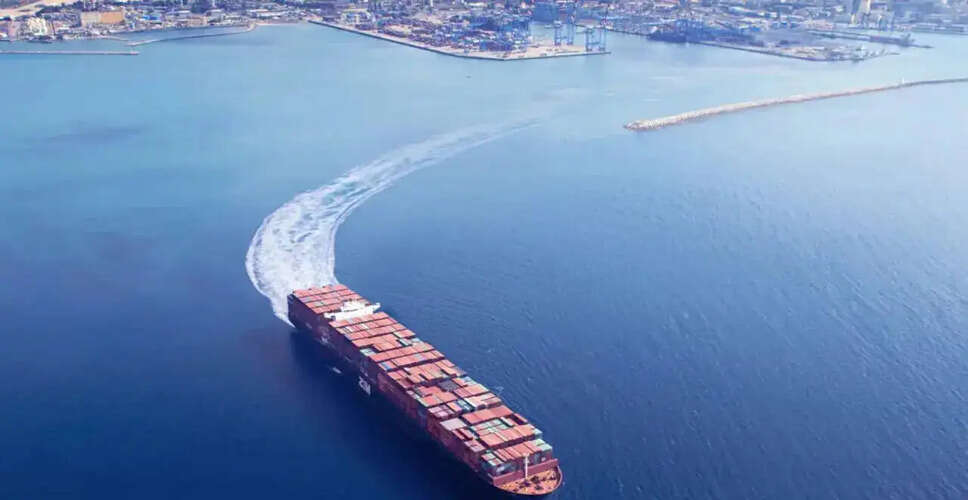
The Strait of Malacca is not merely a shipping route; it is vital for China's energy supply, with approximately 80% of its oil imports traversing this narrow passage between Indonesia, Malaysia, and Singapore. This route represents the most efficient and cost-effective pathway for energy supplies from the Gulf and Africa to East Asia, a fact that has long been a source of concern for Beijing.
In 2003, former Chinese President Hu Jintao introduced the term "Malacca Dilemma," acknowledging that China's economic growth was linked to a maritime chokepoint beyond its control. In times of crisis, this vital supply line could be monitored, disrupted, or blocked by adversaries. Despite significant investments in alternative energy routes, the majority of China's energy still relies on maritime transport through Malacca.
Changing Strategic Landscape
The strategic environment surrounding the Strait of Malacca has evolved. The new US-Indonesia partnership aims to bolster maritime awareness, including surveillance of both surface and subsurface activities, along with joint military exercises. This development effectively establishes a comprehensive network of monitoring across the waters linking the Indian Ocean to the South China Sea.
For Chinese strategists, this alters the dynamics significantly. In any potential crisis—whether related to Taiwan, the South China Sea, or tensions from the Middle East—China must now consider that its critical energy supplies could be tracked in real-time by the US and its regional allies.
Legal and Military Considerations
Strait Of Malacca Governed By UNCLOS
Any attempt to obstruct Chinese shipping in the Strait of Malacca would pose serious legal and military challenges. Governed by the United Nations Convention on the Law of the Sea (UNCLOS), countries like Indonesia, Malaysia, and Singapore have historically opposed the militarization or unilateral control of the strait. Analysts warn that an outright blockade could be perceived as an act of war, leading to unpredictable repercussions.
However, strategy encompasses not just actions but also capabilities. By embedding itself and its allies in key maritime chokepoints, the US is not necessarily gearing up for immediate conflict. Instead, it is shaping the conditions for any future crises. In this context, China's vulnerability remains unchanged: its economy is heavily reliant on energy that must navigate through narrow seas monitored or controlled by others. The Malacca Dilemma persists, managed rather than resolved. With the US tightening its influence from the Gulf to Southeast Asia, Beijing may once again have to confront the uncomfortable truth that its path to prosperity traverses waters it does not control.