
US Restores Pacific Command Name Amid Territorial Map Controversy
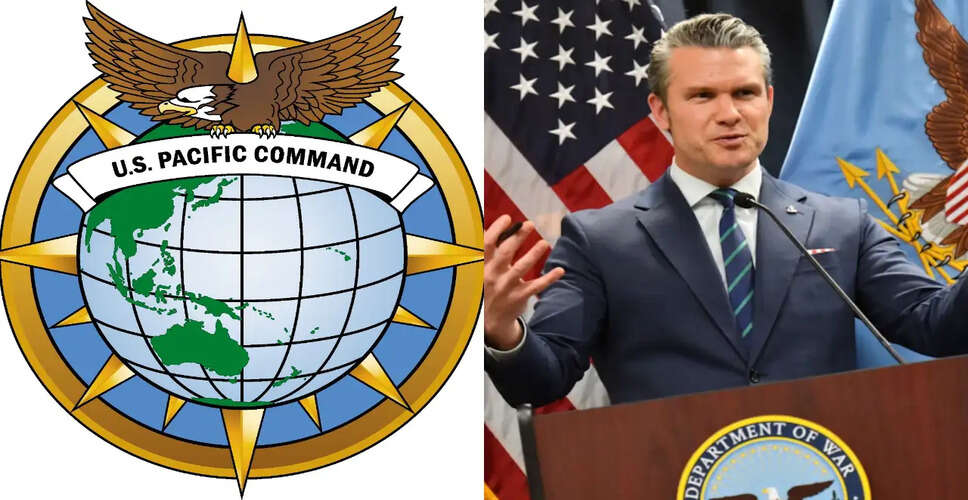

US Indo-Pacific Command Reverts to Pacific Command
In a significant update, the United States Department of War has declared that the US Indo-Pacific Command (USINDOPACOM) will revert to its former title — the US Pacific Command (USPACOM). This name was used for over seventy years before the change. The command faced criticism for displaying an inaccurate map of India on its official site, which illustrated its operational jurisdiction in the Indo-Pacific region. The map in the "Area of Responsibility Map" section incorrectly showed Pakistan-Occupied Kashmir (PoK) as part of Pakistan, leading to disputes regarding India's territorial integrity.
This decision reverses a notable change made in 2018 when then Defense Secretary Jim Mattis renamed the command to emphasize the increasing strategic significance of the Indian Ocean and its connections to Pacific security, reflecting the shifting geopolitical landscape of Washington.
Reason Behind the Name Change
In announcing this recent decision, the Department of War indicated that restoring the original name aims to honor the command’s historical identity and legacy. The department stated that reinstating the USPACOM designation "honors the command's deep historical roots, fostering a sense of pride and collective spirit among all who serve in the Pacific."
INDOPACOM
2067022506742169659
The command emphasized that despite the name change, its core mission and commitment to ensuring a free and open theater alongside regional allies and partners will remain intact. The area of responsibility for USPACOM, which stretches from the western coast of the US to India’s western border, will not change. The department reiterated its dedication to maintaining a "free and open theater alongside regional allies and partners" without any interruptions.
Background of the 2018 Renaming
The renaming of the command in 2018 to Indo-Pacific Command marked Washington’s recognition of the growing interconnection between developments in the Indian Ocean and South Asia with security outcomes in the Pacific. For India, USINDOPACOM has served as a crucial platform for enhancing defense relations with the United States. Over the years, the command has played a pivotal role in strengthening bilateral military cooperation through joint exercises, maritime collaboration, intelligence sharing, and broader strategic engagement.