
US Reduces Embassy Staff in Middle East Amid Rising Threats from Iran
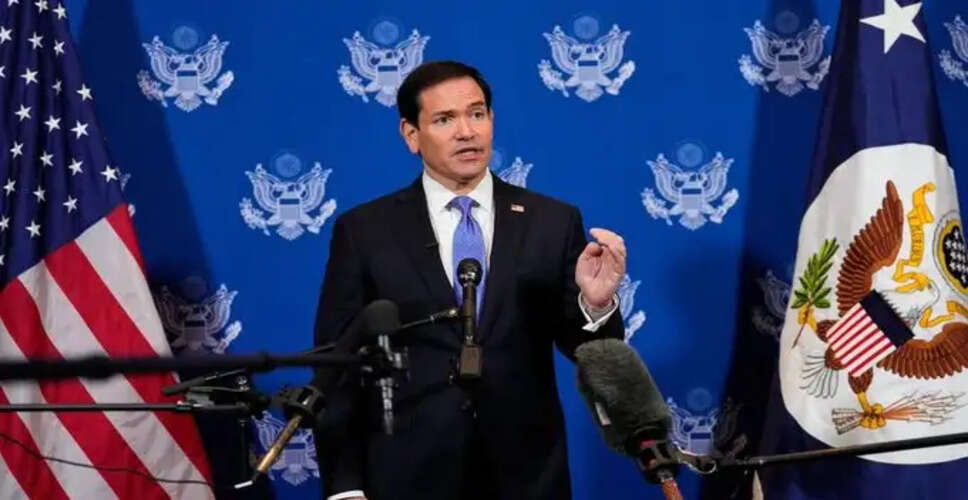

US Embassies on Alert
Washington: The US State Department has decided to cut back on personnel at four embassies located in the Middle East due to intelligence indicating that Iran has intensified its efforts to target American officials both in the region and beyond.
In a memo addressed to Secretary of State Marco Rubio, Director of National Intelligence Jay Clayton reported that his team has gathered information suggesting a significant increase in Iranian attempts to target US citizens.
Clayton noted that these lethal plots by Iran against Americans have progressed to advanced stages in the Middle East and other nations.
This memo was acquired by a news agency and was previously reported by another outlet. Three US officials, who requested anonymity due to the sensitive nature of the information, confirmed that the memo was sent to Rubio in his dual role as secretary of state and national security adviser.
The memo surfaced shortly after the State Department announced the staffing reductions at embassies in Jordan, Lebanon, Qatar, and the United Arab Emirates. The officials indicated that the threats posed by Iran and the Iranian-backed Houthi rebels from Yemen are linked to these staffing adjustments.
These embassies are currently operating under restricted status, which has already limited their personnel. However, they will continue to function.
Unlike the situation in Saudi Arabia, where nonessential US staff and their families were ordered to leave, personnel in the other four countries are not required to evacuate.
In its announcement regarding the staffing reductions, the State Department specifically cited the heightened threats from the Houthi rebels in Yemen, without directly mentioning threats from Iran against US personnel. There has been a resurgence of conflict between a Saudi-led coalition and the Houthis, with the latter launching missile and drone attacks on Saudi Arabia.
US officials have firmly stated that the staffing reductions are not connected to any potential new military actions by the US and Israel against Iran. The ongoing war has led to increased energy prices for Americans and created political challenges for President Donald Trump and the Republican Party, who are aiming to maintain control of Congress in the upcoming midterm elections on November 3.
During a rally in Florida, Trump highlighted US military operations in Iran, referred to as Operation Epic Fury, and suggested that further actions might be taken unless Iran agrees to negotiations. He remarked, 'If they’re smart, they’ll just say, Let’s get down to business.'
Efforts are underway to facilitate formal discussions between Washington and Tehran as the conflict has reached a stalemate.
According to Iranian state media, the Revolutionary Guard navy has once again threatened to target US military installations in the region if the US continues to assist in guiding commercial vessels through the Strait of Hormuz, a vital route for global energy trade.
Iranian Foreign Minister Abbas Araghchi warned in an opinion piece in the Financial Times that any escalation in the Strait of Hormuz or elsewhere in the region could endanger civilian lives and threaten the stability of regional states and the global economy.