
US Officials Decide Against Designated Survivor for White House Correspondents' Dinner

Decision on Designated Survivor
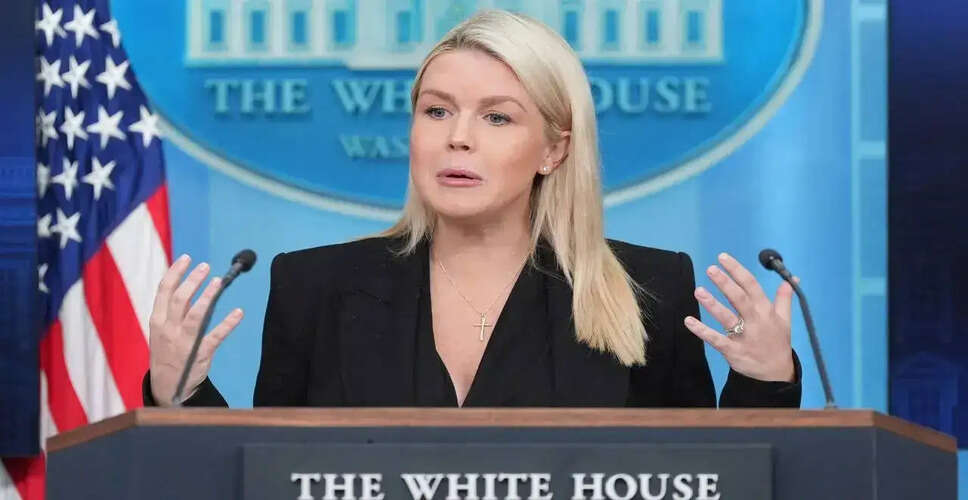
Officials from the United States evaluated the possibility of appointing a "designated survivor" prior to the White House Correspondents' Dinner but ultimately deemed it unnecessary, as confirmed by the White House. During a press briefing on Monday, Press Secretary Karoline Leavitt explained that the administration had considered this precaution but decided against it since several senior officials were already absent. She stated, "Designating one survivor was not necessary as we had several members who were not there already." This announcement follows a recent security incident at the dinner held in Washington DC, where an armed individual opened fire after breaching a checkpoint, leading to the evacuation of Donald Trump, Vice-President JD Vance, and other high-ranking officials. Fortunately, there were no fatalities, and injuries were minimal, but the event has sparked renewed concerns regarding security measures and continuity planning.
During the dinner, Trump and Vance were seated on stage alongside other prominent figures in the presidential line of succession, including House Speaker Mike Johnson, Secretary of State Marco Rubio, and Treasury Secretary Scott Bessent. Leavitt noted that some officials were absent for "various personal reasons"; for instance, Agriculture Secretary Brooke Rollins mentioned on social media that she had gone to Texas for a family obligation. The gathering of so many senior leaders at one location has drawn criticism from certain lawmakers. Republican Representative Michael McCaul remarked to CNN, "Had an explosive device gone off, you would have knocked out the president, vice president, speaker. The three in line of succession." Notably, Senate President Pro Tempore Chuck Grassley, who follows the House Speaker in the line of succession, was also not in attendance.
What Are the Rules on the US Line of Succession Being Together? The order of succession is outlined in the US Constitution and the Presidential Succession Act of 1947, starting with the vice president, followed by the speaker of the House, the Senate president pro tempore, and Cabinet secretaries in the order their departments were established. There is no law that explicitly prohibits multiple individuals in the line of succession from being present at the same event. Instead, officials typically adhere to established continuity protocols. One such protocol is the appointment of a "designated survivor," a practice often utilized during significant events like the State of the Union address, where a senior official is secured at a confidential location.
Designated Survivor Rules Explained The purpose of having a designated survivor is to ensure that a qualified official can assume the presidency if a catastrophic event incapacitates those present. Eligibility criteria align with the constitutional requirements for the presidency, which include being a natural-born citizen, at least 35 years old, and having resided in the United States for 14 years. Generally, a Senate-confirmed Cabinet member within the line of succession is chosen. This individual is then kept under protection with secure communication until the event concludes. The selection process is managed internally by the White House and is part of broader contingency planning rather than a specific legal requirement for any single event.