
US Navy Drone Monitors Cuban Coast Amid Rising Tensions

Surveillance Mission Over Cuba
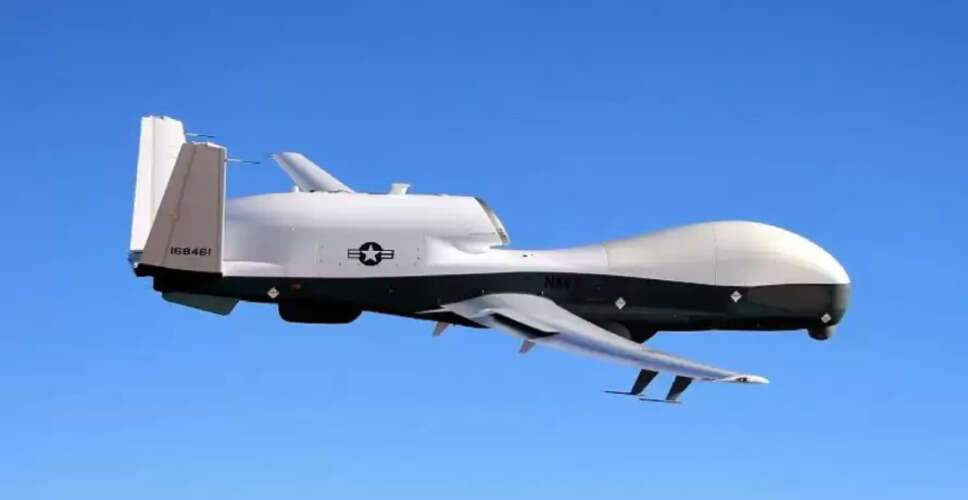
This week, a US Navy surveillance drone, specifically an MQ-4C Triton identified by the callsign BLKCAT6, conducted an extensive monitoring operation along the Cuban coastline. This sophisticated drone, valued at $240 million, is designed for high-altitude surveillance and can remain airborne for over 24 hours, covering vast oceanic and coastal areas in a single mission. Its deployment comes amid escalating tensions between Washington and Havana.
Flight-tracking data indicates that the drone was not merely passing through but actively observing. On Wednesday evening, it hovered near Havana before moving southward to survey the Jamaica Channel, a vital maritime route that connects the Panama Canal to the Atlantic Ocean.
The Jamaica Channel is one of several critical chokepoints essential for global trade and energy transport. Monitoring or controlling these routes has historically been a focal point in the competition between major powers, especially the United States and China, which relies heavily on oil transported through these vulnerable maritime passages.
Cuba's involvement appears to be part of a larger geopolitical strategy that spans from Venezuela to Iran and Southeast Asia, with each location situated near significant energy or trade chokepoints, effectively creating a pressure network around China's supply routes. From these strategic waters, the US can observe and potentially disrupt shipping activities between the Atlantic and crucial canal routes. The Triton's flight path was tracked in real-time, and while high-level surveillance missions can often be hidden, this one was not, indicating a clear message to China.
Overview of the MQ-4C Triton
About the MQ-4C Triton
The MQ-4C Triton, valued at over $200 million, stands out as the only autonomous high-altitude long-endurance (HALE) maritime aircraft capable of flying at altitudes exceeding 50,000 feet for more than 24 hours, with a range of 7,400 nautical miles. Unlike conventional aircraft, the Triton is engineered for prolonged strategic surveillance over critical chokepoints, often acting as the high-altitude eyes for P-8A Poseidon patrol aircraft.
Recently, another Triton drone was reported 'missing' after completing a three-hour surveillance mission over the Persian Gulf and the Strait of Hormuz. This incident occurred just two days into a ceasefire agreement between the US and Iran, during which Tehran consented to reopen Hormuz for shipping activities.