
U.S. Military Strengthens Presence in Caribbean Amid Tensions with Cuba
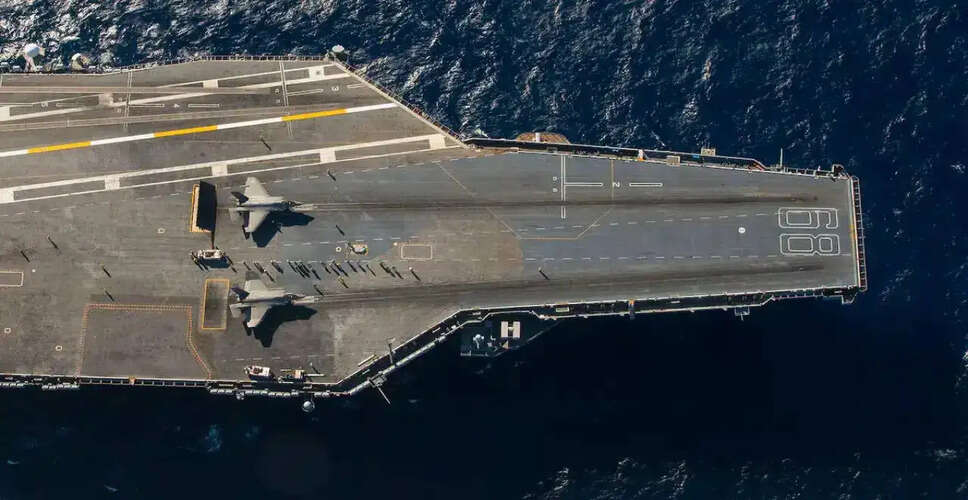

U.S. Military Buildup in the Caribbean
The United States military has significantly enhanced its presence in the Caribbean, positioning itself for potential operations against Cuba with minimal notice. This naval concentration is reportedly the largest American military deployment outside the Middle East. As per a report, while no orders have been issued yet, the necessary military assets are already in place.
Current Military Assets
What's Already Out There
The USS Nimitz aircraft carrier strike group made its way into the Caribbean in May, supported by guided missile destroyers and cruisers equipped for precision land strikes. For several months, military drones and surveillance aircraft have been monitoring Cuban airspace, as indicated by flight tracking data. The timing of the Nimitz's arrival coincided with the U.S. Department of Justice's announcement of an indictment against former Cuban president Raul Castro, suggesting a calculated show of force.
Moreover, the USS Kearsarge, an amphibious vessel with approximately 2,500 Marines, is currently stationed off Virginia's coast and is preparing for deployment, potentially replacing ships returning home from the region. While these military assets provide various options, a full-scale ground invasion would necessitate more troops than are currently available nearby.
Trump's Invasion Talk
Trump Has Already Floated an Invasion
This military positioning follows former President Trump's public suggestion of invading Cuba after economic and political pressures failed to unseat the Communist regime. Reportedly, the options being considered range from targeted strikes to actions similar to those taken in Venezuela, where the U.S. apprehended former President Nicolas Maduro earlier this year.
StateDept
2059678638107447561
During a recent Cabinet meeting, Secretary of State Marco Rubio emphasized the threat posed by a failed state just 90 miles from the U.S. shores, stating that Cuba is "in a lot of trouble." An advisor close to Trump described the president's strategy as "classic Trump," focusing on applying pressure and observing responses.
Challenges Ahead
But There's a Complication
One significant hurdle in any potential action against Cuba is the lack of clarity regarding who would succeed the current government if it were to collapse. This is crucial, as the situation in Cuba differs from Venezuela, where a clear successor was ready when Maduro was ousted. Cuba has not operated under a single ruler for nearly 30 years, meaning that removing Raul Castro would not necessarily dismantle the entire regime.
Crisis in Cuba
Meanwhile, Cubans Are Suffering
As geopolitical tensions escalate, ordinary Cubans are enduring a worsening crisis primarily driven by fuel shortages. Following the U.S. capture of Maduro, Cuba lost its main oil supplier, leading to severe disruptions. Daily life is now marked by rolling blackouts, causing refrigerators to fail, food to spoil, and basic tasks to become increasingly difficult.
The United Nations has reported that around one million Cubans lack reliable access to clean water due to diesel shortages that have grounded delivery trucks. Additionally, the healthcare system is under immense strain, with over 96,000 surgeries postponed and the government halting its immunization program for newborns.