
US Military Presence in the Middle East Intensifies Amid Rising Tensions with Iran
Increased Military Deployment in the Middle East
As the conflict involving Donald Trump and Iran escalates, the United States is discreetly enhancing its military footprint in the Middle East. This includes the deployment of several hundred additional troops, augmenting an already growing contingent of Marines and Army paratroopers. U.S. officials indicate that these reinforcements, which comprise Army Rangers and Navy SEALs, aim to provide Washington with increased operational flexibility amid rising tensions with Tehran. Currently, many of these elite forces lack specific missions, highlighting the unpredictable and rapidly changing dynamics of the situation.
High-Stakes Operations Under Review
High-Risk Plans Under Consideration
Among the strategies being evaluated is a daring mission to secure approximately 1,000 pounds of enriched uranium from Iran. Officials warn that such an operation would be intricate and perilous, potentially necessitating U.S. forces to operate within Iranian borders for several days to retrieve one of Tehran’s most sensitive materials. Other scenarios being contemplated include securing the Strait of Hormuz, a vital global oil passage currently affected by Iranian actions, capturing Kharg Island, Iran’s primary oil export site, or targeting nuclear-related facilities like the Isfahan site.
Strategic Military Surge
Troop Build-Up Signals Strategic Shift
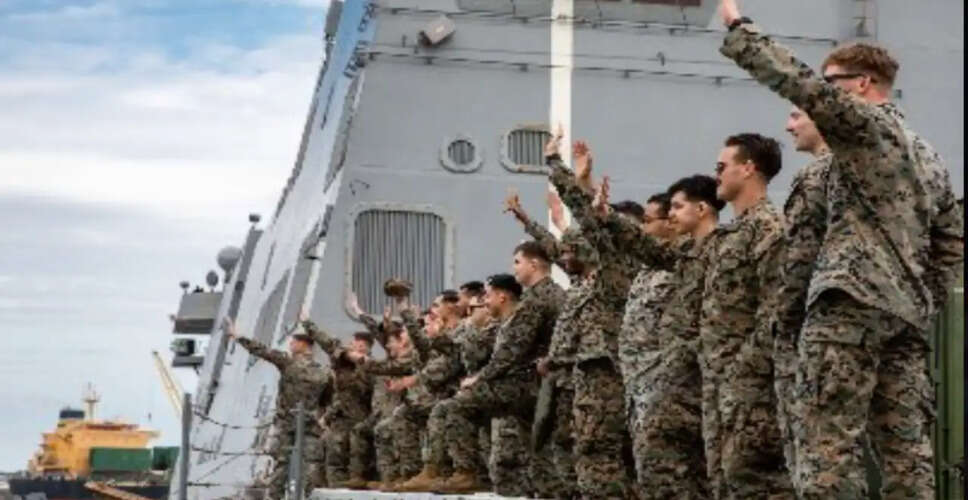
The recent troop deployments contribute to a larger military escalation in the region. Approximately 2,500 Marines and an equal number of sailors have recently arrived, raising the total U.S. troop count in the Middle East to over 50,000, which is about 10,000 more than the usual presence. The Pentagon has also dispatched around 2,000 troops from the 82nd Airborne Division, believed to be positioned close to Iran, although their exact location remains undisclosed. Despite the troop increase, the roles of certain units, such as the 31st Marine Expeditionary Unit, remain ambiguous. A significant focus is on reopening the Strait of Hormuz, through which nearly 20% of the world’s oil supply typically flows.
Strategic Gaps in Naval Power
Regional Presence, Strategic Gaps
U.S. forces are distributed across a broad network of bases and naval deployments in countries including Saudi Arabia, Bahrain, Iraq, Syria, Jordan, Qatar, the UAE, and Kuwait. However, the absence of the USS Gerald R. Ford aircraft carrier, currently out of commission due to technical difficulties, underscores gaps in naval power projection.
Current Military Posture
Not a Full-Scale Invasion - Yet
While troop levels have increased, reports suggest they are not adequate for a full-scale ground invasion. For comparison, the U.S. deployed nearly 250,000 troops during the 2003 Iraq War, while Israel mobilized over 300,000 for its Gaza operation in 2023. Iran, with a population of around 93 million and challenging terrain, would present a significantly tougher battlefield. At this stage, the U.S. strategy seems to prioritize maintaining strategic flexibility rather than occupation as the conflict evolves.