
US Military Intensifies Airstrikes on Iran Amid Rising Tensions
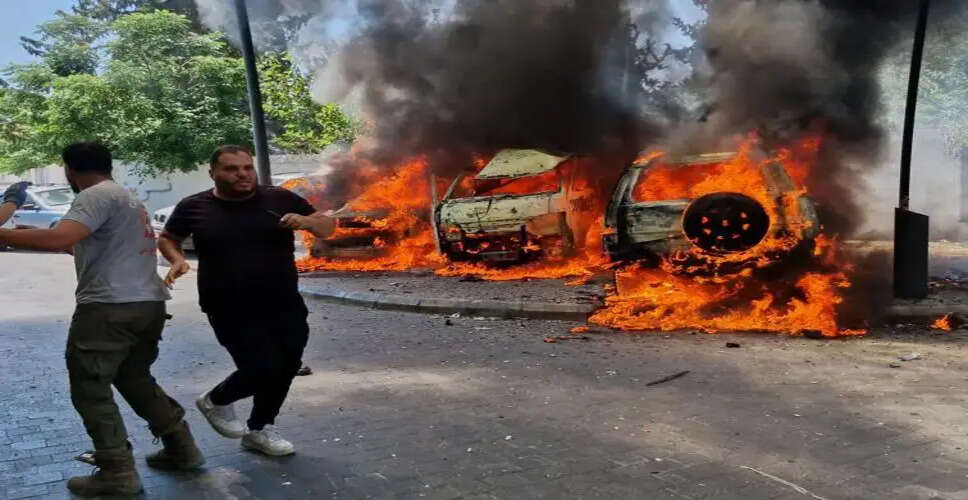

US Strikes Target Iranian Military Assets
In a significant escalation, the US military announced on Thursday that it has concluded a series of airstrikes aimed at Iranian military installations. This action follows President Donald Trump's warning that Iran would face consequences for stalled negotiations. The renewed military actions pose a risk to ongoing efforts to resolve the conflict peacefully.
According to a statement from the US Central Command, the strikes focused on Iranian military surveillance systems, communication networks, and air defense facilities. However, details regarding the extent of the damage inflicted were not disclosed, with the operations being executed by the US Air Force, Marines, and Navy.
The Central Command emphasized that these strikes were a response to Iran's ongoing and unjustified aggression. US forces remain on high alert and prepared for further action.
In retaliation, Iran has issued threats, and missile alarms were activated early Thursday in Bahrain, where US troops are stationed.
Earlier, the Central Command had indicated via social media that multiple targets in Iran were being struck in response to Iran's continued provocations. Iranian media reported explosions in southern regions, including Bandar Abbas, Sirik, and Minab.
This marked the third instance of reciprocal strikes within a week, challenging a two-month ceasefire.
Trump has urged Iran to finalize a deal to conclude the conflict, suggesting that an agreement could be reached imminently.
Iran's representative at the United Nations cautioned the US against using threats if it seeks a resolution.
Ambassador Amir Saeid Iravani stated that Iran has never engaged in negotiations under duress and will not yield to pressure.
Despite the tensions, both nations appear to be searching for a resolution to the conflict, provided they can present it as a victory domestically.
Iran has demonstrated resilience in the face of extensive bombing, leveraging its control over the Strait of Hormuz—a vital route for oil and gas—as a significant bargaining tool.
Israeli Prime Minister Benjamin Netanyahu is reportedly focused on objectives that complicate potential compromises, including the downfall of Iran's theocratic regime, the dismantling of its nuclear program, and the eradication of Hezbollah in Lebanon. Recently, both Iran and Israel have targeted each other.
US Claims to Evade Iranian Control Over Oil
Since the onset of hostilities on February 28, the conflict has disrupted the global economy, causing energy prices to soar and increasing the cost of essential goods.
As of Wednesday, the international benchmark for crude oil exceeded USD 93 per barrel, reflecting a rise of over 25% since the conflict began.
Trump revealed that the US military has been conducting covert operations to transport oil shipments past Iranian forces in the Strait of Hormuz, claiming that over 100 million barrels have successfully evaded Iranian control. This figure, however, has not been independently verified.
The specifics of the military's involvement remain unclear. Capt Tim Hawkins from Central Command mentioned that US forces coordinate with commercial vessels in the region but did not provide further details on military assistance.
US and Iranian Military Actions Impact West Asia
On Wednesday, the US military reported that an American aircraft targeted the engine room of the Palau-flagged vessel MT Settebello as it attempted to breach a naval blockade with Iranian oil. This incident marks the eighth merchant vessel disabled by US forces in the vicinity of Iran.
India's foreign ministry confirmed that three Indian sailors are missing following the strike on the Settebello, while 21 others were rescued. The statement did not reference the US military or the blockade.
Hawkins stated that US forces had issued warnings to the crew before engaging the ship.
Earlier strikes targeted Iranian air defense, ground control stations, and surveillance radar systems.
Iran claimed that US strikes damaged two water reservoirs in Sirik, temporarily affecting water supply to thousands. Central Command did not immediately respond to this claim.
Tehran also alleged attacks in Kuwait, Bahrain, and Jordan, with Jordan reporting the interception of five missiles aimed at an airbase housing US military aircraft.
Iranian Foreign Minister Abbas Araghchi condemned the US strikes as violations of Iranian sovereignty, while spokesperson Esmail Baghaei indicated that Iran would reassess its negotiation stance following the attacks.
Mediation efforts continue, with a Qatari delegation arriving in Tehran for discussions after consultations with the US.
The exchanges of fire occurred a day after a US Army helicopter crashed near the Strait of Hormuz, reportedly colliding with an Iranian drone. The circumstances surrounding the collision remain unclear.
A drone boat successfully rescued the helicopter's two crew members, who were reported uninjured.
Challenges to Achieving a Peace Agreement
With rising gas prices ahead of the November congressional elections, Trump appears eager for a swift resolution. However, his demands may be difficult for Iran to accept.
The US is insisting that Iran relinquish its stockpile of highly enriched uranium, which Iran maintains is for peaceful purposes, although it is close to weapons-grade levels.
Iran is resisting the demand to surrender the uranium and is seeking relief from sanctions, along with the release of frozen assets prior to a final agreement—conditions that Trump has rejected.
The path to reconciliation remains uncertain. In a post on Truth Social, Trump criticized Iran for delaying negotiations, warning that they would face consequences.
Iran has asserted that any agreement to conclude the war must also address the conflict between Hezbollah and Israel, while Israel has intensified its military actions against the militant group.