
US Military Buildup Near Iran: Historical Parallels and Current Tensions
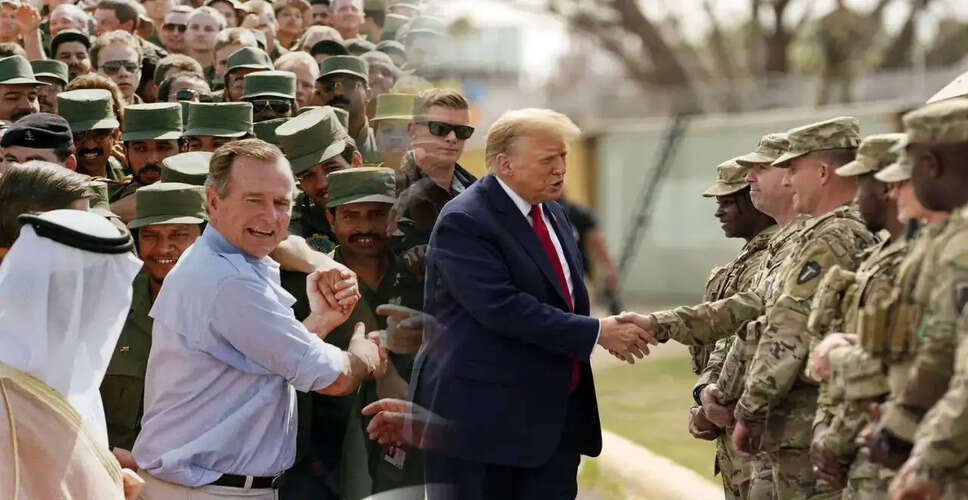
US Forces Repositioning in the Middle East
As American naval and aerial forces adjust their positions throughout the Middle East, a former NATO leader has drawn a striking historical analogy. Admiral James Stavridis, in an interview with CNN, likened the current US military presence near Iran to 'Dante’s Inferno,' suggesting a scenario where layers of military might converge towards a focal point. He noted that this situation is reminiscent of the buildup preceding the 1990 Persian Gulf War. 'It’s akin to the 1990 Persian Gulf War I. This represents a significant amount of US military strength,' Stavridis stated, encouraging viewers to visualize the deployment as moving 'from the outside in.' His reference is significant; the Desert Shield operation in 1990 began with visible, layered troop movements before escalating into full-scale conflict. He implied that this military structure conveys a message, whether aimed at deterrence or preparation.
Stavridis explained that the outermost layer comprises long-range bombers capable of operating from the continental US or nearby bases, extending their reach without permanently stationing forces too close to Iran. Closer in, two US aircraft carriers are currently active in the northern Indian Ocean and near Israel, creating what he termed 'two axes' of operational pressure.
Assessing the Current Military Posture
A War Footing Or A Warning Signal?
Each carrier strike group, he pointed out, is equipped with approximately 80 combat aircraft, including advanced F-35 stealth fighters and F/A-18 Hornets. Beneath this visible layer lies another, consisting of Tomahawk cruise missiles launched from naval vessels and submarines, armed drones, cyber capabilities, and land-based aircraft stationed at regional bases. Stavridis argued that the cumulative effect resembles tightening rings of military capability centered around Tehran. 'At the very bottom is Ayatollah Khamenei,' he concluded, completing his Dante analogy. He emphasized that the overwhelming force is intended to encourage negotiation rather than ensure conflict, stating, 'He would be wise to negotiate,' aligning his view with President Trump's preference for discussions backed by strength.
Rising Tensions and Historical Context
The timing of these remarks is significant, as the US has ordered nonessential diplomatic personnel and their families to leave certain areas in the region due to escalating security concerns. Concurrently, reports indicate that the White House is considering limited military options even as negotiations with Iran are set to continue in Geneva.
Persian Gulf War Parallels And Regional Risk
The comparison to the Persian Gulf War is crucial as it indicates a transition from routine deterrence to a visible concentration of military force. In 1990, troop ships, aircraft carriers, and bombers gradually assembled before Operation Desert Storm began. Stavridis seems to caution that such military buildups can gain momentum of their own. Iran has warned it would respond 'ferociously' to any US strike, framing the carrier deployments as provocations, while Washington insists they are defensive measures. The USS Abraham Lincoln and its accompanying naval forces now symbolize not just military hardware but also a high-stakes geopolitical standoff.
For those living in the Gulf region and international observers, the atmosphere is tense but not yet beyond repair. Markets, shipping routes, and regional capitals are closely monitoring for any signs of miscalculation. Stavridis’s analogy of Dante’s Inferno encapsulates both the extent of American military capability and the precariousness of a moment where concentric rings of force could either stabilize the region or lead to confrontation.