
US Military Adopts Iranian Drone Technology for New Attack Strategy
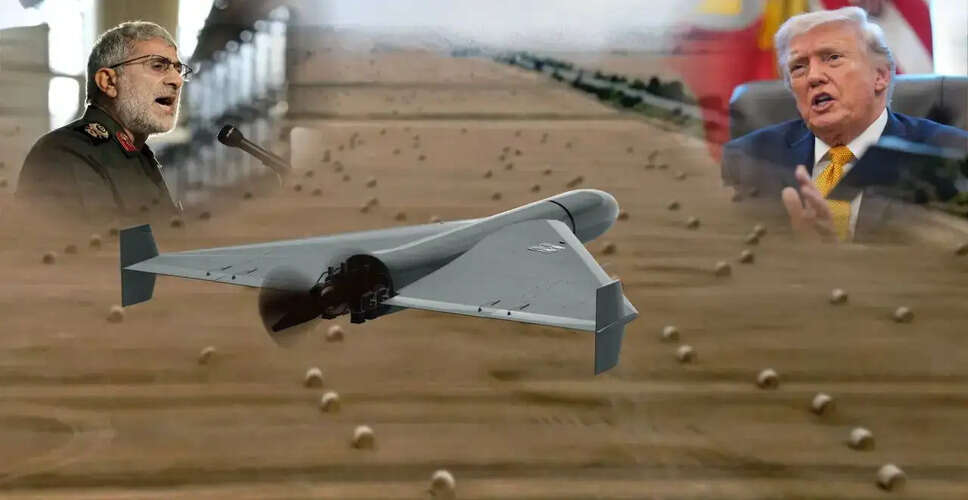
Introduction to the New Drone Strategy
For a long time, the Shahed drones from Iran were seen in Washington as a minor annoyance—loud and rudimentary, yet effective. However, they have now inspired a new approach. Amid the ongoing conflict involving Iran, the United States has discreetly introduced a new type of attack drone known as the FLM-136, or “Lucas.” This drone stands out not only for its capabilities but also for its origins: it was developed by reverse-engineering Iranian drone technology, marking a significant instance where the US military has utilized an adversary's innovation for its own strategic advantage.
The ‘Toyota Corolla’ Approach to Warfare
A former senior defense official characterized the Lucas drone as the “Toyota Corolla of drones”—not particularly sophisticated or stylish, but dependable, affordable, and easy to mass-produce. This philosophy signifies a departure from the traditional US military mindset. Historically, American military operations have depended on high-cost, precision systems, such as Tomahawk missiles, which can exceed $2 million each. In contrast, the Lucas drones are estimated to cost between $10,000 and $55,000, aligning them more closely with the economic model of Iran’s Shahed systems.
This shift is not merely superficial; it represents a fundamental change in doctrine. The Pentagon is now focused on how to produce sufficient quantities of weapons quickly to support modern warfare, rather than solely on developing the most advanced weaponry.
Impact on the Battlefield and Its Limitations
According to senior defense officials, these drones have already been deployed in strikes against facilities associated with the Islamic Revolutionary Guard Corps, targeting weapons infrastructure and drone manufacturing sites. Reports suggest that this has led to an 83% reduction in Iranian drone attacks during the initial stages of the conflict, although comprehensive operational data is still limited. The Lucas drones are designed for volume rather than dominance.
With a range exceeding 500 miles and an endurance of six hours, these drones enable the US to conduct repeated, low-cost strikes without depleting high-end munitions. However, experts caution that their effectiveness may diminish in more complex combat scenarios, particularly where GPS jamming or advanced electronic warfare tactics are employed, such as in a potential confrontation with China.
Reasons Behind the Shift in Strategy
The rationale for this strategic shift stems from a quiet realization. War games conducted by US military planners indicated that, in a high-intensity conflict—especially against a peer adversary—the US could exhaust critical munitions within just two weeks. This vulnerability prompted a reevaluation of military strategy. Rather than relying solely on expensive systems, the Pentagon began efforts to develop scalable, expendable platforms—weapons that could be produced in the thousands rather than hundreds.
The Lucas drone emerged from this urgent need. Ironically, its design was not inspired by Silicon Valley or the US defense startup ecosystem, but rather by observing how countries like Russia effectively utilized Shahed drones in Ukraine.
Reverse Engineering as a Tactical Approach
This development is particularly noteworthy due to its rarity. Former officials indicate that this is the first known instance in nearly fifty years where the US has reverse-engineered foreign military technology for direct battlefield application. The last comparable situation occurred during the Cold War, involving Soviet engineering. This time, the source was a captured Iranian drone. A small team from the Pentagon disassembled it, analyzed its design, and created an American equivalent—faster, cheaper, and ready for mass production.
The production strategy itself reflects wartime thinking. Instead of depending on a single contractor, the Pentagon is collaborating with multiple smaller manufacturers, each capable of producing hundreds of drones monthly—mirroring the industrial mobilization strategies employed during World War II.
A Shift Towards Scale Over Precision
The deeper strategic shift indicates that the US is no longer solely focused on technologically outmatching its adversaries. Instead, it aims to outproduce and outlast them. This comes at a time when the ongoing conflict with Iran has already seen extensive use of high-end weaponry, including Tomahawks and JASSMs, raising concerns about stockpile depletion.
🇺🇸🇮🇷 Iran $20K Shahed-136 low-radar drones carry 90 kg of explosives and fly up to 4,000 km. The problem? U.S. Patriot interceptors cost about $4M each. That cost gap lets Iran flood the skies with cheap drones, draining expensive missile defenses.pic.twitter.com/4o0q8EZJAe https://t.co/h5W0uaWBvt
— Mario Nawfal (@MarioNawfal) March 9, 2026
Affordable drones like Lucas provide a means to sustain operations without depleting critical reserves. However, this lesson is reciprocal. The US adopting Iran’s tactics also acknowledges that low-cost, asymmetric warfare has transformed modern conflict.
Future Implications
The success of the Lucas drone in Iran may just be the beginning. Originally designed with China in mind, its deployment in the Middle East serves as a testing ground. Even its initial use conveys a significant message: the future of warfare may not hinge on the most advanced weaponry but rather on the ability to produce quickly, deploy cheaply, and utilize repeatedly. In this evolving landscape, the distinction between innovator and imitator is increasingly becoming indistinct.