
US Lifts Maritime Blockade on Iran Ahead of Key Agreement

US Central Command Announces Blockade Lift
On Thursday, the United States Central Command (CENTCOM) declared the removal of the blockade on maritime traffic to and from Iranian ports, following directives from the President. This decision precedes the signing of a Memorandum of Understanding (MoU) between the US and Iran, aimed at ceasing hostilities in the Gulf and Middle East for a duration of 60 days. During this period, both nations will implement previously discussed measures and continue negotiations regarding Iran's nuclear program, uranium stockpiles, and frozen assets, among other topics.
In a post on X, formerly known as Twitter, CENTCOM stated, "Today, U.S. forces lifted the blockade on all maritime traffic entering and exiting Iranian ports and coastal areas, in accordance with the President's direction. American forces are not impeding the transit of vessels to or from Iranian ports on the Arabian Gulf and Gulf of Oman. All U.S. military blockade enforcement efforts have ceased. Our great Naval Ships will remain in the general area to ensure that all aspects of the agreement are adhered to, obeyed, and in full force and effect."
Traffic Resumes After Over 100 Days
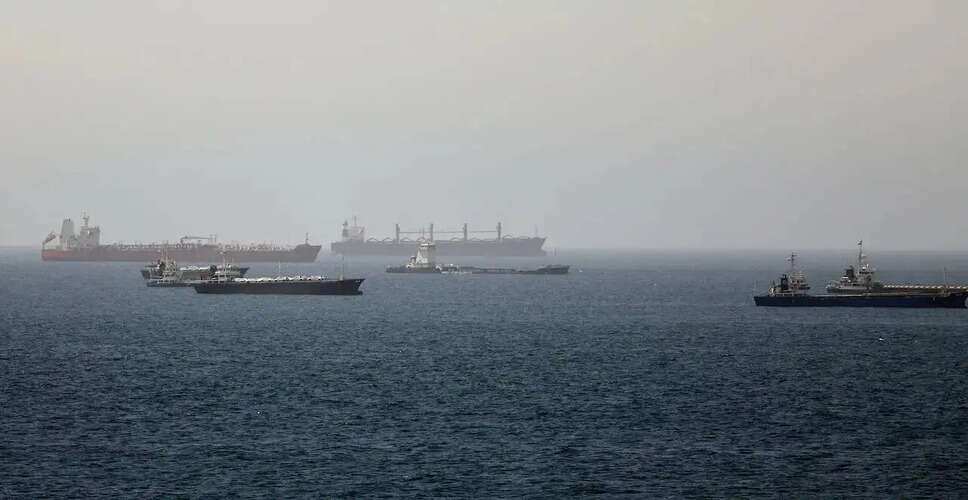
Stranded Over 100 Days, Hormuz Traffic Starts Moving
At least two oil tankers successfully navigated through the US military blockade, departing from Iran without any hindrance. A maritime tracking service reported that these vessels were transporting a total of 3.8 million barrels of Iranian crude oil. Iranian state media confirmed that shipping activities have returned to normal at the southern ports, although the strait remains under the supervision of the Iranian military, necessitating coordination for transit.
Major shipping companies began moving their vessels through the strait following the agreement's signing, as reported by maritime data firm Lloyd’s List Intelligence, although specific numbers of ships that have passed through were not disclosed as of Thursday.
Richard Meade, editor-in-chief of Lloyd’s List, noted that for the first time in 110 days, ships owned by major companies are now transiting the strait after being effectively stranded since February. Tankers from prominent shipping firms such as Grimaldi Group, Cosco, Knutsen, and NYK have successfully crossed the strait. Additionally, two Iranian-flagged tankers, which are under sanctions, have also entered the strait, according to Lloyd’s List.
Phillip Belcher, marine director of Intertanko, a trade association for independent tanker owners, indicated that the main central route of the strait remains closed due to an estimated 80 mines that require clearance. However, vessels have been navigating through the smaller northern route, which passes through Iranian waters, and the southern route, which traverses Omani waters.
Details of the US-Iran Agreement
What US-Iran Interim Deal Talks About
The US-Iran agreement aims to permanently end hostilities and initiates a 60-day timeline for negotiations regarding the future of Iran’s nuclear program, although the possibility of renewed attacks remains open. The deal appears to provide Iran with several immediate benefits while demanding little in return.
It stipulates that Iran’s stockpile of highly enriched uranium, believed to be buried under debris, must be diluted under international oversight. Furthermore, Iran is committed to not acquiring or developing nuclear weapons, a pledge it has made previously. While the agreement outlines negotiations over Iran’s nuclear program, additional commitments are still pending clarification.
The deal also suspends US-backed sanctions, allowing Iran to sell its oil freely, marking a significant concession from Washington. However, Kaja Kallas, the European Union’s foreign policy chief, stated that the 27-member bloc would maintain its sanctions on Iran for the time being. The EU had imposed various sanctions on Iran due to its nuclear activities, human rights abuses, and the closure of the strait. Kallas mentioned, "Once conditions permit, member states will discuss whether the lifting of sanctions is appropriate, but we are not there yet," ahead of an EU leaders' summit in Brussels.
With inputs from various sources