
US-Iran Talks Halted Amid Escalating Israel-Hezbollah Conflict: What’s Next?

US-Iran Negotiations Suspended
Jerusalem: The anticipated discussions between the United States and Iran were abruptly canceled on Friday due to escalating violence involving Israel and Hezbollah in southern Lebanon, according to three officials. This development raises concerns regarding a potential agreement aimed at ceasing hostilities in the region.
Iranian representatives did not proceed to Switzerland as initially scheduled, demanding a halt to the fighting in Lebanon before any negotiations could resume. US Vice President JD Vance also withdrew from his planned visit.
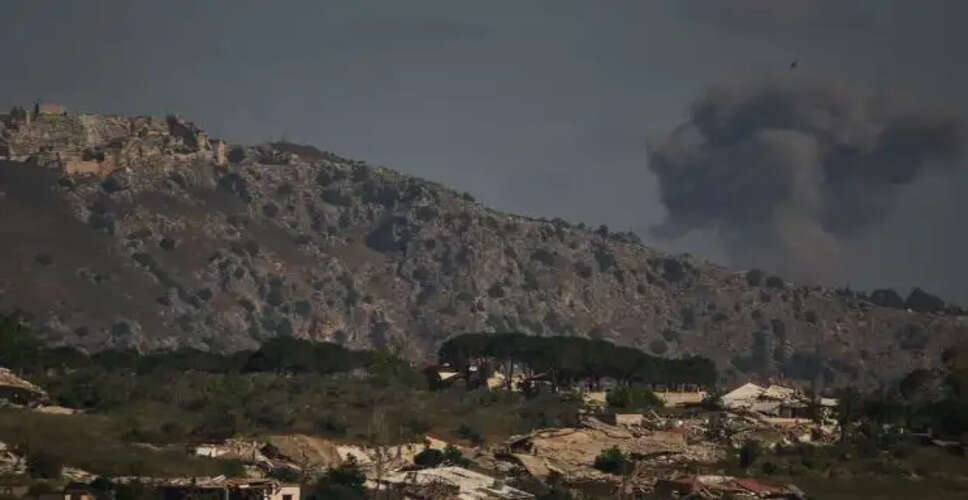
Israeli forces conducted strikes in southern and eastern Lebanon overnight, with Hezbollah reporting fierce clashes. The Lebanese Health Ministry reported at least 21 fatalities, while Israel confirmed the deaths of four soldiers.
The ongoing conflict between Israel and the Iran-supported Hezbollah poses a significant challenge to the Iran deal. Although neither Israel nor Hezbollah signed the agreement, it is intended to halt their confrontations. Iran has indicated a willingness to risk renewed conflict to protect its interests in Lebanon and support its key regional ally.
Efforts are underway to reschedule the discussions, which were meant to address limitations on Iran's nuclear ambitions—the central issue that led to the US and Israel's military actions on February 28.
These talks also aim to establish a lasting resolution to the conflict. The interim agreement has already reopened the Strait of Hormuz to international shipping, following Iranian threats that had severely disrupted oil and gas transit through the vital waterway. A new Iranian authority overseeing the strait issued guidance on Friday, instructing vessels to register with it, indicating Tehran's intention to potentially impose charges.
Escalating Violence Threatens Agreement
The Israeli military reported ongoing strikes on Friday after four soldiers, including a lieutenant colonel, were killed in an attack on a tank near Nabatiyeh. An explosive drone assault also injured five others.
In retaliation, Israel targeted what it described as 'Hezbollah infrastructure sites' in Nabatiyeh and surrounding areas, accusing the militant group of 'clear violations of the ceasefire.'
The military later confirmed strikes in the Beqaa Valley, with Lebanese media reporting damage in the village of Douris.
Israeli Prime Minister Benjamin Netanyahu stated, 'Israel will not tolerate attacks on our soldiers or our territory and will impose a severe cost on Hezbollah for these actions.'
Hezbollah acknowledged its attacks on Israeli tanks, claiming they were a response to Israel's own ceasefire violations. The group stated that its actions followed Israeli attempts to advance towards the northern side of Ali al-Taher hilltop, a strategic location overlooking Nabatiyeh.
In southern Lebanon, many residents have been forced to evacuate their homes due to the Israeli strikes. Mustafa Zain, fleeing with his six daughters, described the situation as chaotic, stating, 'We couldn’t stay.'
The ongoing violence jeopardizes the recently signed agreement, which aims not only to end hostilities in Lebanon but also to ensure the country's 'territorial integrity and sovereignty.'
The agreement does not clarify whether Israel will withdraw from the extensive areas of southern Lebanon it has occupied since Hezbollah's involvement in the conflict began.
Iran has demanded Israel's withdrawal, while Netanyahu asserted that Israeli forces would remain in a 'security zone' in southern Lebanon as long as 'Israel's security needs require it.'
Israel's military actions have created tensions between Israel and the US, with Trump increasingly critical of Netanyahu. The Israeli leader is also facing mounting domestic pressure.
Switzerland Talks Delayed
Tehran has insisted that Israel cease its attacks in Lebanon before sending a delegation to Switzerland, according to the officials.
The White House attributed the postponement of Vance's trip to logistical challenges.
Two regional officials, speaking anonymously, expressed surprise at Iran's decision to withdraw from the talks.
Challenges Ahead
The discussions in Switzerland are expected to center on Iran's nuclear program. Tehran asserts that its program is peaceful, although it possesses highly enriched uranium that could potentially be used to develop nuclear weapons, as reported by the International Atomic Energy Agency.
These negotiations are anticipated to be extremely challenging. The 2015 nuclear agreement, which Trump abandoned during his presidency, took over 18 months to finalize.
The interim deal allows negotiators 60 days to establish a nuclear agreement, with the possibility of extension. It outlines significant incentives for Iran if a new agreement is reached, including the eventual lifting of all international sanctions and a $300 billion fund for post-war reconstruction.
Iran has already secured some concessions. Following the interim deal's signing, the US lifted its blockade on Iranian ports, permitting the country to sell its oil freely. The agreement also stipulates the unfreezing of Iranian assets, although the timeline remains unclear.
Oil tankers have begun moving freely through the Strait of Hormuz this week after months of restrictions. The US reported that over 12.5 million barrels of oil were transported through the waterway on Wednesday night.
However, it may take weeks or even months for the regular flow of oil and gas to fully resume, even if traffic in the strait returns to normal.